

Category Archives: aktualnosci-en

Poland Import Regulations 2026: What Every Business Must Know

Poland Import Regulations 2026: What Every Business Must Know

Time to read:

7–11 minutes

Table of Contents

Introduction 

Poland import regulations are essential knowledge for any business importing goods into the European Union. In 2026, Poland further strengthens its position as a key gateway for EU trade, supporting regional distribution, nearshoring strategies, and cross-border supply chains. As a result, effective management of imports in Poland directly affects costs, delivery timelines, and operational continuity. 

Although imports in Poland follow EU customs law, local enforcement, VAT mechanisms, and inspection practices require careful preparation and attention to detail. Companies that overlook these details often face delays, penalties, or unexpected tax exposure.

In this article, we provide key Poland import regulations, procedures, and practical considerations needed to manage import operations in Poland efficiently and compliantly throughout 2026.

Mandatory digital reforms in Poland are expected to impact importers in 2026 (KSeF & SENT).
Mandatory digital reforms in Poland are expected to impact importers in 2026 (KSeF & SENT) | Source: European Commission

Imports in Poland operate under a dual legal framework. On one level, all import activities are governed by EU-wide customs and trade regulations. On another level, national authorities are responsible for enforcement and daily operational control. In Poland, this role is carried out by the National Revenue Administration (KAS)

The core legal frameworks applicable to imports in Poland include: 

  • Union Customs Code (UCC), which defines customs procedures, declarations, valuation, and origin rules across the EU. 
  • EU VAT Directive, which sets the principles for importing VAT treatment and reporting. 
  • EU product safety and market surveillance regulations, which ensure that goods placed on the EU market meet technical and safety requirements. 

While these rules are harmonized at EU level, their practical application differs by country. In Poland, KAS oversees customs clearance, risk analysis, inspections, and post-clearance audits. As a result, documentation requirements, inspection frequency, and processing timelines may vary compared to other EU Member States. 

For businesses, this means that compliance cannot rely solely on EU-level knowledge. Companies must also understand Poland-specific customs practices, digital systems, and enforcement priorities. Failing to align with local procedures can lead to shipment delays, additional controls, or financial penalties. 

Understanding both EU regulations and Polish enforcement realities is therefore essential to managing imports in Poland efficiently and without compliance risk. 

Poland Imports Regulations: Customs & Data Systems 

PUESC System 

All import operations in Poland rely on PUESC (Polish Electronic Services for Customs and Excise). PUESC is the main online gateway to communicate with Polish customs for tasks related to importing into Poland

PUESC is required for several tasks, such as: 

  • Creating and managing customs-related accounts for your company. 
  • Submitting customs and excise forms through connected services. 
  • Handling SENT reporting obligations for monitored transport. 
  • Receiving official notifications and requests from customs authorities. 

In practice, most delays happen when companies treat PUESC as an “administrative step.” It is not. Data consistency matters. Small mismatches can trigger checks. For example, company details, authorizations, and shipment references must align across customs declarations, invoices, and logistics documents. 

To operate smoothly, importers should: 

  • Register early and assign internal owners for access control. 
  • Set up user roles and permissions (who can file, approve, and view). 
  • Ensure your customs broker has the correct authorization in PUESC. 
  • Keep company data updated (address, VAT status, contacts). 

This preparation reduces downtime and prevents last-minute clearance issues. 

Importer of Record (IOR): Roles and Responsibilities 

The Importer of Record (IOR) is the party legally responsible for goods imported into Poland. This is not only a customs role. It also affects VAT, product compliance, and audit exposure. Therefore, choosing the right IOR model is a strategic decision. 

The IOR may be: 

  • A Polish-registered company. 
  • An EU-based entity registered for relevant obligations. 
  • A non-EU company using an authorised representative or partner structure. 

The IOR is responsible for key obligations, including: 

  • Submitting the customs declaration and ensuring it is accurate. 
  • Paying import duties and import VAT. 
  • Ensuring correct HS classification and customs value. 
  • Keeping compliance documents available for inspections and audits. 
  • Ensuring product compliance before placing goods on the EU market. 

Many companies assume the logistics provider “handles the import.” In reality, the IOR carries legal responsibility even when a broker files on its behalf. That is why governance matters.

Importer of Record (IOR) is the party legally responsible for customs, VAT, and product compliance for goods imported into Poland.
Importer of Record (IOR) is the party legally responsible for customs, VAT, and product compliance for goods imported into Poland.

Customs Procedures and Core Documentation 

To import into Poland, you need both the right procedure and the right documents. Missing one element can cause a shipment to stop. That is why preparation must happen before goods leave the country of origin. 

Core documentation usually includes: 

  • EORI number (EU-wide importer identification). 
  • Customs declaration (often SAD-based structure). 
  • Correct HS code classification for each product. 
  • Customs value calculation, including related costs. 
  • Proof of origin, when preferential tariffs are claimed. 
  • Transport documents (CMR, bill of lading, airway bill). 
  • Commercial invoice and packing list. 

For smooth operations, many importers use a “pre-clearance routine”: 

  • Validate HS code and value before shipment. 
  • Confirm whether original proof is needed. 
  • Ensure invoice data aligns with customs declaration fields. 
  • Confirm the IOR model and broker mandates. 

Therefore, this approach reduces border delays and rework. 

Import Licences and Restricted Goods 

Not all products can be imported with standard customs clearance. Some goods require extra permits, approvals, or special checks.  

The regulatory landscape is constantly evolving due to new EU mandates. Starting January 1, 2026, the Carbon Border Adjustment Mechanism (CBAM) enters its definitive phase. This requires importers of carbon-intensive goods (such as iron, steel, aluminium, cement, and fertilisers) to register as an ‘Authorised CBAM Declarant,’ declare emissions data, and purchase corresponding CBAM certificates. Non-compliance with CBAM obligations will result in penalties or even import prohibitions. 

Additionally, these requirements apply due to security, health, or strategic controls. 

Common categories include: 

  • Dual-use goods, which can have civilian and military applications. 
  • Chemicals, especially those regulated under REACH or special controls. 
  • Pharmaceuticals and medical-related products, depending on classification. 
  • Agricultural and food products are subject to veterinary or phytosanitary rules. 
  • Goods under quota systems, anti-dumping measures, or sanctions regimes. 

This is where many importers face unexpected delays. The shipment arrives, but the permit is missing. Customs then detains the goods. Storage charges increase quickly. Delivery schedules collapse. 

A practical compliance step is to run a “restriction scan” during sourcing: 

  • Is the product controlled at EU level? 
  • Does Poland require local permits or registrations? 
  • Are there quota limits or anti-dumping duties? 
  • Are there labeling requirements in Polish or EU format? 

If the answer is yes, licensing should start early. Processing times vary. In many cases, you should plan weeks, not days. 


You may also like:

📩 Looking to expand your business in Poland? Talk to Valians International experts today.


Poland Imports: Duties, Tariffs, Tax, and VAT 

The section is often where cost surprises happen. Import costs are not only about duties. VAT treatment and cash flow matter just as much. 

Import Duties and Tariffs 

Poland’s import tariffs follow EU rules. Duty rates depend on: 

  • the HS code, 
  • the country of origin, 
  • trade agreements, and 
  • trade defense measures (such as anti-dumping duties). 

Preferential tariffs may apply if valid proof of origin is provided. Without it, the standard duty applies. Therefore, original documentation should be treated as a financial lever, not paperwork. 

Import VAT 

Import VAT is charged on goods entering Poland. In many cases, VAT can be reclaimed. However, timing matters. If VAT is paid at the border, cash is locked until recovery. 

Poland offers a strong mechanism to improve liquidity: Postponed VAT accounting (Article 33a of the Polish VAT Act). This allows eligible importers to declare import VAT in their VAT return instead of paying it upfront. 

The approach can significantly improve cash flow. It is especially valuable for high-value imports or frequent shipments. However, conditions apply. Reporting must also be precise. Incorrect reporting can lead to audits or loss of benefits. 

A strong VAT readiness checklist should confirm: 

  • Eligibility for postponed VAT accounting. 
  • Clean VAT reporting history and documentation discipline. 
  • ERP alignment between customs declarations and VAT returns. 
  • Broker and accounting coordination. 

For companies scaling imports in Poland, VAT strategy is not optional. It directly impacts working capital and margin protection.

EU vs. Poland Import Compliance Mini Checklist - Key compliance areas to watch out for when importing into Poland.
EU vs. Poland Import Compliance Mini Checklist – Key compliance areas to watch out for when importing into Poland.

Best Practices to Achieve Maximum Efficiency in Poland Imports 

To remain compliant and operate efficiently under Polish import regulations, companies should adopt a structured and proactive approach. 

Key best practices include: 

  • Preparing a detailed import compliance checklist by product category. 
  • Validating HS codes and product compliance requirements early in the supply chain. 
  • Using the Postponed VAT accounting scheme when eligible to optimize cash flow. 
  • Preparing for Digital & Carbon Mandates: Proactively adapt accounting systems for the KSeF e-invoicing mandate and assess if products fall under CBAM, establishing procedures for compliance and data collection by January 2026
  • Monitoring transport requirements, particularly the SENT system expansion in March 2026, if shipping clothing, footwear, or monitored sensitive goods. 
  • Working closely with experienced and certified customs brokers and advisors
  • Actively monitoring regulatory updates issued by KAS and EU institutions. 

Together, these measures help reduce clearance delays, limit compliance risks, and protect operating margins. 

Conclusion 

In 2026, mastering Poland’s import regulations is no longer optional. Poland remains a strategic gateway into the European Union, but rising regulatory complexity, digital reporting requirements, and stricter enforcement mean that compliance now plays a direct role in cost control, delivery reliability, and operational scalability. The continuous growth of Poland imports and exports confirms its critical role in the European supply chain

Valians International is a consulting and operational support company focused on Eastern European markets, providing tailored solutions and assisting clients at every stage of their market development, driven by a strong service ethos and results-oriented culture. 

With more than 40 multilingual consultants implementing our quality control procedures in over 18 countries, we are able to coordinate projects across multiple countries simultaneously and provide global, and always personalized, operational support. 

👉 Contact Valians International or email valians@valians-international.com to receive tailored guidance for your import operations or sourcing/supply chain in Poland. 


Latest Posts:

supply chain diversification in CEE 2026

Supply Chain Diversification in CEE: New Resilience Hub for Global Manufacturers

Table of Contents

Introduction

Supply chain diversification in Central and Eastern Europe (CEE) is becoming a priority as Europe shifts from efficiency to resilience. Between 2023 and 2026, the European Union (EU) prioritized supply chain resilience at the center of its industrial agenda. According to the European Parliament Research Service (2025), the EU is shifting away from an “efficiency-first” model and encouraging companies to diversify their suppliers, expand regional production, and enhance the overall diversification of supply chain networks.

This shift is reshaping the role of the Central and Eastern Europe region. With strong engineering talent, competitive costs, and fast access to major EU markets, CEE is evolving from a peripheral zone into a strategic pillar of European industry. Its logistics capacity is also growing quickly, which further strengthens the region’s position and highlights the benefits of supply chain diversification for companies operating across Europe.

At Valians International, we support companies rethinking their European footprint. More businesses now see CEE as a key foundation for building stable, future-ready networks and improving supplier diversification strategies. In this article, let’s explore the opportunities and strategic value behind diversification in supply chain decisions in CEE.

CEE’s Strategic Advantages for Supply Chain Diversification

The global supply chain model has changed rapidly over the past few years. Long-distance logistics, single-region dependency, and cost-only decisions no longer provide the stability companies need. As a result, resilience has become a top priority.  

Therefore, supply chain diversification is now a priority for companies operating in Europe. CEE stands out for several strategic reasons that reflect the growing benefits of supply chain diversification in a volatile global economy.

Geographic advantages: Faster access to Europe’s core markets

CEE’s location is one of its strongest assets. The region sits at the intersection of major European trade corridors and allows companies to reach key markets quickly.

From CEE, goods reach Germany, France, Benelux, and Scandinavia in around 24–72 hours. Faster access to Europe’s Core Markets.
From CEE, goods reach Germany, France, Benelux, and Scandinavia in around 24–72 hours.
  • Goods can travel to Germany, France, the Benelux region, and Scandinavia within 24 to 72 hours by road
  • Key TEN-T corridors, including the Baltic–Adriatic and North Sea–Baltic routes, improve speed and reliability. 

This proximity reduces transport costs, limits exposure to global shipping disruptions, and supports Just-in-Time and Just-in-Sequence production models – two approaches frequently discussed in the European supply chain summit series in recent years.

According to the CTP Industrial Paper (2025)logistics efficiency is now one of the top decision factors for European manufacturers considering relocation. As a result, CEE gives companies a faster and safer route to European consumers.

Skilled workforce with competitive operating costs

CEE offers a strong labour market for industrial and engineering operations. The region is known for: 

  • High levels of technical education. 
  • Strong engineering and R&D capabilities. 
  • Multilingual talent. 
  • Competitive labour costs compared to Western Europe. 

Eurostat highlights that companies relocating to CEE typically achieve 30–40% lower labour costs while maintaining high productivity levels. This reinforces the benefits of supply chain diversification, especially when balancing cost efficiency with workforce capability. 

Moreover, CEE countries consistently invest in STEM programs and vocational training. Therefore, manufacturers find it easier to build specialized teams for automotive, electronics, machinery, or medical devices.

Rapidly expanding industrial and logistics infrastructure

CEE’s industrial real estate market has grown significantly in recent years. 

  • Poland alone surpassed 30 million m² of modern industrial and logistics space in 2025 (CTP, 2025). 
  • Romania, Czech Republic, and Hungary continue to report double-digit growth in warehouse absorption (IO Partners, Q2 2025). 

Additionally, the region is expanding into intermodal terminals, cross-border rail systems, and inland hubs. These developments strengthen its position as a European manufacturing and distribution base. 

Because of this expansion, companies can scale faster and manage inventory more efficiently.

Integrated and predictable regulatory environment

Another advantage is that CEE operates within the European Union’s regulatory framework. This provides: 

  • Predictable labour law. 
  • Consistent product and technical standards. 
  • Strong IP protection. 
  • Full access to the EU Single Market. 

The European Commission’s industrial strategy updates emphasize that EU-level regulation helps companies simplify compliance, especially when shifting production closer to Europe. 

For international investors, this creates a stable and transparent environment.

Strong manufacturing ecosystems and industrial clusters

Many CEE countries host well-developed clusters that attract global suppliers and OEMs. Examples include: 

  • Automotive clusters in Poland, Slovakia, Czech Republic, and Hungary. 
  • Electronics and EMS clusters in Czech Republic, Romania, and Poland. 
  • Aerospace and machinery hubs in Poland and Romania. 
  • Life sciences and MedTech clusters in Poland, Hungary, and Slovenia. 

These clusters reduce supply chain fragmentation and allow manufacturers to integrate quickly into existing networks. Consequently, companies enjoy shorter onboarding times and improved supplier diversification options across the region.

Growing access to EU funds and incentives

CEE countries benefit from significant EU financing through the Recovery and Resilience Facility (RRF). Funds support: 

  • Digitalization. 
  • Robotics and automation. 
  • Energy transition. 
  • Logistics infrastructure. 
  • Upskilling industrial workers. 

Governments in Poland, Hungary, Romania, and Slovakia also offer national incentives for high-tech and green manufacturing.  

This combination of EU and national support strengthens the long-term viability of industrial relocation projects. 

To sum up, global manufacturers face new risks: higher volatility, transportation bottlenecks, and pressure to localize strategic production. In this context, CEE offers proximity, resilience, quality talent, a strong industrial base, and regulatory stability.  

Together, these factors make CEE one of Europe’s most attractive destinations for companies seeking to diversify supply chains and build a regional production model that supports long-term growth.

Key Industries Driving the Shift

Supply chain diversification in CEE is not happening evenly across all sectors. Instead, a few strategic industries are driving most of the momentum. These sectors benefit the most from the region’s proximity, skilled workforce, logistics capabilities, and alignment with EU industrial priorities. 

Below are the industries where CEE is becoming a core part of Europe’s future supply chain architecture. 

Automotive & EV value chain 

The automotive sector remains the backbone of CEE’s industrial economy. 
Countries like Poland, Slovakia, Czech Republic, and Hungary are deeply integrated into Europe’s automotive ecosystem. 

Key advantages: 

  • Strong Tier-1 and Tier-2 supplier networks. 
  • Mature assembly lines and engineering capabilities. 
  • Proximity to German OEMs and Western European markets. 

According to ACEA and regional industry statistics: 

These investments support Europe’s broader EV transformation. As a result, CEE is becoming a critical hub for the European electric mobility supply chain. 

Electronics & Semiconductors (EMS) 

Electronics and electrical manufacturing services (EMS) have expanded significantly across the region. Countries like Czech Republic, Poland, Romania, and Hungary offer strong technical talent and competitive operating costs. 

Drivers of growth: 

  • Rising demand for nearshored EMS capacity. 
  • Need for shorter lead times for European electronics brands. 
  • The EU is pushing for semiconductor resilience. 
  • Strong base of engineering and mechatronics graduates. 

Therefore, electronics and semiconductor-related industries see CEE as a natural location for regional diversification. 

Machinery, Metalworking & Industrial components 

This sector is one of CEE’s historical strengths. Companies from Germany, Italy, and Scandinavia continue to relocate parts of their component manufacturing to the region. 

The reasons are clear: 

  • Skilled mechanical engineers. 
  • High precision capabilities. 
  • Strong machine-building tradition. 
  • Lower labour cost vs. Western Europe. 
  • Reliable supplier networks. 

According to IO Partners (Q2 2025), industrial components and machinery remain among the top 3 demand drivers for new industrial space in Poland and Czech Republic. 

Consequently, CEE is ideal for companies seeking to shorten supply chains without compromising quality. 

Pharmaceuticals & Medical devices 

Hungary, Poland, Slovenia, and Czechia are strengthening their life sciences clusters. These sectors rely heavily on regulatory stability, quality control, and access to skilled scientific talent, all of which CEE provides. 

Key strengths: 

  • Strong tradition in R&D and chemistry. 
  • Compliant with EU Good Manufacturing Practices. 
  • Growing MedTech assembly and component production. 
  • Increasing demand for nearshored sterile packaging and medical electronics. 

EU policies promoting strategic autonomy in critical health goods further support the growth of these sectors. 

For this reason, pharmaceutical and MedTech companies are increasing their footprint in Central Europe. 

Logistics, Distribution & E-commerce infrastructure 

Industrial demand in CEE is also driven by the region’s expanding role as a European distribution gateway

Key factors: 

  • Poland’s logistics stock exceeds 36 million  m² (Updated June 2025). 
  • Romania and Hungary record some of the highest warehouse absorption rates in Europe. 
  • Growth in cross-border e-commerce requires large fulfilment centers, parcel hubs, and last-mile delivery platforms. 

CEE’s infrastructure allows companies to serve both Western Europe and South-East Europe efficiently. Consequently, the logistics segment continues to attract new 3PL, 4PL, and retail operators. 

As you can see, all the industries we mentioned above share similar needs: 

  • Stable production conditions. 
  • Skilled labour. 
  • Predictable regulations. 
  • Fast access to major markets. 
  • Reduced exposure to long-distance supply chain risks. 

These factors align with the core benefits of supply chain diversification, especially for companies that need both regionalization and efficiency inside Europe.

Country Spotlights: CEE Leaders in Supply Chain Realignment

Central and Eastern Europe are not uniform markets. Each country offers distinct strengths for supply chain diversification. Below is a concise overview of the region’s most influential hubs. 

Poland: Scale & Distribution power 

Poland is the anchor of the region’s industrial and logistics landscape. It combines scale, workforce depth, and strategic location, three factors that are essential for resilient supply chains. 

Key advantages: 

  • The largest industrial and logistics stock in CEE, surpassing 36 million m² in 2025. 
  • Strong manufacturing base across automotive, machinery, aerospace, furniture, and electronics
  • Expanding EV battery investments from SK On, LG Energy Solution, and Northvolt. 
  • High logistics performance supported by road, intermodal, and rail corridors linked to Germany and Scandinavia. 
  • Competitive costs for both production and distribution.
Poland leads CEE with over 36 million m² of modern logistics and industrial stock.
Poland leads CEE with over 36 million m² of modern logistics and industrial stock.

Czech Republic: Engineering excellence

Czechia offers one of the most sophisticated industrial profiles in the region. Its proximity to Germany makes it a core part of the Central European supply chain. 

Key advantages: 

  • World-class automotive and engineering clusters. 
  • High productivity and strong technical education. 
  • Mature EMS base supporting electronics and mechatronics production. 
  • Dense supplier networks for German OEMs and Tier-1 manufacturers. 
  • Efficient logistics link to Western Europe.
Czechia offers one of the most advanced engineering and automotive ecosystems in Europe.

Hungary: EV and Electronics investments 

Hungary is one of the fastest-growing industrial markets in Europe, driven by strong foreign investments and government support. 

Key advantages: 

  • A booming EV battery and electric mobility industry, backed by major Korean and Chinese investors. 
  • Attractive incentive schemes for high-tech and large-scale industrial projects. 
  • Strong base in automotive assembly and electronics. 
  • Central location serving both Western and Southern Europe.
Hungary is a fast-growing EV and electronics hub driven by major global investors.

Romania: High-growth logistics & Digital talent

Romania is emerging quickly as a competitive alternative for companies needing both engineering talent and logistics reach. 

Key advantages: 

  • Rapid expansion of logistics corridors, ports, and road networks. 
  • Strong IT, software, and electronics engineering capacity. 
  • Competitive labour cost and availability, especially in secondary cities. 
  • Growing interest from U.S. and Western European investors.
Romania combines engineering talent with rapidly expanding logistics infrastructure.
Romania combines engineering talent with a rapidly expanding logistics infrastructure.

Slovakia: Automotive specialization & Automation 

Slovakia continues to hold the title of one of the world’s top automotive producers relative to population. The country is now transitioning toward electric mobility.

Key advantages: 

  • Longstanding automotive ecosystem anchored by global OEMs. 
  • High adoption of automation and robotics in production lines. 
  • Central location between Poland, Czech Republic, Austria, and Hungary. 
  • Skilled labour force with strong technical training.
Slovakia remains a leader in automotive production and advanced manufacturing.
Slovakia remains a leader in automotive production and advanced manufacturing.

Each of these markets provides a different strategic advantage. Together, they offer a complete platform for companies that want to diversify their supply chain into CEE, covering both high-volume production and high-precision processes.

Future Outlook

Supply chain diversification is now a strategic necessity. As Europe moves toward resilience and more regional production, Central and Eastern Europe (CEE) has become a key pillar in this transformation. The region offers fast access to EU markets, strong industrial talent, and a stable regulatory environment – all essential elements for future-ready supply chains and sustainable diversification of supply chain operations.  

For global companies, the question is no longer whether to diversify, but how quickly they can secure the right position in the region. 

So, when to choose CEE for your supply chain strategy: 

  • You need rapid delivery into the EU. 
  • Your product requires high precision or strict regulatory compliance. 
  • You want to reduce transport risks and long-distance disruptions. 
  • You need close coordination with European OEMs or R&D centers. 
  • You aim to build a regional production model for Europe. 

In these cases, CEE is ideal for EV components, machinery, robotics, medical devices, mechatronics, and advanced assembly. In summary, the region works best for proximity-driven and quality-driven industries. 

Our experts at Valians International support businesses in evaluating opportunities, reducing risks, and building resilient operations across the CEE.  

Ready for near-shore production or diversifying sourcing in Central Europe? 

Valians provides hands-on support across Poland and the wider CEE region. 

👉 Contact us or send an email to valians@valians-international.com to get tailored guidance for your project now!


Latest Posts:

hiring-remote-employees-in-eastern-europe

Hiring Remote Employees in Eastern Europe: What You Need to Know | The Complete 2026 Guide

Table of Contents

Introduction

Remote employment is no longer a temporary solution. It’s a new standard. In 2026, companies of all sizes continue to expand their hiring strategies beyond borders. Among global destinations, Eastern Europe stands out as one of the most dynamic regions for remote talent. 

From IT specialists to finance experts, Eastern Europe offers the right mix of skills, cost-efficiency, and cultural compatibility. For many businesses, it’s the ideal region to build hybrid or fully remote teams that combine quality and agility. 

If you plan to hire remote employees, understanding the region’s landscape is crucial. In this article, we – Valians International, explore everything you need to know about how to hire remote foreign employees from compliance and payroll to onboarding through an Employer of Record (EOR). 

Why Eastern Europe Is a Hotspot for Remote Talent

Eastern Europe has evolved into one of the world’s most competitive labor markets. Countries such as Poland, Romania, Czechia, Hungary, and Slovakia, etc. are home to millions of well-educated professionals ready to work for global companies. 

The region’s strengths are clear: 

  • High education levels and a strong focus on STEM disciplines. 
  • Strong English skills, especially in Poland where the country ranks 15th out of 116 in the EF English Proficiency Index (score 588) according to EF.  
  • Cultural alignment with Western Europe and North America, making collaboration seamless. 
  • EU standards ensuring predictable legal and data protection frameworks. 
  • Competitive labor costs, offering a cost advantage of up to 30-40% compared to Western Europe without sacrificing quality. 

Because the time zone sits right between Asia and the U.S., teams can collaborate across continents with little friction. This combination of talent, stability, and affordability explains why so many companies looking to hire remote employees are turning their attention eastward.  

Three Ways to Hire Remotely: Which One Works Best

Before you start building your team, you must choose the right employment model. Each option has advantages and limitations, depending on your business stage and expansion goals. 

Set up your own local entity.

The model offers full control but requires establishing a legal presence in the country. It involves local tax registration, compliance with labor laws, and ongoing administration. For smaller teams or pilot projects, it may not be cost-effective. 

Hire freelancers or contractors.

Many companies start this way due to flexibility and simplicity. However, it comes with risks: potential misclassification, limited control over schedules, and weaker loyalty. Some governments are tightening regulations around contractor use. 

A blackboard with yellow text. How to hire remote employees in CEE. Hiring freelancers or contractors instead of hiring employees.
Hiring freelancers has flexibility and simplicity, but it comes with risks such as potential misclassification and weaker loyalty. 

Work through an Employer of Record (EOR).

An EOR in Poland or elsewhere in Eastern Europe acts as the legal employer on your behalf. The EOR manages contracts, payroll, taxes, and benefits while you supervise the employee’s daily work. This approach eliminates the need for a local entity and ensures full compliance with labor laws. 

At Valians, we’ve found the EOR path to be the safest bridge between “testing a market” and “building a presence” for global companies wanting to hire remote foreign employees. 

What an EOR Actually Does? Simplifying Remote Hiring 

An Employer of Record acts as your bridge to local employment. Here is its advantage: 

  • Speed: Onboard employees in days instead of months. 
  • Compliance: Avoid legal risks related to contracts, taxation, and benefits. 
  • Cost-efficiency: No need to open a subsidiary or local office. 
  • Administrative relief: Payroll, payslips, and reporting handled by the provider. 
  • Scalability: Hire one or one hundred employees with the same simplicity. 

Therefore, the EOR takes care of: 

  • Drafting contracts that match national labour law. 
  • Registering employees for tax and social insurance. 
  • Running monthly payroll in local currency. 
  • Handling benefits and leave administration. 
  • Keeping you informed about regulation changes. 

For example, EOR service providers in Poland like Valians International allow clients to focus on performance while ensuring full compliance with Polish labor law.  

Besides, by using EOR services in Poland, companies gain access to a highly skilled workforce while keeping flexibility and legal peace of mind. 

Step-by-Step: How to Hire Remote Employees in Eastern Europe

Hiring internationally requires structure and preparation. Here is a clear process to follow:

  1. Define your hiring needs.

    Start with the role, skills, and target country. Compare average salaries, local availability, and language proficiency.

  2. Choose the right hiring model.

    For most foreign companies, an EOR is the fastest route to begin operations without the costs of incorporation.

  3. Ensure compliance.

    Each country has its own paperwork: contracts, social security registration, and mandatory benefits. Non-compliance can result in heavy fines.

  4. Manage onboarding.

    Prepare job descriptions, internal tools of access, and communication channels. The EOR can support local documentation and background checks.

  5. Handle payroll and benefits.

    Your EOR partner takes care of salary payments, tax deductions, and statutory benefits such as social insurance.

  6. Integrate your remote team.

    Regular check-ins, virtual training, and performance tracking help employees feel connected and valued.

Below is a sample EOR onboarding mini checklist in Poland

  • Verify candidate documents and work eligibility. 
  • Sign employment contract compliant with Polish labor law. 
  • Register employees with the national social insurance institution (ZUS). 
  • Set up payroll and tax contributions. 
  • Deliver company onboarding materials and equipment. 

Following these steps helps you hire remote employees efficiently while protecting your business from legal and financial risks. 

Managing and Retaining Remote Employees Effectively

Hiring is just the first step; keeping your remote team motivated is equally important. Effective management starts with communication, trust, and structure. 

Here are some proven practices: 

  • Use clear communication tools such as Slack or Microsoft Teams. 
  • Set measurable goals and review progress weekly. 
  • Respect time zones and create meeting schedules that work for everyone. 
  • Provide feedback regularly. Recognition keeps employees engaged. 
  • Offer training and development opportunities. 

Cultural understanding also matters. In Eastern Europe, professionals value transparency, professionalism, and reliability. When managed well, they demonstrate strong loyalty and work ethics. 

An EOR partner can also help maintain retention by managing benefits, leave tracking, and local HR compliance. With this support in place, you can effectively hire and manage remote employees for long-term success. 

Hiring across borders means understanding not just people, but also laws. Each Eastern European country follows the core principles of EU labor law, yet applies to its own local rules for payroll, social security, and termination. Not complying can result in penalties, even if the employee works remotely. 

That’s why companies increasingly rely on an EOR approach or similar partners to ensure full compliance from day one. 

Key EU-Level Frameworks You Should Know

In 2025, new EU directives reshaped how companies manage employment relationships. 

The EU Directive 2019/1152 on Transparent and Predictable Working Conditions now requires employers to provide detailed written information to employees before they start work. This includes: 

  • Work schedule and location. 
  • Salary frequency and calculation method. 
  • Probation of period conditions. 
  • Termination process and notice period. 

For remote and hybrid roles, these disclosures are essential. They protect both employers and workers, creating transparency in cross-border hiring. 

Remote Hiring Compliance Checklist (Eastern Europe 2026)

You can use this checklist to ensure your company meets the region’s basic legal requirements: 

  • Always issue a written employment contract, which is mandatory in all EU countries. 
  • Register the employee with national tax and social insurance authorities before the start date. 
  • Comply with working-time limits (usually 40 hours per week). 
  • Provide all statutory benefits, such as healthcare, paid leave, and pension contributions. 
  • Process payroll in local currency, with payslips available monthly. 
  • Follow GDPR and local data-privacy rules. 
  • Keep accurate HR and payroll records for audits. 

By partnering with EOR service providers in Poland, companies can delegate these administrative and compliance tasks to a local expert, reducing internal risk and complexity. 

Compliance Highlights by Country (Snapshot 2026)

Each country adds its local nuances. Below is a quick reference summary for some of the most popular hiring destinations: 

Compliance highlights by Eastern Europe’s leading remote-talent hubs (Poland, Romania, Czechia, Hungary, Slovenia). (Updated according to labor law frameworks. )
Compliance highlights by Eastern Europe’s leading remote-talent hubs (Poland, Romania, Czechia, Hungary, Slovenia). (Updated according to labor law frameworks.)

This quick view shows how local differences can affect your onboarding process, especially when managing multiple countries at once. 

EOR Compliance Flow

When working with an EOR, compliance becomes a predictable process. Here’s how it typically works in practice: 

Employer of Record hiring process diagram showing compliance workflow. EOR compliance steps from registration to reporting.
EOR model simplifies legal employment and payroll across borders. Stay compliant in every country with a trusted EOR partner.

This structure ensures that every stage, from the first offer letter to monthly payroll, follows local law. 

An EOR in Poland provider, such as Valians International, continuously monitors legal updates . That means your contracts, tax contributions, and reporting remain accurate and compliant, without needing your internal HR team to master five different legal systems. 

Labor compliance isn’t just about avoiding risk; it’s about building trust. Employees who know their contracts, benefits, and data are handled correctly tend to stay longer and perform better. 

By combining strong HR practices with EOR services in Poland, you ensure a hiring model that is both legally sound and people-centric which is exactly what remote success in 2026 demands. 

Why Poland Leads the Region for Remote Hiring 

When choosing a first country in Eastern Europe, Poland often ranks at the top. It combines stability, scale, and business maturity, all essential for international employers. 

Key strengths include: 

  • A talent pool of over 300,000 IT specialists. 
  • Strong English and German proficiency. According to the EF EPI 2024, Poland scored 588 and ranked 15th globally. 
  • Average salary levels stay highly competitive compared to Western Europe. 
  • Robust infrastructure for digital communication and cybersecurity. 
  • Pro-business policies that encourage foreign investment. 

Poland’s legal system is aligned with EU standards, and its HR administration is predictable. These advantages explain why global companies frequently choose EOR services in Poland as the gateway to the entire region. 

Through Valians International, businesses gain a local partner that understands both Western business expectations and the realities of the Polish market. This dual expertise ensures that onboarding, payroll, and employee relations run smoothly. 

Final Thoughts: Building a Future-Ready Remote Team 

The shift to remote and hybrid work is permanent. By 2026, global companies are not asking whether to hire remotely but where to find the best talent. Eastern Europe delivers on every front: quality, reliability, and scalability. 

Choosing the right model is key. With an Employer of Record in Poland or another Central European country, you can grow your team safely and efficiently, without setting up an entity. 

At Valians International, we help companies hire remote employees and manage them compliantly across Eastern Europe. From payroll to onboarding and HR advisory, our goal is simple: to make international hiring seamless, transparent, and future-ready. 

If your business plans to expand globally, now is the time to explore this opportunity. Connect with our experts and discover how your next remote employee could be just a few clicks away.


Latest Posts:

Hungary Country Profile 2026: Economy, Investment, Labour, and Outlook for Foreign Investors

Hungary Country Profile 2026: Economy, Investment, Labour Outlook for Foreign Investors

Table of Contents

Introduction

Hungary sits at the center of Central Europe, offering EU membership, strong logistics links, and a highly industrialized structure shaped by automotive, electronics, machinery, and chemicals. The Hungary economy is now entering a new phase. After several challenging years marked by inflation, global shocks, and domestic policy adjustments, conditions are stabilizing. Inflation is easing. Investment is gradually returning. And global companies are reassessing their European footprint as supply-chain resilience becomes essential. 

As a result, interest in foreign direct investment in Hungary is rising again. The strongest demand comes from manufacturing and technology players seeking a competitive and strategically located base in Europe. 

In this article, we – Valians International, provide a clear and structured overview of the economy, covering labour, finance, investment conditions, and forecasts for 2026 – 2028. This guide helps international businesses assess whether they should invest in this country in the years ahead.

Country & Economic Overview

Hungary covers 93,000 km² and has 9.6 million inhabitants. Budapest is the capital and the main economic hub. The country joined the European Union in 2004, and today it enjoys full access to the Single Market. It uses the Hungarian forint (HUF), not the euro, which creates both flexibility and volatility. 

According to the European Commission’s Autumn 2024 Forecast and FocusEconomics, the country economy is moving from volatility to gradual stabilization. In 2024, Hungary’s GDP reached USD 223 billion, with GDP per capita at around USD 22,000. The economy contracted by –0.7% in 2023, but it recovered to about 2.3% growth in 2024. Looking ahead, forecasts show GDP rising to ~3.1% in 2025 and remaining in the 2.5 – 3.0% range in 2026 (European Commission, 2024; FocusEconomics, 2024). These figures confirm a moderate but steady recovery. 

Inflation has been the biggest challenge. As noted by the Hungarian Central Bank (MNB) and the European Commission, inflation surged to 24 – 25% in 2023, the highest level in the European Union. However, it eased to about 6.2% by late 2024, and it is expected to fall further to 4.1% in 2025 and around 3.3% in 2026 (MNB Monetary Report 2024; European Commission 2024). This downward trend supports stronger stability in the coming years.

The European Commission’s latest outlook shows that the Hungary economy is expected to grow steadily from 2025 to 2027, with inflation falling toward target and public finances gradually stabilizing.
The European Commission’s latest outlook shows that the economy is expected to grow steadily from 2025 to 2027, with inflation falling toward target and public finances gradually stabilizing.

Overall, insights from the EU Commission, OECD, and FocusEconomics suggest that the economy of Hungary will continue to improve through 2026. Lower inflation, rising real wages, and the gradual return of EU funds will all help strengthen the country’s recovery. 

The verdict: The Hungary economy is stabilizing. It remains vulnerable to inflation and external shocks. Investors should monitor macro trends, yet they can rely on a more predictable climate moving forward.

Structure of the Hungary Economy & Key Growth Drivers

Hungary’s economy is highly industrialized. Manufacturing is its backbone. Exports depend heavily on automotive, electronics, machinery, chemicals, and pharmaceuticals. According to the OEC trade data, Hungary’s exports are deeply integrated in global value chains. 

Manufacturing strength

Automotive is the star sector, accounting for ~20% of industrial output. Audi, Mercedes-Benz, BMW, Suzuki, and many Tier-1 suppliers operate locally. In fact, the BMW iFactory in Debrecen (which officially opened in September 2025) is a major future growth driver. Recent investments focus on electric vehicles. Thus, battery manufacturers and EV component producers continue to expand.  

Electronics and machinery also account for major export flows. Many multinational manufacturers choose Hungary because it combines: 

  • EU access. 
  • Skilled technical workforce. 
  • Competitive labour costs. 
  • Strong supplier ecosystems. 
  • Reliable infrastructure.

Trade competitiveness

Hungary exports more than 80% of its goods to EU markets, with Germany (around 25% in 2023) as the leading partner. Italy (5.75%), Romania (5.43%), and Slovakia (4.5%) are also the main export destinations. The country’s revealed comparative advantage (RCA) is strongest in: 

  • Cars and vehicle parts. 
  • Electrical machinery. 
  • Pharmaceuticals and chemicals. 

These sectors strengthen the economy, especially during global industrial recovery.

According to OEC, Hungary’s exports in 2023 were driven by cars, electric batteries, machinery, and pharmaceuticals, with Germany remaining the largest export partner. This structure highlights the strength of the Hungary economy in manufacturing and high-value industries.

EU funds and infrastructure

Hungary benefits significantly from EU structural and cohesion funds. These funds support: Transport and logistics, R&D and innovation, Digital transformation, and regional development. Some funds were suspended due to rule-of-law issues, but negotiations in 2024 – 2025 showed progress. The country is expected to regain partial access to EU financing in 2025 – 2026. 

The verdict: Hungary’s competitiveness depends on its industrial strength. Investors aligned with automotive; EV supply chains, machinery, electronics, and advanced manufacturing will find strong ecosystems and long-term value.

Investment Climate & FDI Dynamics

Foreign direct investment plays a major role in the Hungary economy. The country actively promotes itself as an FDI destination. Its 9% corporate tax rate, the lowest in the EU, is a major advantage. 

According to HIPA (The Hungarian Investment Promotion Agency) and OECD (The Organization for Economic Co-operation and Development): 

  • FDI inflows in 2023: EUR 13 billion. 
  • Expected inflows in 2024: EUR 8.4 –.9 billion. 
  • FDI stock (total) in 2024: ~USD 224 billion. 
  • FDI accounts for ~6 – 7% of GDP, one of the highest ratios in the EU. 

Hungary continues to attract strong FDI despite global uncertainty. Key investor countries include Germany, South Korea, Japan, China, United States. 

Recent investments include multibillion-dollar battery projects, new automotive lines, and expansions in electronics manufacturing. This trend supports future FDI growth. 

The government offers incentives in: High-value manufacturing; R&D and technology; Export-driven sectors; Logistics and distribution. Also, the support may include: 

  • Tax allowances 
  • Cash grants 
  • Job creation subsidies 
  • Training support 

This makes the country appealing for companies planning to invest in Hungary in advanced manufacturing or technology. 

Despite generous incentives, investors must also consider: 

  • Ongoing disputes with the EU 
  • Rule-of-law concerns 
  • Policy unpredictability 
  • Delayed EU funding 
  • Currency volatility 
  • Energy cost fluctuations 

These challenges do not remove Hungary’s attractiveness. Yet they require careful planning and strong local intelligence. 

The verdict: The country offers powerful incentives and strong industrial potential. However, regulatory unpredictability means investors must build risk buffers and maintain flexible expansion plans.

Hungarian Labour Market & Workforce Quality

Hungary’s labour market supports its export-oriented economy. The workforce is skilled, especially in engineering, manufacturing, and science. Education levels in technical fields are high. 

Wages in Hungary remain lower than in Western Europe but higher than in the Balkans or parts of Southeast Asia. This creates a middle ground: 

  • More expensive than emerging economies. 
  • Cheaper and more productive than many EU neighbours. 

However, Hungary faces structural issues: 

  • The population is ageing. 
  • Birth rates are low. 
  • Talent shortages appear in some regions. 
  • Younger workers often migrate to Budapest or abroad. 

Therefore, companies often rely on automation, internal training programs, international recruitment, or flexible working models to fill gaps. 

In fact, Hungary’s labour productivity has grown slowly in recent years. OECD data shows productivity increased by about 1.2% per year between 2015 and 2023.

Overall productivity remains around 30% below the EU average, but still higher than Romania, Bulgaria, and Croatia, which keeps Hungary competitive within Central Europe. 

For investors, this means labour is cost-efficient, but productivity gains will depend on automation, digital tools, and training. Companies bringing advanced processes can unlock strong long-term performance.

Financial System, Taxation & Business Environment

Hungary provides a mixed financial environment. Taxation is extremely favourable. Financing conditions are tighter and remain more expensive than in Western Europe. 

For tax system, Hungary has: 

  • 9% corporate income tax (EU’s lowest). 
  • 27% VAT (EU’s highest). 
  • Competitive incentives for R&D and investment. 

This combination makes Hungary attractive for businesses focused on high-margin manufacturing and export operations. 

For banking & finance 

  • Interest rates were elevated due to inflation. 
  • Financial conditions remain conservative. 
  • Borrowing costs are stabilizing but still higher than the EU average. 
  • Central bank base rate (MNB) at end-2023: 13% 
  • Base rate end-2024: ~7.25% 
  • Expected 2025 level: ~5.5–6% 

Though decreasing, borrowing costs remain higher than EU averages

Hungary’s debt-to-GDP ratio remains around 70–75%. Budget deficits are above EU thresholds. This limits fiscal flexibility and increases sensitivity to economic shocks. 

  • Fiscal deficit 2024: –4.8% of GDP 
  • Fiscal deficit 2025 forecast: –3.6% 
  • Public debt 2024: ~73.5% of GDP 
  • Debt forecast 2026: ~72% 

The verdict: Hungary offers excellent tax advantages. But higher interest rates, fiscal constraints, and a volatile currency require investors to integrate strong financial planning and hedging. 

Hungary Economic Outlook 2026 – 2027

Hungary is entering a stabilization and recovery phase. Economic forecasts for 2026 – 2027 suggest moderate but positive growth. 

Hungary’s economic forecast for 2026–2027 shows moderate GDP growth, easing inflation, and a stable recovery path supported by EU funds, EV battery investments, and the manufacturing sector.

Hungary offers strong opportunities across several high-growth sectors. The country is now Europe’s third-largest battery market, driven by rapid EV-related investments from global manufacturers.  

Advanced manufacturing is also expanding, with growing capabilities in semiconductors, robotics, aerospace components, and precision machinery.  

Logistics remains a strategic strength thanks to Hungary’s central location, which supports the DACH region, Central and Eastern Europe, and future Ukraine reconstruction efforts. 

Besides, digital services are rising as well. Shared service centers, engineering outsourcing, cybersecurity, and software development continue to grow, supported by a solid technical talent pool.  

Green transition is creating additional potential in solar energy, hydrogen technologies, and energy-efficient production. 

To sum up, Hungary’s strongest opportunities lie in EVs, batteries, advanced manufacturing, logistics, and digital services. These sectors are set for continued growth, making them attractive entry points for foreign investors. 

However, investors should also consider several risks. Inflation remains sensitive. Policy changes can be sudden. EU fund delays still occur. The forint is volatile. Labour shortages are rising, and high energy costs affect manufacturing. Hungary is also closely tied to Germany’s industrial cycle, which influences export performance. 

Hungary is a strategic investment location, but not risk-free. Companies should prepare strong risk-management plans and stay flexible to adapt to policy or market changes. 

Final Thoughts

The Hungary economy in 2026 – 2027 offers both opportunity and complexity.

Hungary is not the EU’s fastest-growing economy. Yet it remains one of the most strategically positioned and cost-efficient locations for companies seeking manufacturing capacity, distribution advantages, and long-term presence in Europe. 

Those who plan to invest in Hungary should

  1. Choose sectors aligned with Hungary’s strengths. 

  2. Plan for inflation, FX risk, and higher borrowing costs. 

  3. Evaluate labour availability early. 

  4. Monitor EU regulatory developments. 

  5. Build long-term, resilient operational strategies. 

Entering a new market requires more than data, it requires on-the-ground expertise, validated insights, and trusted partners. Valians International helps foreign companies navigate Central and Eastern Europe with confidence. 

If you are exploring opportunities or planning to invest in Hungary, our team is ready to help you move forward with clarity and precision. Contact Valians International to discuss your project: contact@valians-international.com now!


Latest Posts:

live-webinar-poland-in-motion-2026

[Upcoming Webinar] Poland in Motion: Growth Drivers 2026

As Poland strengthens its position as one of Europe’s most resilient and investment-ready economies, global companies are looking for clear and actionable insights to guide their next strategic move. To support this need, Valians International is hosting a dedicated webinar titled “Poland in Motion – Growth Drivers 2026”, offering a concise yet impactful overview of the country’s most promising economic directions.

Details

  1. Online Session 1

    Date: Tuesday, November 25
    Time: 4:00 PM to 4:20 PM (UTC +1)
    Registration link here

  2. Online Session 2

    Date: Tuesday, January 20
    Time: 4:00 PM to 4:20 PM (UTC +1)
    Registration link here

Choose the session that best fits your schedule and gain early access to the full & free Growth Drivers 2026 e-book!

Mr. Cédric Fromont, CEO Valians international is the speaker of webinar Poland in Motion: Growth Drivers 2026
Mr. Cédric Fromont, CEO Valians international is the speaker of webinar “Poland in Motion: Growth Drivers 2026”

Poland in Motion: Growth Drivers 2026” webinar brings together real market expertise, field experience, and up-to-date insights to help you understand where growth is accelerating and how foreign companies can position themselves effectively. Participants will receive a clear snapshot of Poland’s economic direction, supported by practical examples and on-the-ground cases handled by Valians International.

Key topics include

  • How Poland’s economy is adapting to global shifts and regional competition.
  • High-potential sectors for foreign investment, including clean energy, mobility, tech, and advanced manufacturing.
  • Poland’s growing influence in Europe’s supply-chain reorganization and nearshoring strategies.
  • Practical insights from real client projects across Poland and CEE.
  • How international companies can leverage market intelligence, partner networks, and local support to accelerate their entry strategy.

Whether you are an investor, business developer, or exporter, Valians’ webinars will support you identify the right opportunities and make informed decisions ahead of 2026.

Meet the Speaker

The speaker: Cédric Fromont: CEO and Co-Founder, Valians International.

Cédric Fromont has more than 20 years of experience supporting international companies in Central and Eastern European markets. As CEO and co-founder of Valians International, Cédric and his team have assisted over 800 companies and guided more than 300 market-entry projects in Poland and CEE.

Cedric is also a trusted partner for more than 30 international economic development organizations and government agencies. His deep expertise in investment, outsourcing, and the services sector provides participants with valuable and actionable insights.

Exclusive Benefit for Participants

All attendees will receive a complimentary copy of the complete publication “Poland in Motion: Growth Drivers 2026”. This one provides a deeper look into sector trends, investment opportunities, regional dynamics, and short-term priorities for foreign companies.

Secure Your Seat Now!

Poland’s next wave of growth is already shaping today’s investment conversations. Make sure you are ready to act on it with Valians team. Contact us for more information about Poland & CEE markets!


Latest Posts:

Download the eBook: Poland in Motion – Growth Drivers 2026

Poland in Motion: Discover the Growth Drivers Shaping 2026

Poland has long been recognized as one of Central and Eastern Europe’s most resilient economies. Nowadays, the country is entering a new phase of acceleration. Beyond stable fundamentals, Poland is experiencing a period defined by industrial reinvention, digital expansion, infrastructure renewal, and green transformation. These shifts are not happening in isolation; together, they are reshaping the country’s role within Europe’s economic architecture.

For global companies evaluating Europe as their next investment destination, Poland is increasingly emerging not just as an option, but as a strategic priority. To help businesses understand this transformation and identify where real opportunities lie, Valians International has developed a comprehensive new publication: Poland in Motion – Growth Drivers 2026.

New Ebook by Valians International

Poland in Motion: Growth Driver 2026 offers a brief overview of the trends driving Poland’s momentum.

This FREE publication explores:

  • The macroeconomic trends fueling Poland’s growth.
  • Emerging sectors and regional investment hotspots.
  • Policy incentives and business environment insights.
  • Expert perspectives from Valians’ on-the-ground experience.

Whether your goal is to invest, expand, or develop commercial partnerships, you’ll find in these pages insights, sector highlights, and real business experiences that show how international companies are thriving here.

Get Your Free Poland in Motion: Growth Drivers 2026

Explore the full insights and discover how your business can be part of Poland’s growth story.

Whether you are exploring manufacturing, energy, technology, logistics, or investment opportunities, Poland in Motion: Growth Drivers 2026 offers a clear, data-backed overview of what’s changing, why it matters, and where growth is headed next.

Contact Valians Interational for Tailored Support

If your company is evaluating investment, expansion, or supplier development in Poland or Central & Eastern Europe, our team is ready to support you with:

  • Market research & feasibility studies;
  • Partner & supplier identification;
  • Industrial localization support;
  • HR and operational setup, and more.

Contact Valians International to to discuss your project!


Latest Posts

The role of business development in market expansion

The Role of Business Development in Successful Market Expansion: Insights from Poland and Central Eastern Europe

Table of Contents

Introduction 

Expanding into new markets is a powerful way for companies to achieve sustainable growth, but success requires more than ambition. It demands local understanding, targeted strategy, and strong business development execution. In today’s fast-evolving European landscape, business development plays a decisive role in turning market potential into measurable growth

Poland and Central Eastern Europe (CEE) have emerged as high-performing investment destinations. Their combination of economic stability, skilled talent, and industrial competitiveness makes the region one of Europe’s most dynamic growth hubs. Yet, entering these markets requires precision, insight, and long-term commitment. 

In this article, we show you how to use business development as a strategic engine for successful market expansion in Poland and across the CEE region, from market intelligence and validation to local execution and long-term growth. 

Understanding the Role of Business Development in Market Expansion 

Business development is often misunderstood as merely generating leads or finding new clients. In reality, it’s a strategic bridge between market analysis and commercial success. It transforms insight into opportunity by identifying new markets, building relationships, and crafting a roadmap for long-term growth. 

In the context of market expansion, business development focuses on three key areas: 

  1. Market intelligence – understanding where and why to grow. It begins with analyzing local demand, competition, regulations, and cultural specifics. 
  1. Strategic positioning – deciding how to grow. A strong entry strategy defines target clients, channels, and partnership structures. 
  1. Implementation – executing the plan through targeted business outreach, meetings, and local representation. 

By combining these three pillars, companies can reduce uncertainty and accelerate ROI (return of investment). Without structured business development, even a promising market entry can stall due to misaligned targets or weak local connections. 

Why Poland and the CEE Region Are High-Potential Markets 

Poland and the CEE countries, such as the Czech Republic, Slovakia, Hungary, and Romania, are increasingly on the radar of international investors. Together, they form a strategic bridge between Western Europe and fast-growing Eastern markets, offering both competitiveness and stability. 

Here’s why business expansion in these regions is gaining momentum: 

  • Economic resilience. Poland remains one of the EU’s fastest-growing economies, with steady GDP growth even during global downturns. 
  • Cost efficiency and talent. Labor productivity, technical expertise, and moderate costs attract manufacturing, IT, and engineering investments. 
  • EU integration. CEE countries benefit from strong EU funding, legal alignment, and transparent trade conditions. 
  • Sector diversity. The region is now a magnet for renewable energy, automotive, life sciences, and tech industries. 

For global companies exploring new frontiers, Poland and CEE offer the perfect blend of market maturity and growth potential. However, to succeed, foreign investors need accurate market data and a reliable local partner who understands the region’s business culture.

The Process: From Market Intelligence to Business Development 

Market expansion begins with understanding, not selling. Successful business development relies on solid market intelligence to guide decisions, validate demand, and identify the right opportunities.

Step 1: Market Intelligence Study 

A market intelligence study lays the foundation for informed decisions. 
Valians International’s experts provide customized research that answers essential questions: 

  • Who are the key players and potential partners? 
  • What are the main entry barriers and regulatory requirements? 
  • How mature is the local demand for your products or services? 
  • What are the price structures and competitive positioning in your sector? 

This study goes beyond data. It identifies strategic pathways and outlines market-entry scenarios (direct sales, distributors, joint ventures, or acquisitions). 

A market intelligence study lays the foundation for informed decisions.

Step 2: Market Validation 

Before investing in significant resources, it is crucial to validate your assumptions. Valians experts help companies test the market through: 

  • Expert interviews and local B2B feedback. 
  • Qualification of business opportunities. 
  • Direct contact with distributors or clients. 

As a result, this stage provides a real-time understanding of the market’s response to your offer. 

Step 3: Business Development Execution 

Once the opportunity is confirmed, Valians supports clients in the hands-on business development phase

  • B2B prospecting and lead generation. 
  • Partner search and distributor qualification. 
  • Organizing business meetings, trade missions, and follow-ups. 
  • Local representation and brand presence. 

This integrated process, from research to execution, ensures that each business decision is supported by facts and driven by local insight. 

Business Development Strategies for Successful Market Expansion 

To expand into a new market effectively, companies must combine strategic planning with on-the-ground execution

Valians International tailors its business development approach to each client’s goals and industry context, using proven methods that deliver measurable results. 

Lead-qualification-market-expansion-business-development
Rather than generating random contacts, Valians experts focus on quality over quantity.

Approach 1: Partner Search and B2B Matchmaking 

Identifying and approaching the right partners, whether distributors, suppliers, or end clients, is the cornerstone of sustainable expansion. Valians leverages its local networks across Poland and the CEE region to organize qualified B2B meetings that align with your target profile. 

Approach 2: Lead Qualification and Pipeline Creation 

Rather than generating random contacts, Valians focus on quality over quantity. We pre-screen potential partners to ensure alignment in capacity, experience, and strategic fit, building a realistic and actionable sales pipeline. 

Approach 3: Trade Missions and Events 

Participation in local trade fairs or B2B missions can rapidly raise brand awareness. Valians supports clients before, during, and after these events, coordinating meetings, logistics, and follow-ups that turn introductions into opportunities. 

Approach 4: Localization and Communication Strategy 

Business development also requires cultural adaptation. Valians provides communication and presentation materials in Polish or other local languages and ensures your market message resonates with decision-makers in the region. 

Each of these strategies reflect a key principle: expansion is not about selling fast; it’s about building meaningful and long-term partnerships. 

Common Challenges and How Business Development Solves Them 

Many international companies face similar challenges when entering Poland or CEE markets. Without local presence or network, it’s easy to lose time and resources. 

Here are the most common barriers and how effective business development addresses them. 

ChallengeHow Business Development Solves It 
Limited market knowledge Market intelligence studies reveal real demand and competitor activity. 
Lack of local connections Local partner search and B2B introductions connect you with decision-makers. 
Cultural and language gaps Multilingual experts bridge communication and negotiation differences. 
Long sales cycles Structured follow-up and local representation maintain engagement. 
Regulatory complexity Advisory support clarifies compliance and market-entry pathways. 
Table 1: Common barriers and how effective business development addresses them.

By addressing these challenges, business development transforms uncertainty into actionable strategies, ensuring companies stay agile and competitive during expansion. 

The Strategic Value of Partnering with Valians International 

When it comes to entering new markets, the difference between success and stagnation often lies in choosing the right partner

Valians International stands out as a trusted ally for international firms seeking to expand their business in Poland and Central Eastern Europe

Local expertise, global perspective 

With offices and project partners across the region, Valians combines local execution with global business vision. Our teams understand both Western business expectations and CEE market realities—enabling precise, culturally aligned strategies. 

End-to-end market expansion support 

Unlike traditional consulting firms, Valians does not stop at strategy. 
We provide an end-to-end service model that includes: 

  • Market research and opportunity mapping. 
  • Partner sourcing and qualifications. 
  • Business development and B2B representation. 
  • Operational support and post-entry follow-up. 

This integrated approach means clients benefit from a single point of contact for every stage of their expansion journey, from initial study to revenue generation. 

Proven track record in CEE markets 

Over the years, Valians has guided hundreds of companies, from SMEs to global groups into Poland and neighboring markets. 

We’ve helped industrial suppliers, tech innovators, and service providers secure partnerships, develop sales pipelines, and build sustainable market presence.

Valians International has guided hundreds of companies, from SMEs to global groups into Poland and neighboring markets.

Are you looking for similar insights? Contact us to request a personalized market intelligence study tailored to your sector and target market. 

Industry-specific know-how 

Our consultants have deep experience in key CEE growth sectors, including: 

  • Manufacturing & Industry 4.0. 
  • Renewable energy & Green technologies. 
  • ICT & Digital solutions. 
  • Healthcare & Life Sciences. 
  • Consumer goods & retail. 

This specialization allows us to deliver insights that are both sector-relevant and action-oriented, helping clients make the right decisions faster. 

A partner focused on long-term value 

At Valians, business development is not a one-off project; it’s a partnership built on transparency, measurable results, and adaptability. We prioritize client success through: 

  • Regular progress reviews. 
  • KPI tracking and ROI measurements. 
  • Strategic feedback for continuous market improvement. 

Our mission is to ensure that every client’s market expansion is sustainable, data-driven, and commercially sound. 

Partner with experts who know the region and speak the language of growth like us! 
Learn more about our Business Development Services and discover how we can help your company build a lasting presence in Poland and CEE. 

Final Words

Business development is far more than a sales function. It’s the strategic engine behind every successful market expansion. 

For companies eyeing opportunities in Poland and Central Eastern Europe, a structured, data-backed approach is essential. From market intelligence to local execution, business development ensures that each move is deliberate, efficient, and aligned with long-term objectives. 

At Valians International, we help you expand your business confidently into Poland and the CEE region. Our expertise lies in combining market research, market intelligence studies, and business development services and more to transform data into tangible results. 

From identifying the right opportunities to building strategic partnerships, we connect insight with execution, helping our clients secure local presence, generate leads, and achieve sustainable growth in new markets. 

Take the next step confidently with Valians experts. 

Contact our team today to explore how Valians International can support your market expansion and business development strategy in Poland and the CEE region and discover how we can help you expand your business with precision, partnership, and measurable impact.


Latest Posts:

doing-business-in-poland

Doing Business in Poland: A Comprehensive Tax Incentives, Legal Framework for Foreign Investors

Introduction 

Poland has become one of the most attractive business destinations in Europe. Known for its economic stability, skilled workforce, and strategic location, it serves as a natural bridge between Western Europe and emerging Eastern markets. For foreign investors, doing business in Poland offers a competitive mix of low costs, high productivity, and access to over 500 million EU consumers.  

In this article, we – Valians International, outlines the country’s business environment, legal structures, tax incentives, and company registration process. Our experts provide everything you need to start or expand a business in Poland confidently. 

Table of Contents

Why Invest in Poland: PESTLE Analysis for Foreign Investors 

Poland has evolved into one of Europe’s most dynamic and secure investment destinations. Its strong economy, central location, and skilled workforce make it a gateway between Western Europe and fast-growing Eastern markets

To understand Poland’s competitive advantages in 2026, you can look at the country through the PESTLE framework, examining Political, Economic, Social, Technological, Legal, and Environmental factors shaping its business environment. 

Poland Political System: Stability and Strategic Influence 

Poland offers a politically stable environment supported by democratic institutions and EU membership. The country’s parliamentary democracy ensures policy continuity, while its alignment with EU and NATO reinforces both economic and geopolitical security. 

Government agencies such as the Polish Investment and Trade Agency (PAIH) actively promote foreign investment through tax exemptions, grants, and advisory support. 

Poland’s strategic location at the crossroads of Europe also makes it a hub for trade routes linking the Baltic Sea, Western Europe, and emerging Eastern economies

Takeaway: A stable democracy, EU integration, and pro-investment policies make Poland a reliable base for long-term business planning. 

Economic Factors: Consistent Growth and Competitive Edge 

Poland’s economy remains one of the most resilient in Europe. It recorded 2.9% GDP growth in 2024, outperforming the EU average, and the World Bank projects steady growth of around 3% annually through 2026. 

The country’s domestic market of 38 million consumers, controlled inflation, and robust banking system ensure steady demand. Meanwhile, labor costs average €17.3 per hour, more than half the EU average of €33.5, providing strong competitiveness in manufacturing and services

Poland continues to attract record foreign direct investment (FDI), especially in sectors such as automotive, batteries, IT, and green energy. Recent projects include Volkswagen’s €1.7 billion battery plant and multiple investments from LG Chem and Ascend Elements

Takeaway: Poland combines low costs with high productivity and EU market access, offering investors stability and profitability. 

Social Factors: Skilled and Multilingual Workforce 

Poland’s workforce is one of the youngest and most educated in Central Europe. Over 300,000 graduates enter the labor market annually, with nearly 15% specializing in STEM disciplines. The unemployment rate is among the lowest in the EU, standing at 3.0% in 2024

English proficiency is widespread, particularly among professionals in major cities such as Warsaw, Kraków, and Wrocław. The Polish workforce is also known for its adaptability, work ethic, and loyalty to employers. 

Takeaway: A well-educated, multilingual labor force supports innovation, technology, and long-term business success. 

Technological Factors: Digital Transformation and Innovation 

Poland is rapidly becoming a regional technology leader. Supported by EU digital transformation funds, the government’s Industry 4.0 program promotes automation, AI, and advanced manufacturing. 

Innovation hubs such as Warsaw, Kraków, and Gdańsk attract R&D centers from major global firms including Google, Samsung, and IBM. The startup ecosystem now exceeds 3,000 active ventures, focusing on fintech, clean tech, and software development. 

Poland also boasts one of the highest broadband penetration rates in Central and Eastern Europe, enabling efficient digital business operations. 

Takeaway: Digital infrastructure, R&D incentives, and a strong startup scene make Poland ideal for high-tech and innovation-driven investment. 

Legal and regulatory systems of Poland align with EU standards, ensuring predictability and protection for investors. The country has over 60 bilateral investment treaties, safeguarding foreign capital against unfair treatment. 

Foreign companies benefit from streamlined company registration via the electronic eKRS platform, allowing limited liability companies (Sp. z o.o.) to be established in less than 10 days. 

Business law reforms have simplified corporate governance, accounting, and labor procedures, while tax regulations offer attractive reliefs such as 9% CIT (with annual revenue up to EUR 2 million) and 0% tax on reinvested profits under the Estonian CIT model. 

Takeaway: Transparent legislation, fast digital registration, and investor protection make Poland one of the easiest places in the EU to start a business. 

Environmental Factors: Green Transition and Sustainable Growth 

Furthermore, Poland is advancing toward a low-carbon economy aligned with the EU Green Deal. Investments in wind, solar, and hydrogen energy are accelerating, supported by public-private partnerships and EU funds. 

The government encourages ESG-compliant investment, offering tax incentives and subsidies for green projects. Poland’s manufacturing and logistics sectors are also adopting circular-economy practices, reducing waste and emissions while improving efficiency. 

Takeaway: Sustainability is now a key pillar of Poland’s industrial policy, opening opportunities in renewable energy, recycling, and eco-innovation. 

Doing business in Poland, Poland’s PESTLE outlook highlights a stable, innovative, and investor-friendly economy.
Poland’s PESTLE outlook highlights a stable, innovative, and investor-friendly economy.

Overall, Poland’s PESTLE outlook for 2026 highlights a stable, innovative, and investor-friendly economy. Its combination of political reliability, economic growth, and digital modernization gives foreign companies a secure base for expansion.  

Whether you plan to establish a subsidiary, register company, or invest in industrial projects, Poland offers a balanced mix of opportunity and security unmatched in Central Europe. 

Explore our Poland Market Outlook 2026 to understand the country’s economic trends, key industries, and sector-specific opportunities shaping investment decisions. 

Tax System and Key Investment Incentives in Poland 

Poland’s tax system is known for being transparent, modernized, and investor-friendly. The country has significantly digitalized its tax administration, improving efficiency and compliance. Through systems like e-Tax (e-Deklaracje) and JPK (Standard Audit File for Tax), businesses can now file and report taxes electronically, saving time and reducing errors. 

This modernization aligns with Poland’s broader goal of creating a competitive, innovation-driven economy. Investors benefit from multiple tax incentives, R&D credits, and regional aid schemes supported by both national and EU programs. 

Corporate Income Tax (CIT) 

Poland applies a two-tier Corporate Income Tax structure: 

  • 9% CIT, for small taxpayers and startups with annual revenue up to EUR 2 million (per the Ministry of Finance, 2025). 
  • 19% CIT for larger enterprises exceeding that threshold. 
  • 0% “Estonian CIT” model, companies reinvesting profits locally can defer or avoid taxation on retained earnings, provided they meet criteria such as transparent ownership and domestic reinvestment. 

Practical insight: This model is ideal for companies focusing on long-term reinvestment in R&D or production capacity rather than immediate dividend payouts. 

Additional tax considerations: 

  • Dividends distributed to EU or EEA companies are often exempt from withholding tax under EU directives. 
  • Poland offers tax relief for capital expenditures tied to automation, green transition, and digital transformation. 

Value Added Tax (VAT) 

The Value Added Tax (VAT) system in Poland aligns with EU directives and covers nearly all goods and services. 

Standard VAT rate: 23% 

Reduced VAT rates

  • 8% for healthcare, construction services, and some utilities. 
  • 5% for food, books, and cultural products. 
  • 0% VAT applies to exports and intra-EU deliveries. 

Businesses can register for VAT online via the CEIDG (Central Business Register) or KRS (National Court Register) system. 

Poland has also introduced electronic invoicing (KSeF platform), mandatory from 2026, enhancing transparency and speeding up refund processing. 

Tip for doing business in Poland: Ensure you use a local accounting provider familiar with Poland’s VAT refund process and reporting requirements. 

Poland’s tax system is known for being transparent, modernized, and investor friendly.
Poland’s tax system is known for being transparent, modernized, and investor friendly. 

Investment Incentives and EU Support 

The country offers one of the most comprehensive incentive systems in the EU. Investors can combine national tax reliefs, regional grants, and EU co-financing programs

Polish Investment Zone (PIZ): 

  • Replaced former Special Economic Zones (SEZs). 
  • Grants Corporate Income Tax (CIT) exemptions of 30% – 70% of eligible investment costs. 
  • Incentive duration: up to 15 years depending on region and investment size. 
  • Eligible sectors include automotive, electronics, renewable energy, logistics, biotechnology, and ICT. 
  • Each project is evaluated based on innovation, job creation, and environmental standards. 

R&D and Innovation incentives: 

  • R&D Relief: Up to 200% tax deduction on qualifying research and development expenses, including wages, prototypes, and testing. 
  • Innovation Box (IP Box): 5% CIT rate on qualifying income from intellectual property such as patents, copyrights, or software. 
  • Robotization Relief: 50% deduction for purchasing or upgrading industrial robots and automation equipment. 

EU Co-financing and Green transition support: 

  • Access to EU Structural and Cohesion Funds (2021–2027) worth over EUR 76 billion. 
  • Grants for digital transformation, smart manufacturing, and renewable energy under programs like FENG (European Funds for Modern Economy). 
  • Companies investing in ESG-aligned projects can receive additional financing from the Polish National Centre for Research and Development (NCBR). 

Takeaway: Combining Polish and EU programs can reduce effective investment costs by up to 50%, especially in strategic sectors such as clean tech, digital infrastructure, and advanced manufacturing 

Once you understand the fiscal and financial advantages, the next logical step is to register company in Poland. 

Foreign investors have access to a wide range of business structures, allowing flexibility depending on company size, industry, and long-term objectives. 

Sole Proprietorship (Jednoosobowa działalność gospodarcza): 

  • Simplest business form, often chosen by freelancers or consultants. 
  • Quick to register through the CEIDG system. 
  • Full personal liability for business debts. 

Partnerships: 

  • Civil Law Partnership (Spółka cywilna), basic form for small businesses, not a legal entity. 
  • General Partnership (Spółka jawna), each partner shares responsibility for obligations. 
  • Limited Partnership (Spółka komandytowa), at least one partner has limited liability, ideal for family or joint ventures. 

Limited Liability Company (Spółka z ograniczoną odpowiedzialnością – Sp. z o.o.): 

  • Most popular form for foreign investors (≈ 95% of all foreign-owned entities). 
  • Requires only 5,000 PLN (~€1,100) share capital. 
  • Can be registered online within 5–10 working days via eKRS. 
  • Offers limited liability and flexible management structure. 

Joint Stock Company (Spółka Akcyjna – S.A.): 

  • Designed for large-scale or publicly listed enterprises. 
  • Minimum share capital: 100,000 PLN (~€22,000). 
  • Must have a supervisory board and follow more complex reporting rules. 

Simple Joint Stock Company (Prosta Spółka Akcyjna – PSA): 

  • Introduced in 2021 to support startups and venture-backed businesses. 
  • Requires only 1 PLN minimum capital. 
  • Allows electronic share issuance and flexible governance. 

Branch and Representative Offices: 

  • Branch office: May conduct full commercial activities on behalf of the parent company. 
  • Representative office: Limited to marketing and promotional functions, with no income-generating operations. 

Doing Business in Poland: How to Open Business (Quick Guide)

For new entrants doing business in poland, combining a Representative Office with a PEO/EOR service can simplify hiring and operations before full incorporation.
For new entrants testing the market, combining a Representative Office with a PEO/EOR service can simplify hiring and operations before full incorporation.

Setting up a business in Poland has become significantly faster and more digital. Here’s step-by-step quick guide: 

  1. Choose your legal form (most common: Sp. z o.o.).

  2. Register your company name in the National Court Register (KRS).

  3. Prepare Articles of Association (must be notarized and in Polish).

  4. Open a corporate bank account to deposit share capital.

  5. Obtain tax and statistical numbers:

    NIP (Tax Identification Number).
    REGON (Statistical Number).

  6. Register for VAT and Social Security (ZUS).

  7. Activate the ePUAP account for electronic correspondence with public offices.

  8. Hire local accounting or PEO services to ensure ongoing compliance.

    Timeline: Most companies are fully incorporated in 5–10 working days.
    Foreign shareholders: No residency requirement for company ownership.

Final Words 

Poland stands out as one of Europe’s most resilient, affordable, and innovation-driven economies. With its political stability, tax advantages, and green transition strategy, the country offers a strong foundation for both new entrants and global leaders. 

Are you ready for starting a business in Poland? 

Contact Valians International for expert support in company registration, legal compliance, HR, and FDI advisory – your trusted gateway to Central Europe. 


Latest Posts

Czechia Country Profile: FDI, Legal and Tax Insights for Investors

Czechia Country Profile: Economy, Tax, Legal, Investment Outlook

Introduction

Czechia, also known as the Czech Republic, is one of Central Europe’s most stable and business-friendly economies. Thanks to its strong industrial base, educated workforce, and central location, the country is often referred to as the “Heart of Europe.” For investors and businesses looking to expand into the European Union, Czechia offers a unique mix of opportunity, security, and accessibility

In the Czechia country profile, we, Valians experts, provide a comprehensive overview of Czechia’s economy, investment environment, labor market, tax system, and key growth sectors. It is designed to give business leaders and SMEs practical insights into why Czechia remains an attractive destination for foreign direct investment (FDI).

Table of Contents

Czech Republic: Heart of Europe 

Strategically located in the center of Europe, Czechia borders Germany, Poland, Slovakia, and Austria. Its position makes it a critical gateway between Western and Eastern Europe. 

Region of the City of Prague’s (Capital of Czechia) working-age population is 909,437 people. (Source World Bank 2023)

Czechia is a parliamentary democracy with a liberal political system based on free competition of political parties. It is a member of the European Union (EU), NATO, OECD, and the Visegrád Group (V4). This international integration ensures a business-friendly legal framework and geopolitical stability. 

Factor Details 
Capital Prague 
Language Czech 
Currency Czech koruna (CZK) 
1EUR = 24.5CZK (August 2025) 
Population (2024) 10,882,164 (World Bank) 
GDP growth (2024) 1.1% (World Bank) 
Inflation (2024) 2.4% (World Bank) 
Unemployment rate (2023) 2.6% (World Bank) 
Global membership EU, NATO, OECD, V4, and other international organizations. 
Infrastructure Dense motorway and railway network. 5 international airports. Direct links to major EU seaports. 
Labor Force Educated workforce: 21% of university graduates in technical & ICT fields. 
Table 1: Czech Republic Economy Facts (Source: World Bank & Statistic Eurostat) 

Why Country Czechia is a Great Place for Investment 

Foreign investors increasingly view Czechia country as one of Central Europe’s safest and most rewarding destinations, thanks to its mix of stability, location, and opportunity. 

The Czech Republic has consistently ranked highly in global rankings in recent years. (Source: World Data, Europe Sustainable Development Report, Expat Insider, IMD, Global Innovation Index, Erste Group Research 2023 - 2024)
The Czech Republic has consistently ranked highly in global rankings in recent years. (Source: World Data, Europe Sustainable Development Report, Expat Insider, IMD, Global Innovation Index, Erste Group Research 2023 – 2024)

Strategic Location and Infrastructure 

Czechia’s central location provides easy access to major EU markets. Prague Václav Havel Airport and four regional airports connect the country to Europe and beyond. Through Germany, Czechia country also benefits from access to ports such as Hamburg and Bremerhaven. A dense motorway and rail network make it a logistics hub in Central Europe. 

Educated and Competitive Workforce 

A highly skilled workforce is one of Czechia’s strongest assets for foreign investors. The country’s labor force is highly skilled, with strengths in engineering, IT, and industrial design.  

Indeed, around 21% of graduates specialize in ICT, engineering, or technical fields, which is higher than the EU average. English proficiency among graduates is high, enabling integration into multinational teams. 

Besides, according to Statistic Eurostat 2024, over 70% of young Czechs complete secondary or tertiary education. 

Wages remain lower than in Germany or Austria: average monthly gross wage ~CZK 44,000 (≈ EUR 1,750) in 2024, vs Germany ~EUR 4,100, while productivity levels are high. As a results, Czechia consistently ranks in the top 20 for technical skills in the Global Talent Competitiveness Index

Investor takeaway:  

Czechia offers a cost-to-skill advantage unmatched in Western Europe, attracting manufacturing, IT, and shared service centers. 

Investment Protection 

Czechia offers strong investment security. Bilateral investment treaties with more than 80 countries guarantee non-discrimination, legal protection, and free transfer of profits. The country also adheres to EU investment and competition regulations, ensuring transparency. 

Stable Political and Economic Environment 

Stability in both politics and economics provides investors with confidence in long-term growth. With one of the lowest unemployment rates in the EU and steady GDP growth, Czechia country provides a secure foundation for long-term investments. 

  • The Czech Republic ranks 32nd out of 180 countries in Transparency International’s Corruption Perceptions Index (2024), ahead of most of its regional peers. 
  • The inflation rate dropped to 2.4% in 2024, back within the central bank’s target after energy shocks. 
  • GDP growth in 2024 was 1.1%. It is projected to 2.6% in 2025 (OECD), supported by EU funds and industrial recovery. 

Furthermore, as an EU and NATO member, it enjoys geopolitical security. 

Investor takeaway:  

Low inflation, political predictability, and eurozone proximity make Czechia one of Central Europe’s safest bets. 

FDI plays a critical role in the economy of Czechia Republic. According to the Czech National Bank, FDI inflows exceeded USD 11.5 billion in 2024, driven by manufacturing, R&D, and shared service centers. 

The Visegrad Group, comprising Czechia, Hungary, Poland, and Slovakia, was established in 1991 to promote cooperation among Central European countries. (Source: IMD, 2024)

A transparent and EU-aligned legal system gives investors protection and predictability. 

Czechia’s legal framework is harmonized with EU law.  

  • Foreign and local investors have equal rights
  • Czechia has bilateral investment treaties with 80+ countries, ensuring protection against expropriation and guaranteeing profit repatriation. 
  • Business setup is straightforward: a limited liability company (s.r.o.) can be registered in ~10–15 days. 
  • Intellectual property rights are harmonized with EU law, protecting patents, trademarks, and designs. 
  • The Czech Commercial Code provides clear corporate governance rules. 

Investor takeaway:  

The legal framework is familiar to EU investors and transparent for non-EU investors, lowering entry risks. 

Czech Labor Market 

The labor market is characterized by low unemployment (2.6%) and a strong supply of technically skilled workers. However, labor shortages in specialized industries create opportunities for training and automation. Foreign companies benefit from transparent labor laws aligned with EU directives. 

Investment Incentives 

The Czech government actively supports FDI through tax breaks and grants. Under Act No. 210/2019 Coll., eligible investors can apply for: 

  • Corporate income tax relief: Up to 10 years. 
  • Cash grants: For job creation, employee training, R&D projects, and training in high-unemployment regions 
  • High-tech incentives: Priority given to AI, green energy, robotics, and digital manufacturing. 
  • Regional incentives: Higher aid intensity in less developed regions (up to 25–30% of eligible costs). 
  • Application process: Submit via CzechInvest, which evaluates project eligibility. 

Investor takeaway: Well-structured incentives reduce entry costs and speed up investment payback. 

Finance: Investment Incentives and EU Funds 

Czech country incentives help reduce initial costs and encourage innovation. Corporate tax breaks, employment subsidies, and financial support for strategic projects are all available to qualifying investors. 

In addition, EU membership provides Czechia with powerful funding opportunities. 

  • EU structural funds (2021–2027): Czechia allocated ~EUR 23 billion. 
  • Cohesion fund: Focus on infrastructure and environment. 
  • Horizon Europe: Research and innovation funding. 
  • Digital Europe programme: Boosts digitalization. 
  • ERDF (European Regional Development Fund): Enhances innovation and SME competitiveness. 

Billions of euros are available for Czech projects each year, making EU co-financing a powerful tool for investors. 

Research and Development in Czechia 

Czechia is investing in Industry 4.0, smart manufacturing, and AI adoption. National strategies prioritize robotics, automation, and digital infrastructure. Companies like Avast, Skoda Auto, and Honeywell run R&D centers in Czechia. 

The country hosts top-tier research centers, including the ELI Beamlines laser facility and BIOCEV biotechnology hub. Partnerships between academia and private companies accelerate applied research and commercialization. 

Czech Tax Environment 

Czechia offers one of the most competitive tax systems in Central Europe.  

  • Corporate income tax (CIT): 21% updated 2025 (lower than Slovakia 23%, same as Poland 21%, higher than Hungary 9%). 
  • R&D tax deduction: Up to 200% of eligible expenses. 
  • Personal income tax (PIT): Flat 15%, with 23% solidarity surcharge above ~EUR 7,500/month. 
  • VAT: 21% standard, 15% and 10% reduced. 
  • Dividend withholding tax: 15%, but exemptions under EU directives. 

Investor takeaway:  

Transfer pricing rules comply with OECD guidelines, ensuring transparency. Tax rates are competitive in the V4 region, especially when combined with R&D deductions. Hungary’s 9% CIT is lower, but Czechia offers more stable governance and stronger EU integration. 

Top 13 Sectors for Investment 

Several high-growth sectors make Czechia country a diversified investment hub. 

  1. Automotive industry 

    Czechia is Europe’s 5th largest car producer, with EV battery plants planned in 2026. Skoda Auto leads, with Germany and South Korea as key investors. 

  2. Mobility & logistics 

    Focus on smart mobility, rail modernization, and green logistics. The ambitious high-speed railway (HSR) network aims to significantly reduce travel times between major cities in the Czech Republic and neighboring countries.   

  3. Defence & aerospace 

    NATO demand fuels growth. U.S. and French companies invest in military contracts. 

  4. Aviation 

    Strong MRO (maintenance, repair, operations) sector. Prague Airport MRO hubs attract EU carriers. 

  5. Advanced industrial technologies 

    Robotics, nanotechnology, and industry 4.0 supported by EU Horizon funding. 

  6. HealthTech 

    Biotechnology, medical devices, and pharmaceuticals expanding rapidly. Pharma exports worth EUR 2.8 billion (2024), with Swiss and German firms leading. 

  7. Artificial Intelligence (AI) 

    Start-ups and hubs in Prague and Brno leading innovation; backed by Microsoft and IBM research centers. 

  8. Creative industries 

    Design, gaming, and audiovisual services thriving. Czech gaming studios generate EUR 350 million annually. 

  9. EcoTech

    Renewable energy, hydrogen, and waste management solutions. Hydrogen and renewables supported by EUR 2 billion EU Green Deal funding. 

  10. Chemical industry 

    Specialties for automotive and electronics supply chains. BASF and other multinationals established production. 

  11. Business support services 

    SSCs and BPO centers growing in Prague and Brno. 350+ SSCs, employing ~120,000 people. 

  12. Banking & Finance 

    Strong EU-integrated financial services; fintech on the rise. Czechia integrated into EU system, fintech adoption accelerating. 

  13. Semiconductors

    New chip R&D and production sites supported by Taiwan and South Korea investment. 

Investor takeaway:  

Czechia offers sector diversity with both traditional industries (automotive, chemicals) and future-facing sectors (AI, EcoTech, semiconductors). 

For investors considering a broader Central and Eastern European strategy, the Republic of Czechia pairs well with neighboring markets. You may also be interested in our detailed Poland Market Outlook 2026for complementary insights into opportunities across the region. 

Conclusion: Look Ahead 

Czechia enters 2026 as one of Central Europe’s most promising investment destinations. Its mix of stability, skilled workforce, EU membership, and innovation-friendly environment makes it an attractive choice for global investors. 

With a competitive tax system, strong FDI incentives, and access to EU markets, the country offers both short-term advantages and long-term growth prospects. Investors exploring automotive, green technologies, digital innovation, or advanced manufacturing will find Czechia a resilient and strategic partner. 

📩 Ready to explore opportunities in Czechia? 

We, Valians, will accompany you at each stage of your project. 

Connect us now by phone (0048)12 631 12 89 or email us via: valians@valians-international.com for tailored research, investment guidance, and market entry support.


Latest Posts

poland market outlook, the poland economy overview

Poland Market Outlook 2026: A Comprehensive Overview of Economy, Trade, Investment

Introduction

Over the past three decades, Poland has shifted from a transition economy to one of the most competitive markets in Central and Eastern Europe (CEE). It strategically located between Western Europe and Eastern markets. As of 2025, Poland is the sixth-largest economy in the European Union. In this article, we provide an updated outlook for the Poland economy in 2025 and a forecast for 2026, focusing on growth, sectors, investment, and trade. We will: 

  • Highlight important facts about Poland. 
  • Explain why the Poland economy is so strong. 
  • Outline what opportunities exist for foreign investment in Poland. 

For investors and business leaders, the key question is not just how Poland is performing but what these numbers mean for decision-making and strategy. Everything you need is in our Poland Market Outlook article. 

Table of Contents

Poland Economy Overview 

Key Economic Factors: Update Spring 2025 

Poland’s economy remains on solid footing. GDP grew by 2.9% in 2024 and is forecast to expand by 3.2% in 2025. Poland GDP per capita has reached around USD 23,000, signaling continued convergence with Western Europe. Inflation has slowed to 5.5% in early 2025, down from double digits in 2022–2023.  

The National Bank of Poland has kept interest rates stable at 5.75%. Meanwhile, unemployment is at just 2.8%, one of the lowest in the EU. Thus, labor shortages are now a bigger issue than unemployment. Household demand remains robust, thanks to rising wages and low unemployment. 

Poland market and GDP Growth Map from 2024 to 2026 (Source: Spring 2025 Economic Forecast: Moderate Growth Amid Global Economic Uncertainty, 2025)
Poland GDP Growth Map from 2024 to 2026 (Source: Spring 2025 Economic Forecast: Moderate Growth Amid Global Economic Uncertainty, 2025)

What this means for investors and businesses: 

It can be seen that Poland has: 

  • Stable demand base. Low unemployment and rising wages mean Polish consumers are spending more. For exporters and retailers, this creates a reliable consumer market for both essential goods and premium products. 
  • Labor shortages. While unemployment is low, companies struggle to find skilled workers. This is pushing demand for automation, HR solutions, robotics, and digital training services. 
  • Controlled inflation. Moderating inflation creates predictability for long-term projects. Companies in real estate, infrastructure, and manufacturing can plan expansions with more confidence. 
  • EU funding pipeline. Billions of euros in EU recovery and cohesion funds are flowing into green energy and digitalization. This translates into direct opportunities for suppliers, consultants, and technology providers. 

So why is Poland’s economy so strong? 

Poland combines a large domestic market, EU funding, strategic location, and a skilled labor force. These factors help explain why Poland is often described as a resilient and strong economy in Europe. 

💡 Takeaway: Poland is not just stable; it is investing heavily in transformation. Investors should view it as both a consumer market and an innovation hub in the making. 

Economic Forecast for Poland 2026 

Looking ahead, momentum is expected to continue. The EU forecasts GDP growth of 3.4% in 2026, with inflation dropping below 4%. Poland exports are expected to strengthen, especially to Germany and other EU partners. Domestic investment will remain strong, supported by EU funds and private sector projects. 

So, what this means for business: 

  • Export-oriented firms can leverage Poland’s strong EU trade links to expand distribution networks. 
  • Tech and digital providers will find sustained demand as SMEs adopt automation and digital tools to deal with labor shortages. 
  • Investors can treat Poland as a gateway to Europe, combining cost competitiveness with EU stability. 

💡 Takeaway: The 2026 forecast highlights continuity. Poland is not just maintaining growth. It is diversifying. That diversification makes the economy more resilient, offering a safer environment for investors. 

Poland’s Sectorial Notes 

Exports are expected to strengthen as demand from Germany and the EU improves. However, it is not only trade flows driving Poland forward. The country is also undergoing rapid change at the sectoral level, with green energy, digital transformation, and infrastructure projects reshaping its future growth path.

Warsaw is the capital and the financial center of Poland.

Green Energy Transition 

Poland is accelerating its renewable energy transition. The country is committed to reducing coal dependency and expanding green energy. In 2025, a major hydrogen factory in Silesia was announced, expected to be a game changer for Poland’s clean energy future. Meanwhile, wind, solar, and hydrogen projects are attracting both domestic and foreign investors. 

Implications for investors: 

  • Suppliers of renewable energy technology (turbines, solar panels, batteries) will see rising demand
  • Companies offering green consulting and certification services can win contracts as firms seek EU-compliant supply chains. 
  • Energy-intensive industries (manufacturing, logistics) should integrate renewables to reduce costs and improve competitiveness. 

Digital Transformation 

Poland is also investing in digital technologies and Industry 4.0. The IT sector is booming, with strong demand for software, cloud solutions, AI, and cybersecurity. We, Valians experts, forecast that opportunities for exporters in digital solutions are expanding quickly, especially for SMEs modernizing their operations. 

What this means for business: 

  • U.S. and EU tech providers can enter through partnerships with local integrators to deliver SaaS, cybersecurity, and cloud services. 
  • Digital services (cybersecurity, fintech, e-commerce tools) will remain high-demand segments. 
  • SMEs offering process automation and training are well-positioned as businesses digitize. 

Poland Economy: Infrastructure 

The Central Transport Hub (CPK) remains one of Poland’s largest infrastructure projects. It will transform Poland into a major logistics and transportation hub for Europe. Investments in roads, rail, and airports are expected to boost construction, logistics, and related industries. 

What this means for business: 

  • Contractors, engineering firms, and suppliers of construction equipment have direct opportunities. 
  • Logistics and distribution companies can use Poland as a hub to serve the EU market more efficiently
  • Real estate investors can capitalize on demand for warehouses and office parks around these projects. 

Other Key Sectors for Poland Economy 

Beyond energy, digital, and transport, Poland also maintains competitive advantages in traditional sectors such as manufacturing, agriculture, and services. 

Manufacturing is still the backbone of exports, especially in machinery, vehicles, and electronics. For agriculture, Poland remains a leading EU producer of apples, poultry, and dairy, creating demand for agribusiness tech and supply chain services. 

About services industry, shared service centers (BPO/SSC) in Warsaw, Kraków, and Wrocław employ thousands, providing outsourcing opportunities for global firms. 

Opportunities & Challenges 

Poland’s strong fundamentals create attractive opportunities for investors. At the same time, businesses must navigate structural challenges that shape the market environment. 

Market Potential 

Poland’s key strengths include its large domestic market (37 million people), skilled labor, EU membership, and location between East and West. 

Therefore, retailers and FMCG companies can capture growth in a market with rising purchasing power. Manufacturers can plug into Germany’s supply chains while benefiting from lower labor costs. Investors in Eastern Poland can access tax incentives and EU funding for underdeveloped regions. 

Challenges & Risks 

Poland is not without risks. Demographic decline, regulatory complexity, and external shocks (such as energy volatility) remain concerns. 

Therefore, what investors and foreign investment companies should do to prepare? Companies must plan for automation and digitalization to offset shrinking labor supply. Investors should use local advisors to navigate bureaucracy and policy changes. Firms exposed to energy costs should hedge with renewable energy solutions and supply diversification. 

💡 Takeaway: Poland offers growth, but winning requires preparation. Those who adapt to demographics and regulations will outperform. 

Poland Investment 

Foreign Investment in Poland 

FDI inflows reached USD 27 billion in 2024, led by manufacturing, IT, and logistics. Poland’s special economic zones (SEZs) and EU-backed projects continue to attract multinational corporations. 

Eastern Poland is promoted as a high-potential region for new factories and logistics centers, backed by EU funds and infrastructure upgrades. 

Implications for business: 

  • Manufacturing firms can benefit from SEZ tax incentives
  • IT and logistics providers can use Poland as a base to scale into the EU
  • SMEs in green energy and digital sectors can find opportunities in EU-funded projects. 
Poland economy: the exports of goods and services from 2019 to 2024 (Source: World Bank)
Poland’s exports of goods and services from 2019 to 2024 (Source: World Bank

Poland Imports 

Poland is a major importer of intermediate and capital goods needed for its industries. In 2024, Poland imported USD 360 billion worth of goods. It reflected Poland’s deep integration into European supply chains. Key categories were machinery, fuels, vehicles, and chemicals. Germany is the main partner, followed by China, Netherlands, Czech Republic, Italy. 

Suppliers of industrial machinery and components can integrate into Poland’s expanding factories. Energy exporters will remain key as Poland diversifies supply away from Russia. 

Poland Exports 

Poland exported USD 370 billion in 2024, led by machinery, vehicles, and electronics. It gave the country a small trade surplus. Germany is still the largest partner, taking 28% of exports, followed by Czech Republic, UK, France, Italy.  

Export-oriented investors in Poland can leverage established trade corridors with Germany, France, and the UK. Food and furniture exporters can use Poland’s strong EU market access to scale quickly. 

Important Facts About Poland Economy 

To put Poland’s economic profile into perspective, here are some quick facts that highlight its scale and competitiveness. 

Category Data (Update 2025 – Source: Notesfrompoland
Population 
 
37.4 million
CapitalWarsaw
CurrencyPolish Złoty (PLN) | 1 USD ≈ 3.9 PLN (Updated 2025)
Poland GDP per capita USD 23,000
Type of Poland economyMarket-oriented, open, EU member
Key sectorsManufacturing, IT, energy, agriculture, services
Important facts about Poland economy 

To sum up, why is Poland’s economy so strong? Because it combines EU stability, skilled labor, a large consumer base, and a pro-investment climate. 

Final Words

Poland enters 2025 with GDP growth of 3.2% and a forecast of 3.4% for 2026. Inflation is moderating, unemployment is low, and EU-backed investments are accelerating structural change. 

The country’s strengths: a large domestic market, EU access, and rising digital and green sectors, make it one of Europe’s most attractive destinations for investment. At the same time, demographic and regulatory challenges require careful strategy. 

For investors and SMEs, Poland offers both scale and resilience. Those who align with its green and digital priorities will capture long-term opportunities. 

Are you interested in Poland economy and trade and have a plan to expand your business into this potential country? Or do you have plans to export to Eastern Europe, identify suppliers, establish your company, increase sales? 

 We – Valians International, will accompany you at each stage of your project. 

Connect us now by phone (0048)12 631 12 89 or email us via: valians@valians-international.com


Latest Posts

Microsoft Announces PLN 2.8 Billion Investment in Cloud and AI Infrastructure, Skilling, and Cybersecurity in Poland


Microsoft has unveiled an ambitious plan to invest PLN 2.8 billion by June 2026, aimed at expanding its cloud and artificial intelligence (AI) infrastructure in Poland. This significant investment will not only enhance Poland’s technological landscape but also strengthen the nation’s global competitiveness, bolster cybersecurity efforts, and create a skilled workforce ready to thrive in the digital age.

A New Chapter in Poland’s Digital Transformation

The $2.8 billion commitment is part of Microsoft’s ongoing efforts to expand its hyperscale cloud infrastructure in the country. The investment will support the growth of existing data center campuses, bringing a broader array of Azure services to meet the increasing demand from Polish businesses and organizations. This move is designed to foster the accelerated adoption of AI and cloud technologies, positioning Poland as a hub for innovation and digital advancement in the region.

Microsoft’s expansion in Poland is poised to benefit multiple sectors, from healthcare and finance to retail and manufacturing. By bringing cutting-edge cloud solutions to the forefront, this initiative will help Polish businesses enhance operational efficiency, streamline processes, and drive innovation. Furthermore, it is expected to attract global businesses to Poland, increasing the country’s economic competitiveness.

Collaboration with the Polish National Defense to Strengthen Cybersecurity

In addition to its investments in cloud and AI, Microsoft has announced a strategic partnership with the Polish National Defense. The collaboration will focus on fortifying national cybersecurity by developing a comprehensive framework designed to defend against the growing threat of cyberattacks. As highlighted by Microsoft’s Digital Defense report, Poland ranks third in Europe and ninth globally in terms of exposure to cybercriminal organizations, making this initiative crucial for national security.

This partnership will include the development of AI competencies, as well as the application of emerging disruptive technologies like cloud computing, AI, and quantum computing. Microsoft’s Vice Chair and President, Brad Smith, emphasized that this investment represents a vote of confidence in Poland’s leadership and economy, with the ultimate goal of enhancing Poland’s cybersecurity resilience.

Empowering the Polish Workforce with AI and Digital Skills

A core aspect of Microsoft’s investment is its commitment to skilling the Polish workforce. By 2025, Microsoft aims to train 1 million Polish workers, including information workers, teachers, software developers, and organizational leaders. The company’s AI skilling initiative will focus on equipping individuals with the digital proficiency needed to excel in today’s fast-evolving technological landscape.

This initiative builds on Microsoft’s previous efforts, which have already trained over 430,000 people in Poland in digital skills between 2020 and 2023. The company’s broader vision is to foster a digitally literate population that can leverage AI and other emerging technologies to drive Poland’s economic growth.

Additionally, Microsoft has committed to providing discounted and donated software to Polish educational institutions, nonprofits, and public libraries. Over the past year alone, Microsoft’s contributions exceeded $80 million, supporting initiatives such as AI-powered learning accelerators, Microsoft Teams for Education, and accessibility tools to empower learners across the country.

Sustainable Growth and the Future of Technology

Microsoft’s investment in Poland is not only focused on technological advancement but also on sustainability. The company is committed to becoming carbon negative, water positive, and achieving zero waste by 2030. As part of this effort, Microsoft is working to bring more carbon-free electricity to the grids where it operates through Power Purchase Agreements (PPAs). In Poland, Microsoft has already begun executing PPAs for renewable energy and plans to expand its use of clean energy in the near future.

This commitment to sustainability aligns with Microsoft’s broader global strategy to drive innovation while addressing environmental challenges. By designing and operating energy-efficient data centers and cloud infrastructure, Microsoft is creating opportunities to enhance performance, efficiency, and sustainability, benefiting both Poland and the global community.

Microsoft’s Long-Term Commitment to Poland

This PLN 2.8 billion investment is a testament to Microsoft’s long-standing partnership with Poland, which has spanned over three decades. Since the opening of its first Polish data center in 2023, Microsoft has continued to support the development of the country’s digital ecosystem. The expansion of its cloud and AI infrastructure, coupled with the company’s commitment to cybersecurity, skilling, and sustainability, ensures that Poland remains at the forefront of the digital transformation in Central and Eastern Europe.

As Microsoft continues to invest in Poland’s digital future, it is clear that the company is not just building infrastructure, but also contributing to the creation of a thriving, competitive, and resilient digital economy. With AI, cloud technologies, and cybersecurity at the core of this investment, Microsoft is helping shape Poland’s future as a global leader in innovation and technology.

The Aerospace Industry in Poland: A Growing Hub in Europe


Poland has become a focal point in Europe’s landscape, boasting a rich history in aviation and a robust, rapidly expanding sector. With strong government backing, a skilled workforce, and a thriving network of businesses, Poland is positioning itself as a key player in both the global industry and space. This article delves into the current state of Poland’s sector, highlighting key regions, major players, and future growth prospects.


Key Developments: A Commitment to Growth

Investment in Space Programs

One of the most promising areas of growth for Poland’s industry is its expanding involvement in space exploration. The Polish government has committed €295 million to the European Space Agency (ESA) for the period 2023–2025. This investment will support key initiatives such as the development of satellite technology, internships for young graduates, and further advancements in space exploration and research.

Poland’s participation in high-profile projects, like the EagleEye satellite mission, underscores its growing capabilities in Earth observation technologies. This commitment places Poland at the forefront of satellite construction and space-based research within Europe.


Technological Advancements Driving Innovation

The Polish industry has a strong focus on innovation and technological development. Companies across the sector are investing heavily in research and development (R&D), driving advancements in manufacturing, materials, and systems.

Poland’s universities are playing a crucial role in this transformation. With approximately 20,000 engineering graduates entering the workforce each year, Poland is cultivating a highly skilled talent pool capable of meeting the needs of the industry. Moreover, modern manufacturing techniques, including 3D printing and automation, are becoming integral to production processes, allowing companies to meet global standards for precision and efficiency.


Regional Aerospace Clusters: Powerhouses of Innovation

Aviation Valley

At the heart of Poland’s aerospace sector lies Aviation Valley, a cluster centered around Rzeszów in southeastern Poland. This region is home to over 200 aerospace companies, including heavyweights like Sikorsky and Lockheed Martin, making it the largest aerospace cluster in Poland. Aviation Valley is responsible for 80-90% of the country’s aerospace output, employing approximately 11,000 people.

The region’s success is rooted in its highly skilled workforce and a long history of collaboration between businesses, educational institutions, and research centers. Aviation Valley remains central to Poland’s aerospace manufacturing, focusing on the production of aircraft components, maintenance, and repairs.

Silesian Cluster

Another notable aerospace hub in Poland is the Silesian Cluster, an area with a rich history of aerospace collaboration that dates back to the 1980s. The Silesian region is focused on fostering technological innovation and strengthening ties between businesses and academic institutions. These efforts have been instrumental in advancing aerospace research, particularly in areas like materials science, robotics, and autonomous systems.


Poland’s Space Sector: Reaching for the Stars

Poland’s space industry has flourished since the country became a member of the European Space Agency (ESA) in 2012. This membership has opened numerous doors for Polish companies to collaborate on key space projects, from satellite launches to Mars exploration. Today, the Polish space sector includes over 400 entities, ranging from small startups to large research institutions, all contributing to the development of cutting-edge space technologies.

Areas of Expertise

Poland has developed specialized expertise in several key areas of the space industry, including:

  • Satellite Technology: Polish companies are designing and constructing advanced satellites, with the CAMILA project being a flagship initiative aimed at creating a constellation of Earth observation satellites.
  • Earth Observation: Poland’s involvement in EagleEye, a high-resolution Earth observation satellite mission, showcases its growing capabilities in this field.
  • Control and Robotics: Polish firms are developing sophisticated control systems and robotics for satellites, enabling automation and precision in space applications.
  • Mechatronics & Communication Systems: The sector is also a leader in developing advanced communication systems for satellite operations, supporting everything from telecommunications to scientific research.

International Collaboration and Future Prospects

Poland’s growing role in the aerospace sector is fueled by its international partnerships. As an EU member state, Poland benefits from collaborations with major aerospace manufacturers, including Airbus and Boeing, as well as with space organizations like ESA and NASA. These partnerships facilitate knowledge transfer, foster innovation, and solidify Poland’s position in the global aerospace ecosystem.

Future Growth Outlook

Looking ahead, Poland’s aerospace industry is poised for continued growth. Some key developments include:

  • Market Expansion: Poland’s aerospace export market share is expected to increase steadily, from 1.05% in 2024 to 1.17% by 2028. This reflects both growing international demand and Poland’s expanding capabilities.
  • Innovation and R&D: Ongoing investments in R&D and education will enhance Poland’s competitive edge, ensuring that the country remains at the forefront of aerospace manufacturing and space technology.
  • Strategic Projects: Programs like CAMILA, aimed at creating satellite constellations, will position Poland as a global leader in space-based infrastructure.
  • Commercialization: As the sector matures, Poland will see growing opportunities to commercialize its aerospace innovations, strengthening its global competitiveness.

Government Support: Laying the Foundation for Growth

The Polish government has been instrumental in supporting the aerospace sector through both policies and funding. Some key initiatives include:

  1. National Space Program: Managed by the Polish Space Agency (POLSA), this program aims to increase Poland’s market share in the global space economy while fostering international collaboration.
  2. Defense Modernization: Poland’s defense contracts, including the acquisition of advanced aircraft like F-35 fighter jets, are providing a significant boost to the aerospace sector.
  3. EU Funding: Poland leverages EU funds to drive innovation and support SMEs, enabling the country to remain competitive in the global aerospace market.

Conclusion: Poland’s Aerospace Industry on the Rise

Poland’s aerospace industry is on an impressive trajectory, combining a rich historical legacy with cutting-edge technological advancements and strong international partnerships. With major investments in both aviation and space technologies, Poland is poised to become one of Europe’s leading hubs for aerospace innovation and manufacturing. As the industry continues to expand, it will play an increasingly important role in shaping the future of global aerospace, contributing to everything from satellite technologies to defense systems.


Discover how Valians International can support your business in Poland’s growing aerospace sector. Our expertise in international collaboration and industry insights can help you navigate opportunities in this dynamic market.

The Water Treatment Sector in Poland: A Look Ahead to 2025

As Poland moves toward 2025, its water treatment sector is poised for significant transformation. The country is working to modernize its water infrastructure while addressing critical issues such as water scarcity, pollution, and climate change. With ambitious goals to improve water quality and ensure sustainability, Poland’s water sector will be shaped by both challenges and opportunities.

Key Priorities for Poland’s Water Treatment Sector

A major priority in Poland’s water treatment landscape is upgrading municipal wastewater treatment facilities. The government is making strides to reduce nitrogen and phosphorus levels in wastewater, targeting a 75% reduction. This goal aligns with the National Program of Municipal Wastewater Treatment (NPMWT), which has already expanded to cover over 73% of wastewater facilities. However, over 1,000 agglomerations still lack adequate systems, signaling the need for continued investment in infrastructure.

Key Drivers of Change in the Water Treatment Sector

  1. Environmental Pressures and Water Scarcity Poland’s geographic location and diverse economic sectors, including agriculture and industry, place significant pressure on its water resources. While the country does not face the severe water scarcity seen in some southern European nations, water quality, availability, and pollution remain growing concerns. Climate change, with increasingly erratic weather patterns—such as droughts and floods—will only intensify these issues in the coming years.
  2. Urbanization and Population Growth Rapid urbanization in Poland means cities like Warsaw, Kraków, and Wrocław will see millions of new residents over the next decade. This urban growth will place additional strain on the country’s water treatment infrastructure. To meet rising demand for clean water, cities will require more efficient, smart water treatment plants, as well as enhanced sewage systems.
  3. EU Regulations and Sustainability Goals As a member of the European Union, Poland is committed to adhering to EU environmental regulations. By 2025, Poland will continue aligning its water management policies with the EU’s Water Framework Directive (WFD), aimed at ensuring that all European waters achieve good ecological status by 2027. This will necessitate significant upgrades to wastewater treatment plants, stricter monitoring of water quality, and the adoption of advanced technologies for sustainable water usage.
  4. Technological Innovations The water treatment sector in Poland will benefit from cutting-edge technologies by 2025. Smart water management systems, automation, and real-time monitoring are set to become widespread, improving efficiency and reducing costs. Technologies like artificial intelligence (AI), machine learning, and data analytics will optimize water treatment processes, while innovations in membrane filtration, ultraviolet (UV) disinfection, and electrochemical treatment will improve water quality and treatment efficiency.
  5. Public Awareness and Engagement Polish citizens are becoming more conscious of the need for responsible water usage. This shift in awareness, driven by environmental NGOs, government campaigns, and international initiatives, is creating a demand for sustainable water solutions. By 2025, this change in public attitudes will further drive the adoption of environmentally friendly water practices and technologies.

Key Developments in Poland’s Water Treatment Sector by 2025

  1. Modernization of Water and Wastewater Infrastructure Poland’s water and wastewater infrastructure, although reliable, is aging and in need of modernization. Over the next few years, major investments will be directed towards the following upgrades:
  2. Decentralized Water Treatment Solutions Decentralized systems will play an increasingly significant role in Poland’s water treatment future. While centralized plants remain essential, smaller, local solutions such as greywater recycling, rainwater harvesting, and biological filtration will become more common, especially in rural areas. These systems can relieve pressure on centralized infrastructure, improve resilience, and promote sustainability.
  3. Advanced Wastewater Treatment and Reuse Poland is expected to emphasize advanced wastewater treatment technologies in urban areas:
  4. Smart Water Management By 2025, smart water management systems will be integral to Poland’s water treatment efforts. These systems will use sensors, AI, and big data to monitor water quality, detect leaks, forecast demand, and optimize treatment processes. As a result, operational costs will decrease, and environmental impact will be reduced.
  5. Increased Investment in Water Conservation and Efficiency Poland will continue to invest in water conservation projects to combat water scarcity and meet EU sustainability goals. Key initiatives will include:
  6. Collaboration with EU and Global Partners Poland will strengthen its partnerships with the EU and international organizations to share best practices and access cutting-edge water management technologies. The EU’s Cohesion Fund will help finance large-scale infrastructure projects, while collaborations with global water management firms will bring advanced solutions to the country.

Challenges Facing the Water Treatment Sector in Poland

Despite the promising outlook, Poland’s water treatment sector faces several challenges:

  • Investment Needs: Modernizing infrastructure to meet EU standards will require significant financial resources.
  • Climate Change: The country must adapt to climate-related issues such as droughts and floods, which can affect water availability and quality.
  • Regulatory Compliance: Adapting to rapidly changing EU regulations and ensuring compliance with water quality standards will continue to be a challenge for municipalities and businesses alike.

Conclusion: A Bright Future for Poland’s Water Treatment Sector

By 2025, Poland’s water treatment sector will be characterized by technological advancements, sustainability efforts, and more efficient processes. The country’s dedication to modernizing its water infrastructure, improving wastewater treatment systems, and aligning with EU regulations will ensure that it remains at the forefront of water management in Europe.

To stay updated on the latest trends, innovations, and news in the water treatment sector, be sure to follow us on LinkedIn. Stay informed as Poland navigates the challenges of water management and sets the stage for a more sustainable future!

Pioneering Sustainability: Łódź Airport and Volta Polska’s Solar Farm Initiative


In an exciting step toward a greener future, Łódź Airport has partnered with Volta Polska to create a state-of-the-art solar farm with a capacity of 12 MWp. This innovative project not only highlights the region’s commitment to sustainability but also positions Łódź as a leader in renewable energy solutions. By harnessing the power of the sun, Łódź Airport is embracing a cleaner, more sustainable future while enhancing energy independence for the region.

Harnessing Solar Power for a Greener Future

Spanning across 13 hectares, the solar farm will feature over 20,000 photovoltaic panels, producing a significant amount of clean energy. With an expected reduction of 8,500 tonnes of carbon emissions annually, this project marks a pivotal moment in Poland’s push towards carbon neutrality. The energy generated will be primarily used to power Łódź Airport and nearby industrial clients, making a considerable contribution to the region’s green energy infrastructure.

This project exemplifies how large-scale renewable energy solutions can help mitigate climate change while providing a reliable, locally-sourced energy supply. By moving towards solar power, Łódź is taking tangible steps to meet global sustainability goals and ensuring that energy production and consumption align with future environmental needs.

Airports as Catalysts for Sustainable Change

Airports, known for their high energy demands, are often seen as significant contributors to carbon emissions. However, Łódź Airport is proving that airports can lead the way in sustainable practices. Through the development of this solar farm, the airport is not only reducing its own carbon footprint but is also making a lasting positive impact on the surrounding community.

The excess energy produced by the solar farm will be distributed to nearby industrial sectors, contributing to a circular economy. This collaborative approach fosters a ripple effect of environmental benefits, where green energy powers multiple facets of the local economy.

A Location with Rich Heritage and Future Potential

The location of the solar farm itself is an intriguing blend of history and innovation. The 13-hectare site has previously served as a backdrop for notable Polish films, making it a landmark of cultural significance. By repurposing this land for solar energy production, the project represents a perfect marriage of past and future. This duality embodies the broader transformation happening in Łódź, as the city focuses on revitalizing its urban spaces, enhancing its infrastructure, and fostering a culture of innovation.

This site’s legacy adds a unique dimension to the solar farm project, which not only supports renewable energy but also encourages a revitalization of the region’s cultural and historical narrative.

Łódź: A City in the Midst of a Green Revolution

Łódź is in the midst of a transformative phase, both in terms of urban development and environmental consciousness. The solar farm at Łódź Airport is an example of how sustainable solutions can be integrated into the revitalization process. By investing in renewable energy, the city is setting a benchmark for sustainable urban development that other cities can follow.

This initiative is part of a broader effort to position Łódź as a hub for green innovation, where the economy, environment, and culture intersect. As a pioneer in renewable energy solutions, the city is leading by example, demonstrating that sustainability is not just a trend but a necessary and achievable future.

Why This Matters: A Call to Action for Sustainable Development

The Łódź Airport solar farm project is a clear signal that renewable energy is not only an environmental necessity but also an economic opportunity. As we continue to face the challenges of climate change, projects like this demonstrate the immense potential for industries, cities, and communities to adopt sustainable practices that reduce carbon emissions, increase energy resilience, and drive economic growth.

This project should serve as a catalyst for further innovation and collaboration across sectors. Whether in energy, transport, or urban development, renewable energy is key to creating a sustainable, resilient future for all.

Let the Łódź Airport and Volta Polska’s solar farm initiative inspire others to explore the possibilities of green energy solutions in their own communities and industries. Together, we can contribute to a cleaner, more sustainable planet while driving progress and growth for future generations.


Ready to Drive Your Own Sustainable Future?

Are you interested in exploring innovative, sustainable energy solutions for your business or organization? Whether you’re looking to implement renewable energy strategies or need guidance on integrating solar power into your infrastructure, Valians International can help. Our team of experts is ready to work with you on custom energy projects tailored to your needs.

Get in touch today to learn how we can help you take the next step toward sustainability and energy independence.

Poland’s Life Sciences Sector in 2025: A Hub of Innovation and Economic Growth


Poland’s life sciences sector is rapidly emerging as one of the most dynamic and innovative fields in Europe. With strategic investments, top-tier talent, and cutting-edge advancements in biotechnology, pharmaceuticals, medical devices, and digital health, Poland is positioning itself as a central hub for life sciences in Central and Eastern Europe (CEE). The sector not only fuels the country’s economic growth but also contributes significantly to addressing global healthcare challenges.

Key Figures of Poland’s Life Sciences Sector in 2023

Poland’s life sciences sector is a key driver of the national economy. With a market revenue of $100 billion, Poland ranks among the largest life sciences markets in the CEE region. This growing industry employs over 320,000 people, highlighting its critical role in providing jobs and boosting the economy.

  • More than 50% of production is exported, with major markets including Germany, France, and Italy.
  • Poland’s life sciences sector contributes approximately 4% of the country’s GDP, underscoring its economic significance.

Poland’s Life Sciences Landscape in 2025

Biotech Sector Growth

The biotechnology industry in Poland is experiencing significant expansion, especially in biopharmaceuticals. This sector is rapidly advancing through the production of human proteins and peptides using advanced genetic engineering techniques. As patents for existing biopharmaceuticals expire, the focus has shifted towards the production of biosimilars, further driving growth.

Poland’s biotech industry is supported by a robust academic research foundation. The country boasts over 37 universities offering biotechnology programs and more than 250 R&D institutions contributing to the development of innovative solutions.

Government initiatives, such as R&D funding programs, are also fueling biotech advancements and fostering public-private collaborations.

Rare Diseases Plan

In September 2024, the Polish government launched the Rare Diseases Plan for 2024-2025, allocating approximately €22 million to improve healthcare services for patients with rare diseases. This plan focuses on creating new specialist centers throughout Poland by the end of 2025, enhancing access to diagnostics and treatment.

The initiative is part of Poland’s broader effort to enhance healthcare infrastructure, ensuring that rare disease patients receive the necessary care and support.

Emerging Trends Shaping Poland’s Life Sciences Industry

Digital Transformation in Healthcare

The life sciences industry is undergoing a significant digital transformation, with companies increasingly adopting data-driven technologies to improve R&D processes and patient care. Digital platforms are enhancing patient engagement and providing insights that lead to better healthcare outcomes. This shift towards patient-centric models integrates data analytics into decision-making, revolutionizing treatment plans and operational strategies.

R&D Investment Driving Innovation

Poland’s life sciences sector continues to benefit from substantial investments in research and development (R&D). In recent years, Polish biotech companies have increased R&D spending to nearly 1.5 billion PLN annually, which is crucial for developing innovative products and maintaining competitiveness in the global market.

Evolving Regulatory Environment

Poland is ensuring that its regulatory landscape remains conducive to innovation. Programs like Horizon Europe facilitate collaboration between academia and industry, enabling Poland to stay at the forefront of scientific research in Europe. These initiatives also play a key role in advancing regulatory frameworks that balance innovation with patient safety.

Challenges in Poland’s Life Sciences Sector

While the future looks promising, there are several challenges that Poland’s life sciences sector must address:

  • Supply chain vulnerabilities: The global healthcare supply chain is under strain, and Poland must work to address these issues to ensure continued success.
  • Skills gap: The demand for a highly skilled workforce in biotechnology is growing, but there is a shortage of practical training programs for graduates.
  • Strategic development: There is a need for a cohesive, national strategy to guide the development and future growth of biotechnology in Poland.

Poland’s Life Sciences Sector: A Bright Future Ahead

As Poland moves toward 2025, its life sciences sector is poised to become a leading player in Europe. With strong foundations in biotechnology and pharmaceuticals, along with significant government support and ongoing investment in R&D, Poland is well-positioned to capitalize on its growing influence in the global life sciences market. Overcoming current challenges will be key to realizing the country’s full potential as a global hub for life sciences innovation.

Follow our LinkedIn page to stay informed about key developments, industry innovations, and opportunities that will drive the future of healthcare and biotechnology.

Vietnam vs. Poland: Strategic Comparison for The United States Small Business Expansion


Poland and Vietnam, situated in Eastern Europe and Southeast Asia respectively, have emerged as some of the fastest-growing economies in the world over the last three decades. Despite their geographical, cultural, and historical differences, these two nations share remarkable similarities in their paths to economic transformation. Once victims of war and socialist planned economies, both Poland and Vietnam have become success stories of rapid development, providing valuable lessons for countries aiming to break free from poverty.

Historical Parallels: From Adversity to Resilience

During the 20th century, both nations faced devastating challenges. Poland endured partitioning, foreign domination, and the impacts of World War II, followed by decades of a centrally planned economy under Soviet influence. Vietnam, meanwhile, suffered from colonial rule, the Vietnam War, and the constraints of a command economy.

In 1990, Vietnam’s GDP per capita stood at a meager $98, one of the lowest globally, while Poland’s average monthly salary hovered around $50, making it one of the poorest nations in Europe. Both countries, however, adopted bold reforms that would transform their trajectories.

  • Poland embraced free-market reforms in the early 1990s, leveraging its accession to the European Union in 2004 for structural funding and trade opportunities.
  • Vietnam initiated its Đổi Mới (Renovation) policy in 1986, transitioning from a collectivist model to a market-oriented economy, opening up to foreign investment and trade.

Vietnam’s Economic Outlook

Vietnam has become a cornerstone of Southeast Asia’s economic growth, playing a pivotal role in the region’s transformation into one of the fastest-growing markets globally over the past decade. Key drivers include:

  • Strong Economic Growth: Vietnam’s GDP is projected growth of 6-7% for 2023-2024, driven by domestic consumption, exports, and key sectors like electronics, textiles, and technology.
  • Foreign Direct Investment (FDI): Vietnam attracted nearly $31.4 billion in the first 11 months of 2024, with over 60% of FDI focused on manufacturing, especially in electronics and consumer goods.
  • Inflation and Labor Dynamics: Inflation is projected to rise to 4–4.5% in 2024, with a young workforce (over 50% of the population under 35) and competitive wages, positioning Vietnam as a cost-effective manufacturing hub.
  • Renewable Energy and Trade Relations: The government’s focus on renewable energy (solar and wind power) presents new opportunities, while strong trade relations with key partners like the The United States, EU, and China strengthen Vietnam’s global position.

Vietnam faces challenges such as inflation, the need for improved productivity and innovation, and addressing workforce upskilling. Infrastructure and environmental sustainability also require attention.

Poland’s Economic Outlook

Poland has become a cornerstone of Eastern Europe’s economic growth, significantly contributing to the region’s transformation into one of the fastest-growing parts of Europe over the past two decades. Key drivers include:

  • EU Support: As a member of the European Union, Poland has received substantial EU funds to modernize infrastructure, energy systems, and education. In 2025, GDP growth is projected at 3.0%, supported by strong private consumption and investment driven by EU funding.
  • Cost-Effective Skilled Labor: Poland’s workforce combines technical expertise with cultural compatibility with Western Europe, attracting foreign investors. The average wage growth is expected to reach 12.3% in 2025, indicating a competitive labor market.
  • Geopolitical Relevance: The ongoing conflict in Ukraine has increased Poland’s strategic importance, particularly in logistics, defense, and energy sectors. For example, defense spending is projected to reach 2.6% of GDP in 2024 due to heightened security concerns.

Despite its progress, Eastern Europe faces disparities among countries in economic development and infrastructure, necessitating nuanced strategies for regional engagement.

Key Similarities Between Vietnam and Poland

  • Strategic Location: Vietnam serves as a gateway to the ASEAN market, while Poland connects to the EU, with over 500 million consumers.
  • Strong Manufacturing Sectors: Vietnam is a hub for electronics, textiles, and furniture, while Poland leads in automotive, machinery, and household appliances.
  • Growing Tech and Digital Transformation: Vietnam is investing heavily in software development, data centers, and e-commerce, while Poland is advancing in IT services and digital infrastructure.
  • Skilled Workforce: Vietnam has a young population with a focus on upskilling, while Poland boasts a highly educated workforce, especially in IT, engineering, and manufacturing.
  • Investor-Friendly Policies: Vietnam attracts FDI with tax incentives and industrial zones, while Poland offers access to EU funds and incentives for manufacturing, IT, and infrastructure.
  • Growth Potential: Vietnam shows strong GDP growth, driven by exports, domestic consumption, and manufacturing. Poland is set to recover and show steady growth, supported by infrastructure development and its role in Ukraine’s reconstruction.

Key Opportunities and Strategic Approaches

Vietnam: Opportunities & Strategy

Vietnam presents significant opportunities for growth across various sectors. Establishing manufacturing facilities can capitalize on the ongoing global supply chain shifts, while focusing on the expansion of digital services, fintech, and software development aligns with the country’s growing digital economy.

The government’s support for renewable energy, particularly through incentives, offers further avenues for investment in solar and wind power. Additionally, leveraging trade agreements such as RCEP and CPTPP can help businesses expand into broader Asian markets, enhancing Vietnam’s strategic position in global trade.

Poland: Opportunities & Strategy

Poland offers excellent opportunities for businesses aiming to access the European market, acting as a gateway to the broader EU. With its skilled workforce, particularly in IT, engineering, and digital services, Poland is an ideal location for investment in these sectors. The country’s focus on renewable energy and digital infrastructure presents growth opportunities in the green and digital economy.

Additionally, targeting Poland’s expanding middle class with consumer-focused products and services can capitalize on the increasing demand within the country’s dynamic consumer market.

Final Thoughts

In summary, Vietnam offers strong growth and a young, competitive workforce, making it ideal for labor-intensive industries and access to fast-growing Asian markets. Poland, with its stability, skilled labor, and EU access, is a prime location for tech, advanced manufacturing, and green energy investments. Both markets provide unique opportunities for growth and diversification.

The Pharmaceutical Sector in Poland: Trends and Outlook for 2025

The pharmaceutical industry in Poland has been a cornerstone of its healthcare and economic systems, demonstrating consistent growth over the years. In 2024, the sector continued to expand, driven by advancements in research and development (R&D), supportive government policies, and growing demand for innovative treatments. This article explores the current state, key drivers, and future prospects of Poland’s pharmaceutical sector.

Industry Overview

Poland boasts one of the largest pharmaceutical markets in Central and Eastern Europe, with a market size exceeding €11 billion. The sector includes a mix of multinational companies, domestic firms, and contract manufacturing organizations. Key players such as Polpharma, Adamed, and Celon Pharma dominate the local landscape, while international giants like Pfizer, Novartis, and Sanofi also maintain significant operations in the country.

The industry is characterized by its dual focus on generics and innovative medicines. While generics form the backbone of the domestic market, accounting for about 70% of sales by volume, there is an increasing emphasis on biopharmaceuticals, orphan drugs, and personalized medicine.

Key Drivers of Growth

1. Rising Healthcare Expenditure

Poland’s healthcare spending has been steadily increasing, with public and private investments aimed at improving healthcare infrastructure and access. In 2025, government funding for healthcare is projected to rise further, supporting both the reimbursement of medicines and innovation in pharmaceutical research.

2. Robust R&D Ecosystem

Poland has become a hub for clinical trials in Europe, thanks to its skilled workforce, cost-effective environment, and large patient population. Approximately 500 new clinical trials are launched annually, with oncology, neurology, and cardiology being the primary focus areas. Government programs such as the National Centre for Research and Development (NCBR) are instrumental in financing innovative drug development.

3. Growing Exports

The Polish pharmaceutical sector has a strong export orientation. In 2025, exports are expected to grow, particularly to European Union (EU) markets, as well as to emerging economies in Asia and Africa. This growth is underpinned by Poland’s compliance with EU regulatory standards and its reputation for producing high-quality generics.

4. Digital Transformation

Digital health technologies, including telemedicine, AI-driven drug discovery, and blockchain for supply chain transparency, are reshaping the industry. Companies are increasingly adopting these tools to enhance efficiency and patient engagement.

Challenges Facing the Sector

Despite its growth, the pharmaceutical industry in Poland faces several challenges:

  • Regulatory Complexity: Lengthy approval processes and frequent changes in pricing and reimbursement policies can hinder market access.
  • Workforce Shortages: A shortage of qualified professionals in specialized fields like biopharmaceutical R&D remains a bottleneck.
  • Pressure on Margins: Price controls on reimbursed drugs and competition in the generics market continue to put pressure on profit margins.

Government Initiatives and Policy Framework

The Polish government has introduced various initiatives to support the pharmaceutical sector. The Polish Medical Research Agency (ABM) plays a crucial role in funding clinical trials and fostering collaboration between academia and industry. The Pharmaceutical Strategy for Poland, aligned with the EU’s Pharmaceutical Strategy, focuses on improving access to medicines, boosting local production, and promoting sustainability in drug manufacturing.

Additionally, tax incentives for R&D and funding under the EU Recovery and Resilience Facility (RRF) are driving innovation and technological adoption in the industry.

Future Outlook

Looking ahead, the Polish pharmaceutical sector is poised for sustained growth in 2025 and beyond. Key trends shaping the future include:

  • Expansion in Biopharmaceuticals: With rising demand for biologics and biosimilars, companies are investing heavily in biomanufacturing capabilities.
  • Increased Focus on Sustainability: Environmental concerns are prompting companies to adopt green manufacturing practices and reduce their carbon footprint.
  • Advances in Precision Medicine: The integration of genetic data into healthcare is paving the way for personalized treatments, particularly in oncology and rare diseases.

Conclusion

The pharmaceutical sector in Poland is a dynamic and rapidly evolving industry, marked by innovation, resilience, and a growing global presence. While challenges persist, the combination of supportive policies, technological advancements, and an expanding healthcare market positions Poland as a key player in the global pharmaceutical landscape. As the year progresses, the sector is expected to continue driving economic growth and improving health outcomes for patients both in Poland and globally.

Stay tuned for more updates and insights—follow us to keep up with the latest trends and developments in the pharmaceutical industry!

Advanced Manufacturing in Poland: Growth, Innovation, and Future Prospects

Poland’s advanced manufacturing sector has grown significantly, benefiting from its strategic location, skilled workforce, and government support. Poland has become a key player in Europe’s manufacturing and technology fields, with trends focusing on digitalization, automation, and innovation. This progress positions the country for continued success in the global market.

Now, Poland’s manufacturing sector has shifted toward advanced technologies like robotics, AI, IoT, and additive manufacturing since 2020. This modernization enables Poland to compete globally, attract foreign investment, and create high-value jobs.

Key Drivers of Advanced Manufacturing Growth

Poland is advancing digital transformation in manufacturing by adopting Industry 4.0 technologies like IoT, data analytics, and AI. This shift aims to improve efficiency, reduce waste, and enable flexible production, boosting both competitiveness and sustainability.

The Polish government and the EU, through funds like the ERDF, are driving the modernization of Poland’s manufacturing sector. This funding supports R&D, technology adoption, and aids SMEs in their digital transformation, with initiatives such as the “Future Industry Platform” guiding their progress.

Collaborative efforts between industry and academia further ensure the workforce is well-prepared for advanced manufacturing needs.

Trends

Robotics and Automation are one of the most important trends. It is estimated that Polish factories will host tens of thousands of robots, performing tasks that range from assembly and welding to quality control.

Another technological advancement regards 3D printing that has become a key tool in Poland, particularly in industries like aerospace and medical devices, where rapid prototyping and customized parts are essential. It helps companies reduce lead times, minimize waste, and enhance product customization. The ability to quickly create prototypes fosters innovation, allowing for faster design iterations.

Polish manufacturers are increasingly leveraging AI and machine learning for data-driven decision-making, improving predictive maintenance, quality control, and supply chain optimization. This use of AI-driven analytics has helped optimize production, reduce downtime, and enhance product quality.

Another key focus in Poland concerns as well Sustainability. Manufacturers are adopting circular economy models, energy-efficient technologies, and waste reduction strategies. These efforts not only meet EU sustainability goals but also boost the global competitiveness of Polish products.

Industry-Specific Developments

Several industries within the Polish manufacturing sector have made significant strides in advanced manufacturing practices.

One of it is the automotive industry that is leading the way in adopting advanced manufacturing technologies, focusing on electric vehicles (EVs) and autonomous driving. Major automakers like Volkswagen and Toyota have heavily invested in Polish facilities, integrating high automation and robotics. The sector is also embracing sustainable manufacturing practices, particularly in producing eco-friendly vehicle components.

Also, Poland’s aerospace sector has grown by focusing on advanced materials, 3D printing, and precision engineering. Collaborations with global giants like Airbus have boosted local suppliers, leading to the adoption of advanced production techniques and quality standards. This growth has also advanced R&D in lightweight materials and composite technologies.

The electronics sector also has grown considerably, driven by increased demand for consumer electronics, telecommunications equipment, and components for smart devices. Polish electronics manufacturers are integrating IoT and AI into their production processes to produce more complex and high-quality electronics for both domestic and international markets.

The Road Ahead: Prospects for 2025 and Beyond

Poland’s advanced manufacturing sector is poised for continued growth, with an emphasis on innovation, sustainability, and digital transformation.  Both private and public sector investments in R&D will drive further technological breakthroughs and enhance the global competitiveness of Polish manufacturers.

With Industry 4.0 technologies becoming more affordable, Polish manufacturers are likely to expand their adoption of smart factory models, where interconnected systems communicate in real time to optimize productivity and quality.

As global attention to climate change intensifies, sustainable manufacturing practices will be a central pillar of Poland’s industrial strategy. Circular economy models and green energy solutions will play an increasingly important role.

Poland is strategically positioned to become a vital part of Europe’s reconfigured supply chain network, serving as a nearshoring hub for companies looking to reduce dependency on distant suppliers.

Conclusion

With strong government support, an adaptable workforce, and robust international partnerships, Poland has emerged as a leader in adopting advanced manufacturing technologies in Central and Eastern Europe. As the country continues to embrace innovation and sustainability, Poland’s advanced manufacturing sector is expected to thrive, solidifying its place in Europe’s industrial future.

To stay ahead in the ever-evolving world of advanced manufacturing, follow Valians International on LinkedIn. By connecting with us, you’ll gain valuable insights, industry updates, and innovative solutions that can help drive your business forward.

The Central Transport Hub (CPK): Transforming Poland’s Transportation Landscape

Poland is on the brink of an extraordinary transformation in its transportation infrastructure. The Central Transport Hub (CPK) project, a massive investment initiative, is set to modernize the nation’s transport system by integrating air, rail, and road networks into a seamless, high-capacity system. This landmark project, which includes a new central airport and a state-of-the-art high-speed rail network, is poised to significantly enhance Poland’s connectivity both domestically and internationally.

In this article, we’ll explore the key components of the CPK project, its projected impact on the economy, job creation, and the timeline for its completion.

What is the Central Transport Hub (CPK)?

The Central Transport Hub (CPK) is one of the most ambitious infrastructure projects in Poland’s history. Positioned strategically between Warsaw and Łódź, the CPK aims to serve as a major transportation nexus, combining an airport and a railway station to enhance Poland’s connectivity within Europe and beyond.

Key features of the CPK include:

  • Central Airport: A new airport located 37 km west of Warsaw, designed to handle 34 million passengers annually initially. This modular airport will be capable of future expansions to accommodate growing demand, with a long-term goal to serve 40 million passengers and 1 million tons of cargo annually.
  • High-Speed Rail Network: The project includes a National High-Speed Rail Network (KDP), which will provide rapid, direct rail connections between major cities such as Warsaw, Łódź, Poznań, and Wrocław. The priority KDP “Y” line, set to achieve speeds of up to 320 km/h, will connect these cities and ensure swift and efficient travel.
  • Intermodal Connectivity: The CPK will integrate the airport with both the rail network and road infrastructure, creating a multi-modal hub that enables seamless travel and transport across various systems. This approach ensures Poland’s position as a critical transport hub in Central and Eastern Europe.

Why is the CPK Important for Poland?

The CPK is not just about building new infrastructure; it’s about creating a modern, sustainable transport ecosystem that drives economic growth and job creation. By 2032, the estimated cost of the project will reach 131.7 billion PLN (approximately 30 billion euros), making it a major economic driver for the region.

Economic Impact:

  • Boosting Connectivity: With the development of both a major airport and an advanced rail network, Poland will become a key transportation hub for international travelers, businesses, and freight. This will enhance the country’s global competitiveness and attract international investments.
  • Job Creation: The project is expected to generate 238,000 jobs by 2028, with a long-term total of 290,000 CPK-related jobs by 2040. These jobs will span aviation, rail, construction, logistics, and service sectors, contributing significantly to Poland’s economy and reducing regional unemployment.

CPK’s Modular Design and Expansion Plans

The CPK is designed for long-term service with the flexibility to grow as demand increases. The modular airport structure will enable phased construction, starting with an initial capacity of 34 million passengers annually, and can expand in phases to accommodate up to 40 million passengers. This expansion will depend on market demand and passenger traffic growth.

The high-speed rail system will also be developed in phases, with the first segment of the KDP “Y” line connecting Warsaw, Łódź, and other major cities set for completion by 2032. Full completion of the KDP network is projected by 2035, linking even more cities across Poland and Central Europe.

Project Progress: Current Status and Future Actions

The CPK project is already well underway, with significant progress made in key areas:

  • Design Work: The design for the passenger terminal is 50% complete, led by the renowned architectural firm Foster+Partners. Additionally, the design for the technical infrastructure, including runways and taxiways, is about 40% complete and is being handled by Dar Al-Handasah Consultants.
  • Land Acquisition: To date, 38% of the land required for the airport has been acquired, with 70-80% of the remaining landowners expressing interest in selling their properties. A voluntary land acquisition program for properties along the future high-speed rail line will be launched later this year.
  • Construction Permit: The CPK expects to receive the construction permit for the airport in the first quarter of 2026, marking a crucial milestone for the start of construction.

Timeline for Completion

  • 2032: The first phase of the project, including the airport terminal and the initial section of the high-speed rail network, will be completed. The airport will be ready to accommodate 34 million passengers annually.
  • 2035: The full high-speed rail network (KDP) is expected to be completed, ensuring seamless connectivity between Poland’s major cities and enhancing the overall transport efficiency.

CPK: A Vision for the Future

The Central Transport Hub (CPK) is more than just an infrastructure project; it is a vision for Poland’s future. By creating a world-class transport hub that integrates air, rail, and road systems, CPK will enhance Poland’s standing as a regional leader in transportation and logistics. The project promises to bring not only economic benefits but also long-term growth, innovation, and job creation to the region.

For businesses, travelers, and the local economy, the CPK represents an exciting new chapter in Poland’s development, with the potential to reshape how people and goods move within Poland and beyond.

About Valians International

At Valians International, we specialize in delivering innovative solutions for businesses engaged in large-scale infrastructure projects. As Poland progresses with the transformative CPK project, we are here to guide your business through the opportunities and challenges it presents. Whether you’re looking to expand operations, navigate new partnerships, or enhance your strategic planning, we offer the expertise you need to succeed in this dynamic environment. Reach out to us today to learn how we can help you capitalize on the growing potential of Poland’s transportation sector.

EU Approves 40 Billion PLN in Recovery Funds for Poland: A Major Boost for Green Energy, Infrastructure, and Healthcare

On November 12, 2024, the European Commission approved Poland’s second and third payment requests from the National Recovery Plan (KPO), amounting to a significant 40 billion PLN. This major financial approval, announced by Poland’s Minister of Funds and Regional Policy, Katarzyna Pełczyńska-Nałęcz, marks a key step in the country’s efforts to recover from the economic impact of the COVID-19 pandemic and transition to a more sustainable, resilient economy. With two more payment requests planned for submission by the end of the year, this is just the beginning of Poland’s transformative recovery journey.

What Are EU Recovery Funds and How Do They Help Poland?

The EU’s recovery funds, allocated through the Recovery and Resilience Facility (RRF), are designed to help member states recover from the pandemic’s economic fallout. Poland’s National Recovery Plan (KPO) outlines how the country will invest these funds to address critical areas like green energy, digital infrastructure, healthcare, and social services.

With a total of approximately 58 billion EUR allocated to Poland, the funds are aimed at supporting long-term, sustainable economic growth and resilience. Poland’s KPO is aligned with the European Union’s broader climate and economic goals, focusing on decarbonization, digital transformation, and improving public services.

Key Investments from the 40 Billion PLN Approval

The 40 billion PLN approval is a critical milestone for Poland, enabling the country to advance several high-impact projects in key sectors. These investments will support Poland’s transition to a low-carbon economy, enhance public services, and create jobs, all while boosting the country’s overall economic resilience.

  1. Green Energy and Offshore Wind Farms – 10 Billion PLN A significant portion of the funds, approximately 10 billion PLN, will be directed towards offshore wind farms in the Baltic Sea. This investment is part of Poland’s strategy to reduce its reliance on coal and embrace renewable energy sources, aligning with the EU’s green transition goals. By expanding offshore wind capacity, Poland aims to not only enhance its energy security but also contribute to the global fight against climate change.
  2. Railway Renovations and New Trains – 7.4 Billion PLN With 7.4 billion PLN earmarked for railway infrastructure, Poland is set to modernize its rail network, improving connectivity and reducing carbon emissions from transport. This investment will fund the renovation of old railway lines, the construction of new routes, and the procurement of modern, energy-efficient trains, offering a sustainable transportation solution for Poland’s citizens.
  3. Healthcare Investments – 4.7 Billion PLN A portion of the funds, 4.7 billion PLN, will be allocated to improving Poland’s healthcare system. Specifically, the funds will support the construction of new oncology hospitals and elderly care facilities. This is a direct response to the growing healthcare demands of an aging population, helping to strengthen Poland’s health infrastructure and ensure that all citizens have access to high-quality medical care.
  4. Home Insulation and Furnace Replacement – 3 Billion PLN Poland will also invest 3 billion PLN in home insulation and the replacement of old, inefficient heating systems. This initiative will help to reduce energy consumption, lower heating costs for Polish households, and reduce the country’s carbon emissions. This aligns with Poland’s broader climate goals and its commitment to reducing its environmental footprint.
  5. Public Transport: Buses – 2.1 Billion PLN In a bid to modernize public transport, 2.1 billion PLN will be dedicated to the purchase of eco-friendly buses. This initiative aims to reduce air pollution, support sustainable urban mobility, and improve the quality of life for Polish citizens by enhancing access to efficient and low-emission public transport.
  6. High-Speed Internet Infrastructure – 1.5 Billion PLN The recovery funds will also provide 1.5 billion PLN for the expansion of high-speed internet infrastructure. This investment is vital for bridging the digital divide, improving connectivity in rural areas, and supporting Poland’s digital transformation. Access to high-speed internet is crucial for remote work, online education, and fostering innovation across industries.

Why This Approval Is Crucial for Poland’s Economic Future

The approval of 40 billion PLN is not just about financial support; it’s about securing Poland’s long-term economic resilience and sustainable development. These investments are strategically aligned with Poland’s goals of:

  • Achieving a Low-Carbon Economy: By investing in renewable energy, sustainable transport, and energy-efficient homes, Poland is taking concrete steps towards reducing its carbon emissions and meeting its climate targets.
  • Modernizing Infrastructure: From railways to buses to high-speed internet, the KPO funding will significantly improve Poland’s infrastructure, making it more competitive in the global market and enhancing the quality of life for its citizens.
  • Strengthening Healthcare: The focus on healthcare, particularly in oncology and elderly care, will help Poland address the challenges posed by an aging population and ensure that its healthcare system is equipped to meet growing demand.
  • Creating Jobs: With investments spanning diverse sectors, from green energy to public transport, these funds are expected to create thousands of jobs, contributing to Poland’s recovery and providing opportunities for workers in emerging industries.

Looking Ahead: The Fourth and Fifth Payment Requests

Minister Pełczyńska-Nałęcz has indicated that Poland plans to submit its fourth and fifth payment requests by the end of 2024, which will continue to support similar projects in the areas of green energy, infrastructure, healthcare, and digital transformation. These additional funds will further cement Poland’s path toward a sustainable, modern economy and help the country maintain its recovery momentum as it moves into the post-pandemic era.

Conclusion

The approval of 40 billion PLN in recovery funds by the European Commission is a transformative development for Poland, unlocking vital investments that will shape the country’s future. By focusing on green energy, infrastructure modernization, healthcare, and digital connectivity, these funds are helping Poland recover from the pandemic and build a more resilient and sustainable economy.

At Valians International, we understand the importance of strategic investments in economic recovery and transformation. As Poland continues its journey towards a sustainable future, we are committed to helping businesses and organizations navigate these changes and seize opportunities in the evolving landscape. Learn more about how we can support your organization in adapting to new challenges and driving long-term success in the global market.

Hydrogen Factory to be Built in Silesia: A Game Changer for Poland’s Green Energy Future!

The Agencja Rozwoju Przemysłu (ARP) is set to embark on a transformative venture with the construction of a hydrogen production facility in Silesia, Poland. This ambitious project, in collaboration with three partners, including a technology partner, is projected to cost between €1.5 billion and €2 billion, as highlighted by ARP President Michał Dąbrowski.

Project Overview

Dąbrowski emphasized that this initiative is aimed at revolutionizing Poland’s economy, particularly within the transportation and ecological sectors. The facility will focus on producing green hydrogen through the electrolysis of water powered by renewable energy sources. This green hydrogen will not only serve as an energy carrier in fuel cells for road and rail transport but also hold potential for energy generation, heating, and various industrial applications, including the production of green ammonia.

Investment Details

In the first phase of this investment, ARP plans to allocate PLN 600 million (approximately €140 million) next year. Additionally, the agency is exploring funding opportunities from the European Hydrogen Bank to further support this significant project. Dąbrowski noted that the goal is to establish a comprehensive value chain for hydrogen production and utilization, integrating technology development, production capabilities, and innovative applications across various sectors.

Strategic Importance

Dąbrowski referred to the hydrogen plant as a “game changer” for the region, positioning Silesia at the forefront of the green hydrogen market. This project aligns seamlessly with Poland’s broader strategy to transition from coal dependency towards sustainable energy solutions. The partnership with a technology provider underscores ARP’s commitment to leveraging advanced technologies in hydrogen production.

Future Prospects

ARP’s vision extends beyond mere production; it encompasses a holistic approach to developing hydrogen applications across industries such as refining and chemicals. This initiative is a crucial part of Poland’s efforts to decarbonize its economy and enhance its competitiveness in the emerging global hydrogen market.

Conclusion

In summary, ARP’s planned hydrogen facility represents a pivotal step in Poland’s energy transformation. It promises substantial economic and environmental benefits while positioning Silesia as a leader in green technology. This project not only reflects a commitment to sustainable energy but also highlights the potential for innovation and growth in the region’s economy.

Stay tuned for more updates on this exciting journey towards a sustainable future!

Poland’s IT Sector: A Landscape of Opportunities
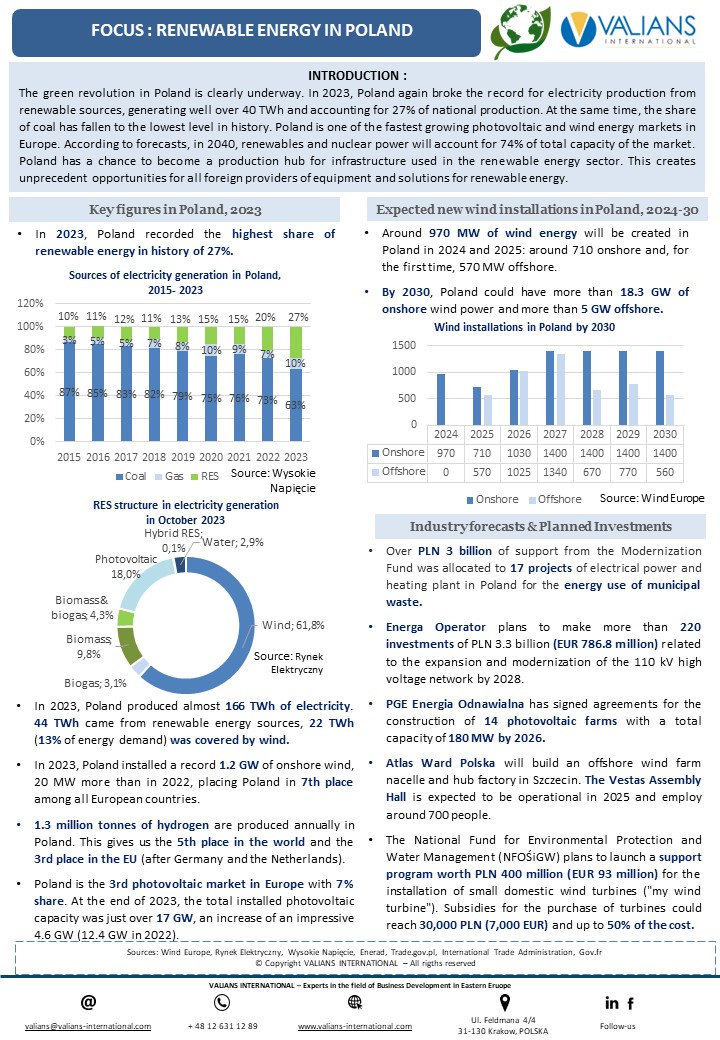
In 2024, Poland’s IT sector is experiencing remarkable growth, solidifying its reputation as a key hub for technology in Europe. The sector is projected to contribute approximately 8-9% to Poland’s GDP, with market values estimated between PLN 70 billion and PLN 85 billion. The software and IT services segment is particularly dominant, accounting for about two-thirds of the total market and trending towards a 70% share, reflecting a shift typical of advanced economies.

Current Market Dynamics

The demand for IT services has surged as businesses continue to adapt to digital transformation. This trend has been accelerated by the COVID-19 pandemic, which forced many traditional businesses to embrace digital channels. In 2024, the Polish IT sector is characterized by a diverse range of companies, including around 50,000 software firms, from small startups to large multinational corporations. Notably, major global players like Microsoft and Google have made significant investments in the Polish market. Microsoft launched its first cloud data center in Central and Eastern Europe in 2023, while Google announced a €590 million investment in a new office complex in Warsaw that will employ 2,500 people. These developments underscore Poland’s attractiveness as a destination for tech investment.

Labor Market Trends

Despite global economic challenges, Poland’s IT job market remains robust. The country boasts a talent pool of approximately 500,000 skilled IT professionals, making it an appealing location for tech talent. The entry of new enterprises and the expansion of Global Business Services have further increased job opportunities in the sector. Currently, IT professionals are increasingly prioritizing flexible working conditions and company culture when considering job changes. A survey revealed that many employees are not actively seeking new positions but remain open to lucrative offers. Salary continues to be a significant factor influencing job mobility.

Cybersecurity and Cloud Services

The rise in cyber threats has heightened the focus on cybersecurity within the Polish IT landscape. Companies are increasingly investing in cybersecurity solutions to protect against malware and phishing attacks. As digital transformation progresses, the need for robust cybersecurity measures will only grow. Cloud services are also thriving in Poland, driven by their cost-effectiveness and accessibility. The ongoing transition to cloud-based solutions is expected to continue shaping the market dynamics throughout 2024.

Government Initiatives

The Polish government is actively promoting digitalization through various initiatives aimed at enhancing the country’s technological infrastructure. Programs providing free laptops to schoolchildren and funding for local digitization projects reflect this commitment.

Opportunities Ahead
Looking forward, several key areas present significant opportunities for growth in Poland’s IT sector:
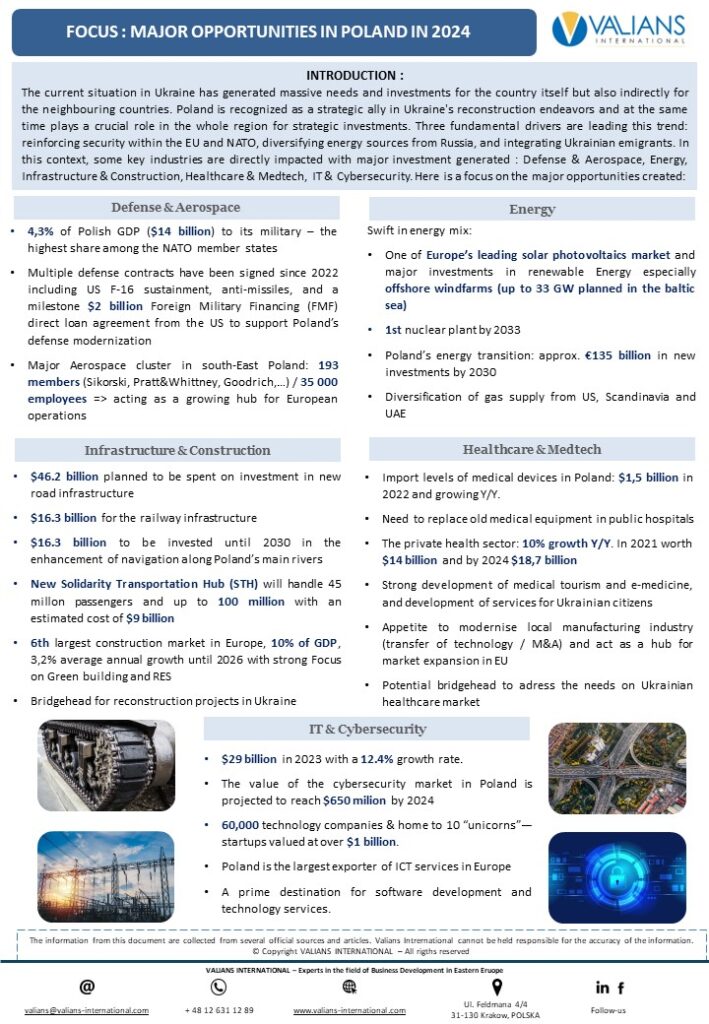
  • Cybersecurity: Increased demand for security solutions as cyber threats escalate.
  • Cloud Computing: Continued adoption of cloud technologies across various industries.
  • Internet of Things (IoT): Expansion of IoT applications in sectors like manufacturing and logistics.
  • 5G Development: Ongoing efforts to enhance telecommunications infrastructure.

Poland’s IT sector is poised for continued success in 2025, attracting both local and international investments while addressing the challenges posed by global economic conditions. The combination of a skilled workforce, supportive government policies, and growing demand for technology positions Poland as a vibrant tech hub in Central and Eastern Europe.

If you would like to learn more about the Polish IT landscape or explore potential partnerships, feel free to contact us. We’re here to help you navigate this exciting market!

Poland: Labor Market Trends & Forecast 2025

Poland has emerged as one of Europe’s key economic players, with its strong labor market and business-friendly environment making it an increasingly attractive destination for investment. In this article, we will explore the key trends shaping the Polish labor market in 2024, forecast what the market will look like in 2025, and provide valuable insights on salary expectations across industries, particularly for sales professionals.

Poland Today: A Growing Economy

Poland is home to a population of approximately 37.5 million, with its capital, Warsaw, housing over 1.86 million residents. In recent years, the country has witnessed robust economic growth, driven by its strategic location, skilled workforce, and stable economic policies. Poland’s GDP was 790 billion Euros in 2024, projected to grow to 829 billion Euros by 2025, with a steady growth rate of 3.5%.

The Polish economy is also characterized by a stable currency (Zloty), with 1 Euro currently worth 4.22 PLN. In terms of employment, the country enjoys a low unemployment rate of 5% in both 2024 and 2025, which signals a healthy labor market. The average gross monthly salary for Polish workers in 2025 is forecast to reach 8,673 PLN (approximately 2,030 Euros), marking a 7 to 8% increase from the previous year. The minimum wage is also set to increase to 4,666 PLN (about 1,106 Euros) in 2025.

Labor Market Highlights of 2024

In 2024, the Polish labor market was shaped by a variety of trends:

  1. Stable Unemployment: The unemployment rate remained steady at 5.1%, reflecting a strong demand for workers in diverse sectors.
  2. Hybrid Work Models: The trend towards flexible work arrangements became more widespread, with 65% of companies adopting hybrid work models. This shift was driven by employees’ desire for a better work-life balance, with 45% of workers preferring this system.
  3. Employee Retention: Employee turnover rates were reduced in 2024, with the average length of employment per position rising to 4.2 years, signaling improved job satisfaction and employee retention.
  4. Impact of Immigration Policies: Tightening immigration policies affected sectors that traditionally relied on foreign labor, such as transportation and construction. The number of registered foreign workers in Poland decreased by approximately 5% compared to 2023.

Poland’s Labor Market Outlook for 2025

Looking ahead to 2025, Poland’s labor market is expected to remain dynamic, but companies will face challenges in sourcing qualified candidates:

  1. Recruitment Activity: A staggering 86% of employers plan to hire in 2025, but 53% of them anticipate difficulties in finding the right talent. The demand for skilled workers, particularly in automation, robotics, and electrotechnics, will remain high.
  2. Salary Increases: Companies are expected to implement salary increases in 2025, with most hikes ranging from 7 to 8%. For sectors facing a shortage of skilled professionals, such as automation and robotics, salary increases of 10 to 15% are expected to attract top talent.
  3. Salary Transparency: By June 2026, Poland will implement salary transparency policies, requiring companies to disclose salary information to promote fairness and equity in compensation.
  4. Global Events and Political Factors: The ongoing conflict in Ukraine could potentially affect Poland’s labor market. The potential departure of Ukrainian refugees, who have significantly contributed to the workforce, may exacerbate labor shortages in certain sectors. Additionally, the political landscape in Poland, with presidential elections scheduled for May 2025, could affect the stability of immigration policies.

Salary Insights for 2025

Industry Trends: While salary expectations in Poland depend on industry, professional experience, and location, certain sectors are expected to see higher salary growth in 2025. The demand for professionals in automation, robotics, and electrotechnics is expected to outpace other industries, leading to more substantial salary increases.

Salaries by Sector: The average salary across Poland is expected to reach 8,673 PLN in 2025. However, certain sectors, such as IT, finance, and pharmaceuticals, will offer higher salaries, while industries like hospitality and retail are likely to offer lower compensation.

Key Findings for Employees: 60% of employees are actively seeking new job opportunities due to insufficient salaries, while 48% are motivated by a lack of career development prospects. Therefore, employees are not only looking for competitive pay but also for opportunities to grow within their roles.
Employer Perspective: Nearly 49% of employers are recruiting to accommodate business growth, while 35% are replacing departing employees. However, 53% of employers are concerned about the challenge of finding qualified candidates, highlighting the increasing competition for top talent in specialized fields.

The Impact of AI and Automation

Artificial intelligence (AI) is gradually transforming the Polish labor market. By 2025, 46% of employees are expected to work in environments where AI is already in use, with 53% of companies promoting AI adoption. While AI offers many benefits, including increased efficiency and productivity, it also raises concerns about job displacement.

In response to these concerns, many companies are investing in workforce upskilling programs to ensure their employees are equipped with the necessary skills for the future. AI-related fields such as data analysis, machine learning, and AI programming are expected to grow rapidly, driving demand for skilled professionals who can develop and manage AI systems.

Sales Positions and Salary Trends for 2025

Sales professionals are expected to see salary increases in 2025, with sectors such as pharmaceuticals, IT, and finance offering some of the highest salaries. For example, Sales Directors in these industries may earn up to 35,000 PLN per month, while other positions, such as Sales Managers and Representatives, can expect to see salaries ranging from 8,000 to 20,000 PLN, depending on experience and sector.

Salary increases are also anticipated for eCommerce and real estate sales professionals. Companies in high-demand industries will be offering competitive compensation packages to attract the best talent.

Conclusion: Adapting to Poland’s Evolving Labor Market

Poland’s labor market in 2025 is set to be dynamic, with strong economic growth and a high demand for skilled professionals. Companies must stay agile, adjusting their recruitment strategies to find and retain top talent in an increasingly competitive environment.

Salary increases will be common, particularly for specialized sectors like automation, robotics, and electrotechnics. Companies that embrace salary transparency and invest in workforce development, particularly in AI and automation, will be better positioned to thrive in this evolving market.

As businesses navigate these changes, they must remain mindful of external factors such as global events and political shifts. The ability to adapt and anticipate labor market trends will be key to maintaining success in Poland’s ever-evolving economy.

Contact us today to discuss how we can help you adapt your recruitment and workforce strategies for success in 2025 and beyond.

Overview of The Sourcing in Metalworking Market

The metal industry in Poland is a key pillar of the national economy, encompassing diversified sectors such as machining, welding and forging. With a long tradition of metal construction production, Poland continues to modernise thanks to significant transfers from the European Union and an attractive tax system. With a highly qualified, productive and abundant workforce in a country of 37 million inhabitants, the Polish market attracts a great deal of foreign direct investment. 🇵🇱💡

Minimum wage increase in Poland

On 1 July 2024, the gross monthly minimum wage in Poland was increased to PLN 4,300 (around EUR 1,000). This increase of +1.4% compared to 1 January 2024 and +19.4% year-on-year (y-o-y) marks a significant change for many workers.

🔍 Key figures :

  • 23.9% of employees, or 3.6 million people, are affected by this revaluation, according to the Ministry of Labour.
  • In the 1st quarter of 2024, the average monthly wage in the corporate sector rose by 14.4% year-on-year, reaching PLN 8147.38 (EUR 1895).

For 2025, the government is proposing a one-off minimum wage increase of 7.6% to PLN 4,626, in response to continued wage pressure.

This measure reflects Poland’s ongoing commitment to improving the living and working conditions of its citizens.

Renewable energy in Poland

Poland is at the forefront of the green revolution, breaking records in #renewableenergy production while reducing its dependence on coal to an all-time low. Renewables and nuclear power are forecast to dominate 74% of our energy market by 2040, and the opportunities for global suppliers in this sector are unprecedented. From major onshore wind installations to groundbreaking offshore projects, Poland is positioning itself as a European powerhouse when it comes to sustainable energy.
Join us in shaping a cleaner, greener future for #Poland and the world. 🇵🇱💡

🌟 𝗘𝘅𝗰𝗶𝘁𝗶𝗻𝗴 𝗡𝗲𝘄𝘀! 𝗣𝗵𝗿𝗼𝗻𝗲𝘀𝘆𝘀 𝗲𝗻𝘁𝗲𝗿𝘀 𝘁𝗵𝗲 𝗣𝗼𝗹𝗶𝘀𝗵 𝗺𝗮𝗿𝗸𝗲𝘁 𝘄𝗶𝘁𝗵 𝗩𝗔𝗟𝗜𝗔𝗡𝗦 𝗜𝗻𝘁𝗲𝗿𝗻𝗮𝘁𝗶𝗼𝗻𝗮𝗹! 🌟

We are excited to collaborate with Phronesys as they enter the Polish market! Our combined expertise and commitment to excellence will drive significant growth and innovation in this dynamic region.

The Phronesys’ mission extends beyond geographical expansion. The company is committed to guiding companies on their QHSE/ISO digitalisation journey and offer an all-in-one digital tool for managing Quality, Health, Safety, and Environment. They also specialize in digital transformation for QHSE/ISO management systems. From software implementation to consultancy, Phronesys drives organizations into a new era of efficiency.


Here’s to a successful and prosperous journey together! 🌟🚀

FOCUS: Major opportunities in Poland in 2024
We’ve compiled a document outlining the significant opportunities arising in Poland for 2024, covering various sectors and industries.
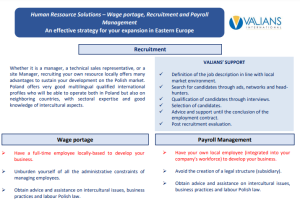
🛡️ Defense & Aerospace : Witness the surge in defense spending, with Poland leading NATO in military investment. Explore the aerospace cluster, home to industry giants.

🌿 Energy Revolution: Dive into Poland’s energy transformation boom, including ambitious plans for #renewableenergy – photovolatics and offshore wind farms, and the country’s first nuclear plant by 2033.

🏗️ Infrastructure : Experience the transformation with massive investments supported by EU funds in roadways, railways, and river navigation, and the New Solidarity Transportation Hub (STH) Mega project, spearheading growth in construction and green building.

🏥 Healthcare & Medtech Advancements: Tap into the healthcare sector, fueled by rising demand for medical devices, innovative treatments, and medical tourism.

💻 IT & Cybersecurity Hub: Poland’s tech ecosystem, boasting rapid growth in cybersecurity and IT services, with a thriving community of technology companies and unicorn startups.

The document is available here.

Overview of the key incentives for investment in 4 major CEE countries

In-depth overwiev of the investment landscape in Central and Eastern Europe (CEE), with a particular focus on four countries: Poland, Slovakia, Hungary, and Serbia. These countries have positioned themselves as magnets for large companies, fostering investor-friendly business environments complemented by a suite of compelling incentives.

Favorable tax regimes, financial grants, and supportive policies form the pillars of encouragement for large-scale investments. The governments in these countries have recognized the importance of attracting substantial capital and have strategically crafted incentives to bolster economic growth and development.

To learn more read this article prepared by Valians International in cooperation with CEIS.

New article about Healthcare Sector in Poland

With a growing demand for medical care and a real need for infrastructure modernization, the medical sector stands out as one of the most dynamic industries in Poland.

This sector presents numerous opportunities for the development of French and European businesses, particularly in the field of digital health.
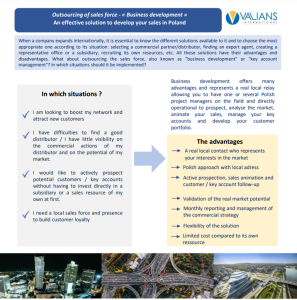
Valians International, in collaboration with DeviceMed magazine, has prepared an article outlining the development opportunities in the Polish medical sector.
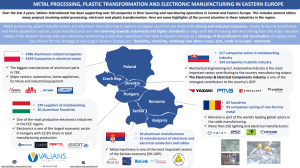
If you’re interested in learning more about this topic, we encourage you to read the full article here.

Focus : The medical industry in Poland

Boostée par les fonds européens et une réelle volonté de moderniser les infrastructures existantes, l’industrie médicale représente l’un des marchés les plus dynamiques de Pologne.

Il existe un besoin général de remplacer les vieux équipements médicaux dans les hôpitaux publics. Dans le même temps, les soins de santé privés se développent rapidement. Les domaines d’opportunité comprennent le besoin de thérapies et d’équipements de soins de santé innovants, d’équipements de soins dentaires et de dispositifs qui augmentent l’efficacité et réduisent les taux d’occupation des hôpitaux. Il est nécessaire de moderniser les équipements spécialisés tels que la dialyse, les simulateurs cardiaques, les équipements orthopédiques et les prothèses, etc.

Le tourisme médical se développe également rapidement et se spécialise dans certains domaines. Les soins dentaires, la médecine esthétique, l’ophtalmologie, le traitement de l’obésité et les soins aux personnes âgées connaissent tous une croissance rapide, et cette tendance devrait se poursuivre dans les années à venir: la Pologne, par exemple, a la population vieillissante la plus rapide d’Europe.

Pour en savoir plus, nous avons préparé un focus sur le sujet que vous pouvez télécharger ici.

Focus – Human Ressource Solutions in Eastern Europe

Optimizing long-term development in the Eastern European market can mean recruiting the right resources locally, whether they are managers, technical sales staff or even site directors. Poland has a wealth of highly qualified international profiles, fluent in several languages, capable of operating not only in Poland, but also in neighboring countries.

For more information, you can dowload this focus on human ressource solutions in Eastern Europe !

Any projects in Eastern Europe ? Contact us – valians@valians-international.com


Focus on Business development solution in Poland

During international development, it is essential for a company to be aware of the available solutions and choose the one that best suits its situation. Outsourcing the sales force, also known as “business development” or “key account management,” can be an interesting option to consider. This focus discusses the relevance of this approach and the situations in which it can be implemented.

For more information, you can download this focus on the business development solution in Eastern Europe.  Click here !

Any projects in Eastern Europe ? Contact us – valians@valians-international.com

Interview of Cédric Fromont by STRATEXIO

Poland and Eastern Europe are showing strong resilience and a great capacity to adapt. Our countries are at the heart of many strategic development issues, whether in the context of supply chain relocation or the opportunities that are emerging in the future reconstruction of Ukraine.
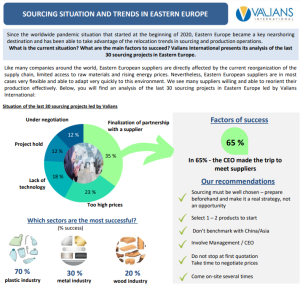
To learn more about these topics, we invite you to watch the interview of Cédric Fromont conducted by the Statexio club in which he discusses the various themes of the moment in our area, its opportunities and recommendations for successful development.
Questions, projects? Contact us : valians@valians-international.com

Focus : Metal processing, plastic transformation, and electronic manufacturing in Eastern Europe

Valians International has supported over 50 companies in the past three years with their sourcing and nearshoring initiatives in Central and Eastern Europe. These projects have covered various sectors, such as metal processing, plastics transformation, and electronics. Here are a few examples illustrating the current situation of these industries in the region.
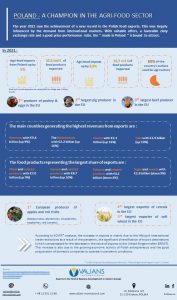
 For more information, you may download this focus on the metallurgy, plastics, and electronics sectors in Eastern Europe. Click here !

Any projects in Eastern Europe ? Contact us – valians@valians-international.com

Focus : Sourcing situation and trends in Eastern Europe

Since the beginning of the pandemic in 2020, the region has established itself as a key destination for nearshoring, benefiting from the trend of relocating sourcing and production operations. Through the analysis of the last 30 sourcing projects in Eastern Europe, you will find the success factors of these projects in the region.

For more information, you may download this focus on sourcing in Eastern Europe. Click here !

Any projects in Eastern Europe ? Contact us – valians@valians-international.com

Focus : Human resources solutions by Valians

We offer human resources solutions for your development in Eastern Europe. From HR and salary comparative study to HR organizational audit and personalized recruitment services, we help you optimize your human resources management and find the best talents to ensure your long-term success.

For more information, you can download this focus on human resources in Eastern Europe. Click here !

Any projects in Eastern Europe ? Contact us – valians@valians-international.com

Cedric Fromont accredited as Foreign Trade Specialist for AWEX (Wallonia) for the next 3 years

This certification allows Walloon companies to use funding support to rely on our consulting and support services in their development in Eastern European countries (Poland, Czechia, Slovakia, Hungary, Romania, Bulgaria, Serbia, Ukraine, Lithuania, Latvia)

A real recognition that comes in the continuity of our strategy of continuous improvement and implementation of high value-added services within VALIANS INTERNATIONAL to support the success of our customers in Eastern Europe.

Valians’ 10th anniversary seen by Maryline Bertheau-Sobczyk and Cédric Fromont

VALIANS INTERNATIONAL CELEBRATES ITS 10TH ANNIVERSARY!

Dear customers, partners, and friends, it’s already been 10 years since Valians International was created by Maryline Bertheau-Sobczyk and Cédric FROMONT

– 10 years of passion for our profession

– 10 years of trust in us and that we are by your side for the success of your development in Eastern Europe.

We thank you for this wonderful human and professional adventure. We are ready for the next 10 years of success in Eastern Europe!

See you soon,

Nearshoring of sourcing and production operations in Eastern Europe: Situation and major outcomes after 2 years

The worldwide pandemic situation that started at the beginning of 2020 has accelerated a global trend that emerged few years earlier of nearshoring sourcing and production operations. This was the consequence of a strategy of ”derisking” supply chain disruption: higher costs from Asia, diversification of sourcing options, made in Europe awareness and better control on logistic costs and delivery time.
 Companies from different industries (machinery, industrial equipment, retail, …) started to investigate other alternatives to China and Eastern Europe emerged as one of the major focus for European companies due to its closeness to European market with relatively low production costs.


 What is the situation after 2 years? Is Eastern Europe an alternative to China? What are the main factors of success and major challenges in sourcing in Eastern Europe nowadays?

 At Valians, we’ve been conducting sourcing and investment operations in Eastern Europe for over 25 years. From the beginning of the pandemic situation, we’ve been focusing our effort on ensuring access to reliable information and data in order to deliver short-time alternative to the Asian situation. This involved exhaustive identification of local suppliers, their access to raw materials, production capacities and availability, and also evaluation of best production location within the region via comparative investment and sourcing analysis.

 Sourcing in Eastern Europe is a complex and quite different process than in China. 1st of all, when you consider sourcing in Eastern Europe, you need to consider sourcing in over 15 different countries of different sizes, industrial know-how and cultures. It involves allocating many resources in identifying and qualifying reliable suppliers. In many cases, suppliers are not identifiable at 1st sight (no major fairs like Canton, no catalogues of suppliers, very few and low matured sectorial associations).

 2ndly, access to reliable information on suppliers is often quite limited. Without a local presence speaking local language and culture, it makes it very challenging to collect data.

 3rdly, suppliers from Eastern Europe are in most cases of lower size and production capacities than in China. It means that volumes cannot easily be transferred from China to Eastern Europe with 1 supplier. Limited financial assets of suppliers will also often limit them to expand production capacities to reach high volumes expected. Eastern Europe is rather a complementary option to China in a strategy of derisk than a total replacement option in the short term.

 During these last 2 years, our teams located in the different countries in Eastern Europe has been travelling intensively: Poland, Czech Republic, Hungary, Serbia, Romania, … to strengthen our position with our local network including public institutions – investment and export agencies. We edited several materials on sourcing opportunities per major industry in each country in Eastern Europe, and presented several webinars. During this period of time, we provided support to over 30 companies looking to nearshore production operations in Eastern Europe.

 Major outcomes: flexibility and resilience of Eastern European Suppliers

In the period between 2020 and beginning of 2021, most of the projects were mainly disrupted by the Pandemic situation as many factories were on a hybrid phase (limited number of workers present on site). But in the meantime, many Eastern European suppliers managed to adapt to the situation and to rapidly be competitive towards new demands from European companies, thanks to the fact that they had production capacities available and to the competitiveness of local currency. Some very successful operations were conducted by our team, especially in the plastic and packaging industry.

 From mid-2021, many Eastern European factories started to be at full capacity. In the meantime, worldwide situation on lack of raw materials and pressure on labour costs generated a need to identify new sources of suppliers.

 Thanks to our long-standing experienced team of partners present in each Eastern European country, we managed to collect in-depth reliable sourcing opportunities and identify a very large database of potential suppliers in most of the major industries. This allows us to get fast access to potential sources of suppliers and get a comprehensive and comparative view on the different sourcing options for our clients in the whole region.

 Like many companies in the world, Eastern European suppliers are directly hit by the current supply chain reshifting and limited access to raw materials. Nevertheless, Eastern European suppliers are in most cases very flexible and capable to adapt very rapidly to this environment. We see many suppliers willing and capable to reshift efficiently their production (automotive to consumer goods, finish goods to bathroom elements, …).We currently conduct successful operations for our clients in metal-working and aluminium parts, plastic consumer goods and home interior.

 Keys to success

A successful nearshoring of sourcing and production activities in Eastern Europe should be based on:

–       Being aware of the diversity of the industrial landscape of each country

–       Not comparing to the ”traditional” sourcing process from China

–       Focusing on generating successful landed costs operations (included direct and indirect costs), and rather on small volumes to start with, as a complement to China

–       Willing to allocate time and resources on identifying and qualifying the right suppliers

–       Going through a preliminary comparative sourcing analysis between the different countries in Eastern Europe to focus on most promising wins

–       Being supported by local experts on the ground having already a deep knowledge of industrial landscape and database of suppliers and with the capacity to coordinate the project in the whole region

 Trends and prospects 

The current situation in Ukraine and Russia will generate new challenges for Eastern European suppliers in gaining access to raw materials and shows once more the importance of diversifying its supply chain options. Eastern European suppliers show strong resiliance to external factors and their capacity to find short term solutions will definitely be an advantage in the current context.

Additionally, we currently see opportunities for strategic investment through acquisition of local suppliers in the region who are often willing to grow but usually lack of financial capacities. This solution enables foreign companies to secure production operations within Europe, using competitive and reliable existing production capacities.

click here for the pdf version : Nearshoring of sourcing and production operations in Eastern Europe: Situation and major outcomes after 2 years PDF

Poland a champion in the agri-food sector

2021 was a great year for the Polish food industry.

Thanks to an impressive amount of food exports from Poland, the country was able to set a record in this field. This impressive productivity is largely due to attractive prices and a favorable ZLOTY exchange rate. With all these points, the “made in Poland” can only attract!

For the occasion, we have prepared an infographic that highlights the key achievements of the Polish food industry.

We are at your disposal to answer your questions – contact us at: valians@valians-international.com

POLAND – A CHAMPION IN THE AGRI-FOOD SECTOR (02.22)

REPLAY – POLAND – Meet the largest marketplace of a booming e-commerce economy with Allegro and Business Finland

In 2020, the e-commerce market in Poland will experience the strongest growth for several years. In addition, this market is forecast to grow at double-digit rates over the next three years. Our Managing Partner, Cédric FROMONT was glad to give Finnish companies from Business Finland its expertise of the e-commerce market in Poland in collaboration with the largest marketplace in the country Allegro.pl


Newsletter

July 2023

With the focus of the month: Human Ressource solutions in Eastern Europe !

Newsletter Valians – May 2023

Newsletter Valians – March 2023

Newsletter Valians – January 2023

Newsletter Valians – November 2022

Newsletter Valians – October 2022

Newsletter Valians – July 2022 

Newsletter Valians – June 2022 

Newsletter Valians – March 2022 

Newsletter Valians – January 2022

Newsletter Valians – November 2021 

Newsletter Valians – September 2021

Newsletter Valians – July 2021

Newsletter Valians – May 2021

Newsletter Valians – March 2021

Newsletter Valians – January 2021