If you’ve been keeping an eye on European markets, you’ll know that Poland is no longer just a “promising” economy; it is a powerhouse in full motion. Valians International recently hosted an insightful webinar on 20th January, “Poland in Motion: Growth Drivers 2026,” led by Cedric Fromont, Managing Director, which broke down the complexity of this market into actionable insights.
We provided a comprehensive analysis of Poland’s economic transformation. Then, we outlined the strategic roadmap for foreign businesses aiming to penetrate one of Europe’s most resilient markets.
If you missed the live session, here is the essential recap of why 2026 will be a pivotal year for international players in Poland.
Poland 2026: Growth drivers and key export opportunities, with insights into the country’s evolving investment landscape and export potential.
Beyond the Statistics: A Story of Unstoppable Momentum
We often talk about GDP, but what does 4% annual growth actually look like over 30 years? Cedric shared a perspective that puts things into focus: Poland has evolved from a low-cost sourcing destination into a “trillionaire economy,” now ranking 20th in the world.
Cedric highlighted that the most human element of this growth is the rise of the Polish consumer. Imagine a market where the average gross salary has surged from $50 in 1990 to roughly $2,300 today. We are witnessing the birth of a sophisticated, demanding middle class, which is the 40 million people looking for quality, innovation, and global standards.
Poland’s economic transformation (1995–2025), from a sourcing destination to a modern investment, consumption, and industrial growth market.
The 5 Strategic Pillars of Poland’s Growth Engine 2026
In the webinar, Cedric outlined five strategic reasons why Poland is becoming the cornerstone for European supply chains:
A balanced economic engine: Unlike nations dependent on a single sector, Poland thrives on a healthy mix of heavy industry, advanced services, and a resilient agricultural base.
The new European corridor: From aerospace to automotive, Poland is the “Main Gate” connecting Asian manufacturing with European consumers.
The “EU Recovery” catalyst: This is the big one for 2026. The influx of EU funds (RRF) is finally hitting the ground, fueling massive projects in infrastructure and the green energy transition.
Talent as a competitive edge: It’s no longer about “cheap labor”; it’s about “smart labor.” Poland’s high density of universities has made it the go-to hub for R&D and shared service centers.
Strategic nearshoring: As global companies move production closer to home, Poland is the natural beneficiary, and it stands as the primary logistical base for the future reconstruction of Ukraine.
Main growth drivers in Poland include strategic location, EU funding, skilled labor, and a central role in European and global supply chains.
The 2026 Window: Energy, Tech, and Logistics
One key takeaway from the webinar was the sheer scale of the Green Transition. With massive investments in offshore wind and nuclear energy, the doors are wide open for technology providers and smart manufacturing solutions.
Simultaneously, the e-commerce explosion is demanding a total digital overhaul of the logistics sector. If your business provides smart automation or sustainable tech, the timing couldn’t be better.
Key export opportunities in Poland in 2026, highlighting high-growth sectors such as renewable energy, advanced manufacturing, digitalization, and logistics infrastructure.
Expert advice:
During the Q&A session, Cedric emphasized that entering Poland is not just about exporting goods; it is about building a presence. “Poland is a market of 40 million people, but it is also a platform for the entire CEE region,” he remarked. Thus, to succeed in Poland 2026, “It requires presence, localization, and a deep understanding of the local ecosystem,” – he added, because “Poland is not a market you can win from a distance.“
For localization: Tailoring products and marketing to Polish cultural nuances.
For presence: Leveraging local expertise to navigate the regulatory and logistical landscape.
Final Thoughts
The “Poland in Motion” webinar concluded with a clear message: the window of opportunity for 2026 is opening now. With a steady GDP growth forecast of 3.5% and a revitalized investment climate, Poland is no longer just an option; it is a necessity for any global growth strategy.
At Valians International, we’re here to ensure you don’t just watch this motion from the sidelines. Our experts continue to lead the way in providing market intelligence and operational support, ensuring your business is not just a spectator, but a key player in Poland’s bright economic future.
Whether you are looking for deep-dive market research, looking to establish a local footprint, or seeking the right partners to scale your operations, we are here to bridge the gap.
Cédric Fromont is Managing Director of Valians International and an expert in international expansion across Poland and Eastern Europe. With more than 20 years of experience, he has advised companies, public institutions, and executives on market entry, export development, sourcing, and investment strategies in the region.
Each year, Cédric and his teams lead over 150 projects across Eastern Europe, supporting businesses through market research, strategic consulting, local business development, and operational setup. Under his leadership, Valians International has supported 900+ companies, operates with 40+ project managers in 20 countries, and maintains a strong on-the-ground presence with three offices in Poland.
Driven by a culture of performance and continuous improvement, Cédric is also the co-founder of Globallians, a global network of accredited international expansion experts active in more than 70 countries.
Discover why supply chain diversification in CEE is accelerating. Explore key advantages, industry trends, and strategic insights for building resilient operations in Europe 2026.
Poland and the wider Central & Eastern Europe (CEE) region have become key destinations for international companies seeking sustainable growth in Polandand long-term expansion within the European Union. Supported by strong economic fundamentals, competitive operating costs, and access to highly skilled talent, Poland plays a central role in regional growth strategies across manufacturing, logistics, technology, and advanced services.
As the largest economy in CEE and a gateway to the EU Single Market, growth in Poland is increasingly driven by nearshoring, infrastructure investment, and rising domestic demand. At the same time, neighboring CEE markets offer complementary advantages that allow companies to scale efficiently across Europe.
However, achieving growth in Poland requires more than market interest. Companies must understand local business practices, competitive dynamics, and on-the-ground execution realities to succeed.
To explore these opportunities and challenges, we spoke with Mrs Karolina Tadla, a Senior Project Manager at Valians International, who has supported hundreds of companies in evaluating, entering, and scaling their activities across the region.
Interview with Karolina Tadla, Senior Project Manager at Valians International
The Poland’s Central Transport Hub (CPK) is a strategic mega-project planned for the coming years.
From your experience, what makes Poland and the CEE region stand out as a destination for international expansion?
Poland and CEE stand out for international expansion due to several key factors. Poland serves as Europe’s logistics gateway with its central location, upgraded infrastructure, and the Central Transport Hub (CPK) – a strategic mega-project, planned for the coming years, featuring a mega-airport and high-speed rail connecting Western markets to growth corridors.
Poland offers CEE’s largest domestic market (nearly 38 million consumers) with expected 3-3.5% GDP growth in 2026, low unemployment, and rising wages fueling demand. The region combines a multilingual skilled workforce, competitive CIT for SMEs, full EU single market access, and record FDI from multinationals like Google and Microsoft.
What are the most dynamic sectors right now in Poland and the wider CEE region?
Poland and CEE excel in high-tech and industrial sectors fueled by EU funds and nearshoring. Top performers include: – Manufacturing: leads with strong revenues and €12B+ FDI driving nearshoring from Germany and Western Europe. – Defense & Aerospace: Poland’s fastest-growing strategic sector with defense spending over 4.5% GDP – NATO’s highest relative commitment. – Logistics: dominates with a $50B+ market with massive warehouse expansion, Europe’s largest freight share – perfectly positioned for manufacturing/IT/defense supply chains. – IT: over 430K BPO/SSC jobs and Google/Microsoft data centers, delivering the highest quality at CEE cost advantage. – Medical & MedTech: rapid growth with substantial government healthcare funding through 2026, emphasizing AI diagnostics and digital transformation.
When companies first explore these markets, what common misconceptions or mistakes do you often see?
One of the most common misconceptions I encounter is that CEE markets offer the same low-cost manufacturing advantages and massive scale as Asia, without the associated risks. While our labor and operational costs are competitive (often 30-50% lower than Western Europe), EU quality standards, regulatory compliance, and logistics add layers of complexity that can erode those savings if not managed properly.
Another factor is that each CEE market has its own unique dynamics, so companies entering should first study the local landscape and craft tailor-made offerings. These markets are just as competitive as anywhere else in Europe; success depends on grasping local buyer preferences, quality expectations, and budget realities.
Finally, CEE companies don’t like to be kept waiting too long for offers. Local buyers prioritize quick responses and customized adaptations, making collaboration with an experienced on-the-ground partner essential for prosperous development.
How does Valians International help foreign businesses successfully enter and grow in Poland or CEE?
Valians International serves as your local partner, guiding companies through market entry, regulatory compliance, talent acquisition, and sales acceleration across Poland and CEE.
We provide targeted prospecting, ongoing operational monitoring with reporting, key account management, commercial network development, on-site support, part-time expert deployment, full sales/distribution oversight, order tracking, and even company domiciliation. This end-to-end approach enables our clients to scale efficiently in complex CEE markets.
Could you share an example of a project where local expertise really made a difference to the client’s success?
A French SME distributing stainless steel and titanium struggled to grow Polish sales amid language barriers and time constraints. Valians International deployed two part-time project managers to prospect 250+ accounts, run sales tours with 50 in-person meetings, and attend key trade shows. This opened 10 new accounts, boosted sales by +150%, and led them to hire our full-time salesperson for ongoing expansion. The company continues boosting its sales on the Polish market, which we consider a major success.
In your view, what key factors determine whether a business will succeed or struggle when entering CEE markets?
Success in CEE markets depends on three key factors, backed by practical steps we’ve seen work. – Deep local knowledge and complete market adaptation: Leverage local sales resources, train local teams, and fully adapt your commercial approach to cultural and regulatory realities. – Agile execution with total commitment: Engage your commercial, technical, and industrial teams for timely offers, follow-ups, on-site visits, and order management—while staying flexible to listen and adapt to market feedback. – Clear roles and long-term partnerships: Let local experts like Valians International handle client contact and prospecting while you focus on negotiations and back-office support, This combination builds trust, ensures speed, and drives sustainable growth.
Looking ahead, what trends or opportunities should companies watch closely in 2026 and beyond?
Looking ahead to 2026 and beyond, companies should watch these key trends in CEE markets. – Nearshoring will accelerate through Poland’s strategic logistics hubs, bringing supply chains closer to Central and Eastern Europe. – AI-driven innovations and Industry 5.0, alongside Poland’s defense expansion, will reshape manufacturing and security. – EU Green Deal funds targeting CEE renewables and decarbonization efforts will impact transformative investments in sustainable energy.
Nearshoring will accelerate through Poland’s strategic logistics hubs, bringing supply chains closer to Central and Eastern Europe.
Conclusion
Poland has firmly positioned itself as one of Europe’s most attractive destinations for international expansion, offering companies a rare combination of market size, stability, and long-term opportunity. As this interview highlights, growth in Poland is not driven by cost advantages alone, but by strategic execution, local adaptation, and strong on-the-ground partnerships.
However, as this interview with Mrs. Karolina Tadla illustrates, entering Poland or CEE is not a one-size-fits-all exercise. Each market has distinct regulatory frameworks, buyer expectations, and competitive dynamics. Companies that succeed are those that combine a clear market entry strategy with deep local knowledge, fast commercial execution, and reliable on-the-ground support.
As nearshoring, digitalization, defense investment, and green transition accelerate across CEE, the region offers not only cost efficiency but long-term growth opportunities. With the right local partner, businesses can turn these structural advantages into sustainable commercial success.
Considering an expansion or acceleration in Poland or the CEE region? Connect with the team at Valians International to evaluate your market entry strategy, identify priority sectors, and build a scalable presence with on-the-ground execution support.
About the Expert
Karolina Tadlais a Senior Project Manager at Valians International, where she supports international companies expanding into Poland and the wider Central & Eastern Europe (CEE) region.
She specializes in market entry strategy, local sales development, and operational execution, working closely with clients across manufacturing, logistics, technology, and industrial sectors. With hands-on experience managing on-the-ground projects and commercial development in CEE markets, Karolina brings practical insights into how foreign companies can adapt, scale, and succeed in complex European environments.
Discover why supply chain diversification in CEE is accelerating. Explore key advantages, industry trends, and strategic insights for building resilient operations in Europe 2026.
Poland import regulations are essential knowledge for any business importing goods into the European Union. In 2026, Poland further strengthens its position as a key gateway for EU trade, supporting regional distribution, nearshoring strategies, and cross-border supply chains. As a result, effective management of imports in Poland directly affects costs, delivery timelines, and operational continuity.
Although imports in Poland follow EU customs law, local enforcement, VAT mechanisms, and inspection practices require careful preparation and attention to detail. Companies that overlook these details often face delays, penalties, or unexpected tax exposure.
In this article, we provide key Poland import regulations, procedures, and practical considerations needed to manage import operations in Poland efficiently and compliantly throughout 2026.
Mandatory digital reforms in Poland are expected to impact importers in 2026 (KSeF & SENT) | Source: European Commission
Dual Legal Framework: EU Rules and Polish Enforcement
Imports in Poland operate under a dual legal framework. On one level, all import activities are governed by EU-wide customs and trade regulations. On another level, national authorities are responsible for enforcement and daily operational control. In Poland, this role is carried out by the National Revenue Administration (KAS).
The core legal frameworks applicable to imports in Poland include:
Union Customs Code (UCC), which defines customs procedures, declarations, valuation, and origin rules across the EU.
EU VAT Directive, which sets the principles for importing VAT treatment and reporting.
EU product safety and market surveillance regulations, which ensure that goods placed on the EU market meet technical and safety requirements.
While these rules are harmonized at EU level, their practical application differs by country. In Poland, KAS oversees customs clearance, risk analysis, inspections, and post-clearance audits. As a result, documentation requirements, inspection frequency, and processing timelines may vary compared to other EU Member States.
For businesses, this means that compliance cannot rely solely on EU-level knowledge. Companies must also understand Poland-specific customs practices, digital systems, and enforcement priorities. Failing to align with local procedures can lead to shipment delays, additional controls, or financial penalties.
Understanding both EU regulations and Polish enforcement realities is therefore essential to managing imports in Poland efficiently and without compliance risk.
Poland Imports Regulations: Customs & Data Systems
PUESC System
All import operations in Poland rely on PUESC (Polish Electronic Services for Customs and Excise). PUESC is the main online gateway to communicate with Polish customs for tasks related to importing into Poland.
PUESC is required for several tasks, such as:
Creating and managing customs-related accounts for your company.
Submitting customs and excise forms through connected services.
Handling SENT reporting obligations for monitored transport.
Receiving official notifications and requests from customs authorities.
In practice, most delays happen when companies treat PUESC as an “administrative step.” It is not. Data consistency matters. Small mismatches can trigger checks. For example, company details, authorizations, and shipment references must align across customs declarations, invoices, and logistics documents.
To operate smoothly, importers should:
Register early and assign internal owners for access control.
Set up user roles and permissions (who can file, approve, and view).
Ensure your customs broker has the correct authorization in PUESC.
Keep company data updated (address, VAT status, contacts).
This preparation reduces downtime and prevents last-minute clearance issues.
Importer of Record (IOR): Roles and Responsibilities
The Importer of Record (IOR) is the party legally responsible for goods imported into Poland. This is not only a customs role. It also affects VAT, product compliance, and audit exposure. Therefore, choosing the right IOR model is a strategic decision.
The IOR may be:
A Polish-registered company.
An EU-based entity registered for relevant obligations.
A non-EU company using an authorised representative or partner structure.
The IOR is responsible for key obligations, including:
Submitting the customs declaration and ensuring it is accurate.
Paying import duties and import VAT.
Ensuring correct HS classification and customs value.
Keeping compliance documents available for inspections and audits.
Ensuring product compliance before placing goods on the EU market.
Many companies assume the logistics provider “handles the import.” In reality, the IOR carries legal responsibility even when a broker files on its behalf. That is why governance matters.
Importer of Record (IOR) is the party legally responsible for customs, VAT, and product compliance for goods imported into Poland.
Customs Procedures and Core Documentation
To import into Poland, you need both the right procedure and the right documents. Missing one element can cause a shipment to stop. That is why preparation must happen before goods leave the country of origin.
Core documentation usually includes:
EORI number (EU-wide importer identification).
Customs declaration (often SAD-based structure).
Correct HS code classification for each product.
Customs value calculation, including related costs.
Proof of origin, when preferential tariffs are claimed.
Transport documents (CMR, bill of lading, airway bill).
Commercial invoice and packing list.
For smooth operations, many importers use a “pre-clearance routine”:
Validate HS code and value before shipment.
Confirm whether original proof is needed.
Ensure invoice data aligns with customs declaration fields.
Confirm the IOR model and broker mandates.
Therefore, this approach reduces border delays and rework.
Import Licences and Restricted Goods
Not all products can be imported with standard customs clearance. Some goods require extra permits, approvals, or special checks.
The regulatory landscape is constantly evolving due to new EU mandates. Starting January 1, 2026, the Carbon Border Adjustment Mechanism (CBAM)enters its definitive phase. This requires importers of carbon-intensive goods (such as iron, steel, aluminium, cement, and fertilisers) to register as an ‘Authorised CBAM Declarant,’ declare emissions data, and purchase corresponding CBAM certificates. Non-compliance with CBAM obligations will result in penalties or even import prohibitions.
Additionally, these requirements apply due to security, health, or strategic controls.
Common categories include:
Dual-use goods, which can have civilian and military applications.
Chemicals, especially those regulated under REACH or special controls.
Pharmaceuticals and medical-related products, depending on classification.
Agricultural and food products are subject to veterinary or phytosanitary rules.
Goods under quota systems, anti-dumping measures, or sanctions regimes.
This is where many importers face unexpected delays. The shipment arrives, but the permit is missing. Customs then detains the goods. Storage charges increase quickly. Delivery schedules collapse.
A practical compliance step is to run a “restriction scan” during sourcing:
Is the product controlled at EU level?
Does Poland require local permits or registrations?
Are there quota limits or anti-dumping duties?
Are there labeling requirements in Polish or EU format?
If the answer is yes, licensing should start early. Processing times vary. In many cases, you should plan weeks, not days.
The section is often where cost surprises happen. Import costs are not only about duties. VAT treatment and cash flow matter just as much.
Import Duties and Tariffs
Poland’s import tariffs follow EU rules. Duty rates depend on:
the HS code,
the country of origin,
trade agreements, and
trade defense measures (such as anti-dumping duties).
Preferential tariffs may apply if valid proof of origin is provided. Without it, the standard duty applies. Therefore, original documentation should be treated as a financial lever, not paperwork.
Import VAT
Import VAT is charged on goods entering Poland. In many cases, VAT can be reclaimed. However, timing matters. If VAT is paid at the border, cash is locked until recovery.
Poland offers a strong mechanism to improve liquidity: Postponed VAT accounting (Article 33a of the Polish VAT Act). This allows eligible importers to declare import VAT in their VAT return instead of paying it upfront.
The approach can significantly improve cash flow. It is especially valuable for high-value imports or frequent shipments. However, conditions apply. Reporting must also be precise. Incorrect reporting can lead to audits or loss of benefits.
A strong VAT readiness checklist should confirm:
Eligibility for postponed VAT accounting.
Clean VAT reporting history and documentation discipline.
ERP alignment between customs declarations and VAT returns.
Broker and accounting coordination.
For companies scaling imports in Poland, VAT strategy is not optional. It directly impacts working capital and margin protection.
EU vs. Poland Import Compliance Mini Checklist – Key compliance areas to watch out for when importing into Poland.
Best Practices to Achieve Maximum Efficiency in Poland Imports
To remain compliant and operate efficiently under Polish import regulations, companies should adopt a structured and proactive approach.
Key best practices include:
Preparing a detailed import compliance checklist by product category.
Validating HS codes and product compliance requirements early in the supply chain.
Using the Postponed VAT accounting scheme when eligible to optimize cash flow.
Preparing for Digital & Carbon Mandates: Proactively adapt accounting systems for the KSeF e-invoicing mandate and assess if products fall under CBAM, establishing procedures for compliance and data collection by January 2026.
Monitoring transport requirements, particularly the SENT system expansion in March 2026, if shipping clothing, footwear, or monitored sensitive goods.
Working closely with experienced and certified customs brokers and advisors.
Actively monitoring regulatory updates issued by KAS and EU institutions.
Together, these measures help reduce clearance delays, limit compliance risks, and protect operating margins.
Conclusion
In 2026, mastering Poland’s import regulations is no longer optional. Poland remains a strategic gateway into the European Union, but rising regulatory complexity, digital reporting requirements, and stricter enforcement mean that compliance now plays a direct role in cost control, delivery reliability, and operational scalability. The continuous growth of Poland imports and exports confirms its critical role in the European supply chain.
Valians International is a consulting and operational support company focused on Eastern European markets, providing tailored solutions and assisting clients at every stage of their market development, driven by a strong service ethos and results-oriented culture.
With more than 40 multilingual consultants implementing our quality control procedures in over 18 countries, we are able to coordinate projects across multiple countries simultaneously and provide global, and always personalized, operational support.
Discover why supply chain diversification in CEE is accelerating. Explore key advantages, industry trends, and strategic insights for building resilient operations in Europe 2026.
Supply chain diversification in Central and Eastern Europe (CEE) is becoming a priority as Europe shifts from efficiency to resilience. Between 2023 and 2026, the European Union (EU) prioritizedsupply chain resilience at the center of its industrial agenda. According to the European Parliament Research Service (2025), the EU is shifting away from an “efficiency-first” model and encouraging companies to diversify their suppliers, expand regional production, and enhance the overall diversification of supply chain networks.
This shift is reshaping the role of the Central and Eastern Europe region. With strong engineering talent, competitive costs, and fast access to major EU markets, CEE is evolving from a peripheral zone into a strategic pillar of European industry. Its logistics capacity is also growing quickly, which further strengthens the region’s position and highlights the benefits of supply chain diversification for companies operating across Europe.
At Valians International, we support companies rethinking their European footprint. More businesses now see CEE as a key foundation for building stable, future-ready networks and improving supplier diversification strategies. In this article, let’s explore the opportunities and strategic value behind diversification in supply chain decisions in CEE.
CEE’s Strategic Advantages for Supply Chain Diversification
The global supply chain model has changed rapidly over the past few years. Long-distance logistics, single-region dependency, and cost-only decisions no longer provide the stability companies need. As a result, resilience has become a top priority.
Therefore, supply chain diversification is now a priority for companies operating in Europe. CEE stands out for several strategic reasons that reflect the growing benefits of supply chain diversification in a volatile global economy.
Geographic advantages: Faster access to Europe’s core markets
CEE’s location is one of its strongest assets. The region sits at the intersection of major European trade corridors and allows companies to reach key markets quickly.
From CEE, goods reach Germany, France, Benelux, and Scandinavia in around 24–72 hours.
Goods can travel to Germany, France, the Benelux region, and Scandinavia within 24 to 72 hours by road.
Key TEN-T corridors, including the Baltic–Adriatic and North Sea–Baltic routes, improve speed and reliability.
This proximity reduces transport costs, limits exposure to global shipping disruptions, and supports Just-in-Time and Just-in-Sequence production models – two approaches frequently discussed in the European supply chain summit series in recent years.
According to the CTP Industrial Paper (2025), logistics efficiency is now one of the top decision factors for European manufacturers considering relocation. As a result, CEE gives companies a faster and safer route to European consumers.
Skilled workforce with competitive operating costs
CEE offers a strong labour market for industrial and engineering operations. The region is known for:
High levels of technical education.
Strong engineering and R&D capabilities.
Multilingual talent.
Competitive labour costs compared to Western Europe.
Eurostat highlights that companies relocating to CEE typically achieve 30–40% lower labour costswhile maintaining high productivity levels. This reinforces the benefits of supply chain diversification, especially when balancing cost efficiency with workforce capability.
Moreover, CEE countries consistently invest in STEM programs and vocational training. Therefore, manufacturers find it easier to build specialized teams for automotive, electronics, machinery, or medical devices.
Rapidly expanding industrial and logistics infrastructure
CEE’s industrial real estate market has grown significantly in recent years.
Poland alone surpassed 30 million m² of modern industrial and logistics space in 2025 (CTP, 2025).
Romania, Czech Republic, and Hungary continue to report double-digit growth in warehouse absorption (IO Partners, Q2 2025).
Additionally, the region is expanding into intermodal terminals, cross-border rail systems, and inland hubs. These developments strengthen its position as a European manufacturing and distribution base.
Because of this expansion, companies can scale faster and manage inventory more efficiently.
Integrated and predictable regulatory environment
Another advantage is that CEE operates within the European Union’s regulatory framework. This provides:
Predictable labour law.
Consistent product and technical standards.
Strong IP protection.
Full access to the EU Single Market.
The European Commission’s industrial strategy updates emphasize that EU-level regulation helps companies simplify compliance, especially when shifting production closer to Europe.
For international investors, this creates a stable and transparent environment.
Strong manufacturing ecosystems and industrial clusters
Many CEE countries host well-developed clusters that attract global suppliers and OEMs. Examples include:
Automotive clusters in Poland, Slovakia, Czech Republic, and Hungary.
Electronics and EMS clusters in Czech Republic, Romania, and Poland.
Aerospace and machinery hubs in Poland and Romania.
Life sciences and MedTech clusters in Poland, Hungary, and Slovenia.
These clusters reduce supply chain fragmentation and allow manufacturers to integrate quickly into existing networks. Consequently, companies enjoy shorter onboarding times and improved supplier diversification options across the region.
Governments in Poland, Hungary, Romania, and Slovakia also offer national incentives for high-tech and green manufacturing.
This combination of EU and national support strengthens the long-term viability of industrial relocation projects.
To sum up, global manufacturers face new risks: higher volatility, transportation bottlenecks, and pressure to localize strategic production. In this context, CEE offers proximity, resilience, quality talent, a strong industrial base, and regulatory stability.
Together, these factors make CEE one of Europe’s most attractive destinations for companies seeking to diversify supply chains and build a regional production model that supports long-term growth.
Key Industries Driving the Shift
Supply chain diversification in CEE is not happening evenly across all sectors. Instead, a few strategic industries are driving most of the momentum. These sectors benefit the most from the region’s proximity, skilled workforce, logistics capabilities, and alignment with EU industrial priorities.
Below are the industries where CEE is becoming a core part of Europe’s future supply chain architecture.
Automotive & EV value chain
The automotive sector remains the backbone of CEE’s industrial economy. Countries like Poland, Slovakia, Czech Republic, and Hungary are deeply integrated into Europe’s automotive ecosystem.
Key advantages:
Strong Tier-1 and Tier-2 supplier networks.
Mature assembly lines and engineering capabilities.
Proximity to German OEMs and Western European markets.
According to ACEA and regional industry statistics:
These investments support Europe’s broader EV transformation. As a result, CEE is becoming a critical hub for the European electric mobility supply chain.
Electronics & Semiconductors (EMS)
Electronics and electrical manufacturing services (EMS) have expanded significantly across the region. Countries like Czech Republic, Poland, Romania, and Hungary offer strong technical talent and competitive operating costs.
Drivers of growth:
Rising demand for nearshored EMS capacity.
Need for shorter lead times for European electronics brands.
The EU is pushing for semiconductor resilience.
Strong base of engineering and mechatronics graduates.
Therefore, electronics and semiconductor-related industries see CEE as a natural location for regional diversification.
Machinery, Metalworking & Industrial components
This sector is one of CEE’s historical strengths. Companies from Germany, Italy, and Scandinavia continue to relocate parts of their component manufacturing to the region.
The reasons are clear:
Skilled mechanical engineers.
High precision capabilities.
Strong machine-building tradition.
Lower labour cost vs. Western Europe.
Reliable supplier networks.
According to IO Partners (Q2 2025), industrial components and machinery remain among the top 3 demand drivers for new industrial space in Poland and Czech Republic.
Consequently, CEE is ideal for companies seeking to shorten supply chains without compromising quality.
Pharmaceuticals & Medical devices
Hungary, Poland, Slovenia, and Czechia are strengthening their life sciences clusters. These sectors rely heavily on regulatory stability, quality control, and access to skilled scientific talent, all of which CEE provides.
Key strengths:
Strong tradition in R&D and chemistry.
Compliant with EU Good Manufacturing Practices.
Growing MedTech assembly and component production.
Increasing demand for nearshored sterile packaging and medical electronics.
EU policies promoting strategic autonomy in critical health goods further support the growth of these sectors.
For this reason, pharmaceutical and MedTech companies are increasing their footprint in Central Europe.
Logistics, Distribution & E-commerce infrastructure
Industrial demand in CEE is also driven by the region’s expanding role as a European distribution gateway.
Romania and Hungary record some of the highest warehouse absorption rates in Europe.
Growth in cross-border e-commerce requires large fulfilment centers, parcel hubs, and last-mile delivery platforms.
CEE’s infrastructure allows companies to serve both Western Europe and South-East Europe efficiently. Consequently, the logistics segment continues to attract new 3PL, 4PL, and retail operators.
As you can see, all the industries we mentioned above share similar needs:
Stable production conditions.
Skilled labour.
Predictable regulations.
Fast access to major markets.
Reduced exposure to long-distance supply chain risks.
These factors align with the core benefits of supply chain diversification, especially for companies that need both regionalization and efficiency inside Europe.
Country Spotlights: CEE Leaders in Supply Chain Realignment
Central and Eastern Europe are not uniform markets. Each country offers distinct strengths for supply chain diversification. Below is a concise overview of the region’s most influential hubs.
Poland: Scale & Distribution power
Poland is the anchor of the region’s industrial and logistics landscape. It combines scale, workforce depth, and strategic location, three factors that are essential for resilient supply chains.
Key advantages:
The largest industrial and logistics stock in CEE, surpassing 36 million m² in 2025.
Strong manufacturing base across automotive, machinery, aerospace, furniture, and electronics.
Expanding EV battery investments from SK On, LG Energy Solution, and Northvolt.
High logistics performance supported by road, intermodal, and rail corridors linked to Germany and Scandinavia.
Competitive costs for both production and distribution.
Poland leads CEE with over 36 million m² of modern logistics and industrial stock.
Czech Republic: Engineering excellence
Czechia offers one of the most sophisticated industrial profiles in the region. Its proximity to Germany makes it a core part of the Central European supply chain.
Key advantages:
World-class automotive and engineering clusters.
High productivity and strong technical education.
Mature EMS base supporting electronics and mechatronics production.
Dense supplier networks for German OEMs and Tier-1 manufacturers.
Efficient logistics link to Western Europe.
Czechia offers one of the most advanced engineering and automotive ecosystems in Europe.
Hungary: EV and Electronics investments
Hungary is one of the fastest-growing industrial markets in Europe, driven by strong foreign investments and government support.
Key advantages:
A booming EV battery and electric mobility industry, backed by major Korean and Chinese investors.
Attractive incentive schemes for high-tech and large-scale industrial projects.
Strong base in automotive assembly and electronics.
Central location serving both Western and Southern Europe.
Hungary is a fast-growing EV and electronics hub driven by major global investors.
Romania: High-growth logistics & Digital talent
Romania is emerging quickly as a competitive alternative for companies needing both engineering talent and logistics reach.
Key advantages:
Rapid expansion of logistics corridors, ports, and road networks.
Strong IT, software, and electronics engineering capacity.
Competitive labour cost and availability, especially in secondary cities.
Growing interest from U.S. and Western European investors.
Romania combines engineering talent with a rapidly expanding logistics infrastructure.
Slovakia: Automotive specialization & Automation
Slovakia continues to hold the title of one of the world’s top automotive producers relative to population. The country is now transitioning toward electric mobility.
Key advantages:
Longstanding automotive ecosystem anchored by global OEMs.
High adoption of automation and robotics in production lines.
Central location between Poland, Czech Republic, Austria, and Hungary.
Skilled labour force with strong technical training.
Slovakia remains a leader in automotive production and advanced manufacturing.
Each of these markets provides a different strategic advantage. Together, they offer a complete platform for companies that want to diversify their supply chain into CEE, covering both high-volume production and high-precision processes.
Future Outlook
Supply chain diversification is now a strategic necessity. As Europe moves toward resilience and more regional production, Central and Eastern Europe (CEE) has become a key pillar in this transformation. The region offers fast access to EU markets, strong industrial talent, and a stable regulatory environment – all essential elements for future-ready supply chains and sustainable diversification of supply chain operations.
For global companies, the question is no longer whether to diversify, but how quickly they can secure the right position in the region.
So, when to choose CEE for your supply chain strategy:
You need rapid delivery into the EU.
Your product requires high precision or strict regulatory compliance.
You want to reduce transport risks and long-distance disruptions.
You need close coordination with European OEMs or R&D centers.
You aim to build a regional production model for Europe.
In these cases, CEE is ideal for EV components, machinery, robotics, medical devices, mechatronics, and advanced assembly. In summary, the region works best for proximity-driven and quality-driven industries.
Our experts at Valians International support businesses in evaluating opportunities, reducing risks, and building resilient operations across the CEE.
Discover why supply chain diversification in CEE is accelerating. Explore key advantages, industry trends, and strategic insights for building resilient operations in Europe 2026.
As Poland strengthens its position as one of Europe’s most resilient and investment-ready economies, global companies are looking for clear and actionable insights to guide their next strategic move. To support this need, Valians International is hosting a dedicated webinar titled“Poland in Motion – Growth Drivers 2026”, offering a concise yet impactful overview of the country’s most promising economic directions.
Choose the session that best fits your schedule and gain early access to the full & free Growth Drivers 2026 e-book!
Discover the trends shaping Poland’s next wave of growth
Mr. Cédric Fromont, CEO Valians international is the speaker of webinar “Poland in Motion: Growth Drivers 2026”
“Poland in Motion: Growth Drivers 2026” webinar brings together real market expertise, field experience, and up-to-date insights to help you understand where growth is accelerating and how foreign companies can position themselves effectively. Participants will receive a clear snapshot of Poland’s economic direction, supported by practical examples and on-the-ground cases handled by Valians International.
Key topics include
How Poland’s economy is adapting to global shifts and regional competition.
High-potential sectors for foreign investment, including clean energy, mobility, tech, and advanced manufacturing.
Poland’s growing influence in Europe’s supply-chain reorganization and nearshoring strategies.
Practical insights from real client projects across Poland and CEE.
How international companies can leverage market intelligence, partner networks, and local support to accelerate their entry strategy.
Whether you are an investor, business developer, or exporter, Valians’ webinars will support you identify the right opportunities and make informed decisions ahead of 2026.
Cédric Fromont has more than 20 years of experience supporting international companies in Central and Eastern European markets. As CEO and co-founder of Valians International, Cédric and his team have assisted over 800 companies and guided more than 300 market-entry projects in Poland and CEE.
Cedric is also a trusted partner for more than 30 international economic development organizations and government agencies. His deep expertise in investment, outsourcing, and the services sector provides participants with valuable and actionable insights.
Exclusive Benefit for Participants
All attendees will receive a complimentary copy of the complete publication “Poland in Motion: Growth Drivers 2026”. This one provides a deeper look into sector trends, investment opportunities, regional dynamics, and short-term priorities for foreign companies.
Poland’s next wave of growth is already shaping today’s investment conversations. Make sure you are ready to act on it with Valians team. Contact us for more information about Poland & CEE markets!
Poland has long been recognized as one of Central and Eastern Europe’s most resilient economies. Nowadays, the country is entering a new phase of acceleration. Beyond stable fundamentals, Poland is experiencing a period defined by industrial reinvention, digital expansion, infrastructure renewal, and green transformation. These shifts are not happening in isolation; together, they are reshaping the country’s role within Europe’s economic architecture.
For global companies evaluating Europe as their next investment destination, Poland is increasingly emerging not just as an option, but as a strategic priority. To help businesses understand this transformation and identify where real opportunities lie, Valians International has developed a comprehensive new publication: Poland in Motion | Poland Growth Drivers 2026.
New Ebook by Valians International
Poland in Motion | Poland Growth Drivers 2026 offers a brief overview of the trends driving Poland’s momentum.
Emerging sectors and regional investment hotspots.
Policy incentives and business environment insights.
Expert perspectives from Valians’ on-the-ground experience.
Whether your goal is to invest, expand, or develop commercial partnerships, you’ll find in these pages insights, sector highlights, and real business experiences that show how international companies are thriving here.
Get Your Free Poland Growth Drivers 2026
Explore the full insights and discover how your business can be part of Poland’s growth story.
Whether you are exploring manufacturing, energy, technology, logistics, or investment opportunities, Poland in Motion | Poland Growth Drivers 2026 offers a clear, data-backed overview of what’s changing, why it matters, and where growth is headed next.
Contact Valians International for Tailored Support
If your company is evaluating investment, expansion, or supplier development in Poland or Central & Eastern Europe, our team is ready to support you with:
Expanding into new markets is a powerful way for companies to achieve sustainable growth, but success requires more than ambition. It demands local understanding, targeted strategy, and strong business development execution. In today’s fast-evolving European landscape, business development plays a decisive role in turning market potential into measurable growth.
Poland and Central Eastern Europe (CEE) have emerged as high-performing investment destinations. Their combination of economic stability, skilled talent, and industrial competitiveness makes the region one of Europe’s most dynamic growth hubs. Yet, entering these markets requires precision, insight, and long-term commitment.
In this article, we show you how to use business development as a strategic engine for successful market expansion in Poland and across the CEE region, from market intelligence and validation to local execution and long-term growth.
Understanding the Role of Business Development in Market Expansion
Business development is often misunderstood as merely generating leads or finding new clients. In reality, it’s a strategic bridge between market analysis and commercial success. It transforms insight into opportunity by identifying new markets, building relationships, and crafting a roadmap for long-term growth.
In the context of market expansion, business development focuses on three key areas:
Market intelligence – understanding where and why to grow. It begins with analyzing local demand, competition, regulations, and cultural specifics.
Strategic positioning – deciding how to grow. A strong entry strategy defines target clients, channels, and partnership structures.
Implementation – executing the plan through targeted business outreach, meetings, and local representation.
By combining these three pillars, companies can reduce uncertainty and accelerate ROI (return of investment). Without structured business development, even a promising market entry can stall due to misaligned targets or weak local connections.
Why Poland and the CEE Region Are High-Potential Markets
Poland and the CEE countries, such as the Czech Republic, Slovakia, Hungary, and Romania, are increasingly on the radar of international investors. Together, they form a strategic bridge between Western Europe and fast-growing Eastern markets, offering both competitiveness and stability.
Here’s why business expansion in these regions is gaining momentum:
Economic resilience. Poland remains one of the EU’s fastest-growing economies, with steady GDP growth even during global downturns.
Cost efficiency and talent. Labor productivity, technical expertise, and moderate costs attract manufacturing, IT, and engineering investments.
EU integration. CEE countries benefit from strong EU funding, legal alignment, and transparent trade conditions.
Sector diversity. The region is now a magnet for renewable energy, automotive, life sciences, and tech industries.
For global companies exploring new frontiers, Poland and CEE offer the perfect blend of market maturity and growth potential. However, to succeed, foreign investors need accurate market data and a reliable local partner who understands the region’s business culture.
The Process: From Market Intelligence to Business Development
Market expansion begins with understanding, not selling. Successful business development relies on solid market intelligence to guide decisions, validate demand, and identify the right opportunities.
Step 1: Market Intelligence Study
A market intelligence study lays the foundation for informed decisions. Valians International’s experts provide customized research that answers essential questions:
Who are the key players and potential partners?
What are the main entry barriers and regulatory requirements?
How mature is the local demand for your products or services?
What are the price structures and competitive positioning in your sector?
This study goes beyond data. It identifies strategic pathways and outlines market-entry scenarios (direct sales, distributors, joint ventures, or acquisitions).
A market intelligence study lays the foundation for informed decisions.
Step 2: Market Validation
Before investing in significant resources, it is crucial to validate your assumptions. Valians experts help companies test the market through:
Expert interviews and local B2B feedback.
Qualification of business opportunities.
Direct contact with distributors or clients.
As a result, this stage provides a real-time understanding of the market’s response to your offer.
Step 3: Business Development Execution
Once the opportunity is confirmed, Valians supports clients in the hands-on business development phase:
B2B prospecting and lead generation.
Partner search and distributor qualification.
Organizing business meetings, trade missions, and follow-ups.
Local representation and brand presence.
This integrated process, from research to execution, ensures that each business decision is supported by facts and driven by local insight.
Business Development Strategies for Successful Market Expansion
To expand into a new market effectively, companies must combine strategic planning with on-the-ground execution.
Valians International tailors its business development approach to each client’s goals and industry context, using proven methods that deliver measurable results.
Rather than generating random contacts, Valians experts focus on quality over quantity.
Approach 1: Partner Search and B2B Matchmaking
Identifying and approaching the right partners, whether distributors, suppliers, or end clients, is the cornerstone of sustainable expansion. Valians leverages its local networks across Poland and the CEE region to organize qualified B2B meetings that align with your target profile.
Approach 2: Lead Qualification and Pipeline Creation
Rather than generating random contacts, Valians focus on quality over quantity. We pre-screen potential partners to ensure alignment in capacity, experience, and strategic fit, building a realistic and actionable sales pipeline.
Approach 3: Trade Missions and Events
Participation in local trade fairs or B2B missions can rapidly raise brand awareness. Valians supports clients before, during, and after these events, coordinating meetings, logistics, and follow-ups that turn introductions into opportunities.
Approach 4: Localization and Communication Strategy
Business development also requires cultural adaptation. Valians provides communication and presentation materials in Polish or other local languages and ensures your market message resonates with decision-makers in the region.
Each of these strategies reflect a key principle: expansion is not about selling fast; it’s about building meaningful and long-term partnerships.
Common Challenges and How Business Development Solves Them
Many international companies face similar challenges when entering Poland or CEE markets. Without local presence or network, it’s easy to lose time and resources.
Here are the most common barriers and how effective business development addresses them.
Challenge
How Business Development Solves It
Limited market knowledge
Market intelligence studies reveal real demand and competitor activity.
Lack of local connections
Local partner search and B2B introductions connect you with decision-makers.
Cultural and language gaps
Multilingual experts bridge communication and negotiation differences.
Long sales cycles
Structured follow-up and local representation maintain engagement.
Regulatory complexity
Advisory support clarifies compliance and market-entry pathways.
Table 1: Common barriers and how effective business development addresses them.
By addressing these challenges, business development transforms uncertainty into actionable strategies, ensuring companies stay agile and competitive during expansion.
The Strategic Value of Partnering with Valians International
When it comes to entering new markets, the difference between success and stagnation often lies in choosing the right partner.
Valians International stands out as a trusted ally for international firms seeking to expand their business in Poland and Central Eastern Europe.
Local expertise, global perspective
With offices and project partners across the region, Valians combines local execution with global business vision. Our teams understand both Western business expectations and CEE market realities—enabling precise, culturally aligned strategies.
End-to-end market expansion support
Unlike traditional consulting firms, Valians does not stop at strategy. We provide an end-to-end service model that includes:
Market research and opportunity mapping.
Partner sourcing and qualifications.
Business development and B2B representation.
Operational support and post-entry follow-up.
This integrated approach means clients benefit from a single point of contact for every stage of their expansion journey, from initial study to revenue generation.
Proven track record in CEE markets
Over the years, Valians has guided hundreds of companies, from SMEs to global groups into Poland and neighboring markets.
We’ve helped industrial suppliers, tech innovators, and service providers secure partnerships, develop sales pipelines, and build sustainable market presence.
Valians International has guided hundreds of companies, from SMEs to global groups into Poland and neighboring markets.
Are you looking for similar insights? Contact us to request a personalized market intelligence study tailored to your sector and target market.
Industry-specific know-how
Our consultants have deep experience in key CEE growth sectors, including:
Manufacturing & Industry 4.0.
Renewable energy & Green technologies.
ICT & Digital solutions.
Healthcare & Life Sciences.
Consumer goods & retail.
This specialization allows us to deliver insights that are both sector-relevant and action-oriented, helping clients make the right decisions faster.
A partner focused on long-term value
At Valians, business development is not a one-off project; it’s a partnership built on transparency, measurable results, and adaptability. We prioritize client success through:
Regular progress reviews.
KPI tracking and ROI measurements.
Strategic feedback for continuous market improvement.
Our mission is to ensure that every client’s market expansion is sustainable, data-driven, and commercially sound.
Partner with experts who know the region and speak the language of growth like us! Learn more about our Business Development Services and discover how we can help your company build a lasting presence in Poland and CEE.
Final Words
Business development is far more than a sales function. It’s the strategic engine behind every successful market expansion.
For companies eyeing opportunities in Poland and Central Eastern Europe, a structured, data-backed approach is essential. From market intelligence to local execution, business development ensures that each move is deliberate, efficient, and aligned with long-term objectives.
At Valians International, we help you expand your business confidently into Poland and the CEE region. Our expertise lies in combining market research, market intelligence studies, and business development services and more to transform data into tangible results.
From identifying the right opportunities to building strategic partnerships, we connect insight with execution, helping our clients secure local presence, generate leads, and achieve sustainable growth in new markets.
Take the next step confidently with Valians experts.
Contact our team today to explore how Valians International can support your market expansion and business development strategy in Poland and the CEE region and discover how we can help you expand your business with precision, partnership, and measurable impact.
Discover why supply chain diversification in CEE is accelerating. Explore key advantages, industry trends, and strategic insights for building resilient operations in Europe 2026.
Poland has become one of the most attractive business destinations in Europe. Known for its economic stability, skilled workforce, and strategic location, it serves as a natural bridge between Western Europe and emerging Eastern markets. For foreign investors, doing business in Poland offers a competitive mix of low costs, high productivity, and access to over 500 million EU consumers.
In this article, we – Valians International, outlines the country’s business environment, legal structures, tax incentives, and company registration process. Our experts provide everything you need to start or expand a business in Poland confidently.
Table of Contents
Why Invest in Poland: PESTLE Analysis for Foreign Investors
Poland has evolved into one of Europe’s most dynamic and secure investment destinations. Its strong economy, central location, and skilled workforce make it a gateway between Western Europe and fast-growing Eastern markets.
To understand Poland’s competitive advantages in 2026, you can look at the country through the PESTLE framework, examining Political, Economic, Social, Technological, Legal, and Environmental factors shaping its business environment.
Poland Political System: Stability and Strategic Influence
Poland offers a politically stable environment supported by democratic institutions and EU membership. The country’s parliamentary democracy ensures policy continuity, while its alignment with EU and NATO reinforces both economic and geopolitical security.
Government agencies such as the Polish Investment and Trade Agency (PAIH) actively promote foreign investment through tax exemptions, grants, and advisory support.
Poland’s strategic location at the crossroads of Europe also makes it a hub for trade routes linking the Baltic Sea, Western Europe, and emerging Eastern economies.
Takeaway: A stable democracy, EU integration, and pro-investment policies make Poland a reliable base for long-term business planning.
Economic Factors: Consistent Growth and Competitive Edge
Poland’s economy remains one of the most resilient in Europe. It recorded 2.9% GDP growth in 2024, outperforming the EU average, and the World Bank projects steady growth of around 3% annually through 2026.
The country’s domestic market of 38 million consumers, controlled inflation, and robust banking system ensure steady demand. Meanwhile, labor costs average €17.3 per hour, more than half the EU average of €33.5, providing strong competitiveness in manufacturing and services.
Poland continues to attract record foreign direct investment (FDI), especially in sectors such as automotive, batteries, IT, and green energy. Recent projects include Volkswagen’s €1.7 billion battery plant and multiple investments from LG Chem and Ascend Elements.
Takeaway: Poland combines low costs with high productivity and EU market access, offering investors stability and profitability.
Social Factors: Skilled and Multilingual Workforce
Poland’s workforce is one of the youngest and most educated in Central Europe. Over 300,000 graduates enter the labor market annually, with nearly 15% specializing in STEM disciplines. The unemployment rate is among the lowest in the EU, standing at 3.0% in 2024.
English proficiency is widespread, particularly among professionals in major cities such as Warsaw, Kraków, and Wrocław. The Polish workforce is also known for its adaptability, work ethic, and loyalty to employers.
Takeaway: A well-educated, multilingual labor force supports innovation, technology, and long-term business success.
Technological Factors: Digital Transformation and Innovation
Poland is rapidly becoming a regional technology leader. Supported by EU digital transformation funds, the government’s Industry 4.0 program promotes automation, AI, and advanced manufacturing.
Innovation hubs such as Warsaw, Kraków, and Gdańsk attract R&D centers from major global firms including Google, Samsung, and IBM. The startup ecosystem now exceeds 3,000 active ventures, focusing on fintech, clean tech, and software development.
Poland also boasts one of the highest broadband penetration rates in Central and Eastern Europe, enabling efficient digital business operations.
Takeaway: Digital infrastructure, R&D incentives, and a strong startup scene make Poland ideal for high-tech and innovation-driven investment.
Legal Factors: Transparent and Business-Friendly Framework
Legal and regulatory systems of Poland align with EU standards, ensuring predictability and protection for investors. The country has over 60 bilateral investment treaties, safeguarding foreign capital against unfair treatment.
Foreign companies benefit from streamlined company registration via the electronic eKRS platform, allowing limited liability companies (Sp. z o.o.) to be established in less than 10 days.
Business law reforms have simplified corporate governance, accounting, and labor procedures, while tax regulations offer attractive reliefs such as 9% CIT (with annual revenue up to EUR 2 million) and 0% tax on reinvested profits under the Estonian CIT model.
Takeaway: Transparent legislation, fast digital registration, and investor protection make Poland one of the easiest places in the EU to start a business.
Environmental Factors: Green Transition and Sustainable Growth
Furthermore, Poland is advancing toward a low-carbon economy aligned with the EU Green Deal. Investments in wind, solar, and hydrogen energy are accelerating, supported by public-private partnerships and EU funds.
The government encourages ESG-compliant investment, offering tax incentives and subsidies for green projects. Poland’s manufacturing and logistics sectors are also adopting circular-economy practices, reducing waste and emissions while improving efficiency.
Takeaway: Sustainability is now a key pillar of Poland’s industrial policy, opening opportunities in renewable energy, recycling, and eco-innovation.
Poland’s PESTLE outlook highlights a stable, innovative, and investor-friendly economy.
Overall, Poland’s PESTLE outlook for 2026 highlights a stable, innovative, and investor-friendly economy. Its combination of political reliability, economic growth, and digital modernization gives foreign companies a secure base for expansion.
Whether you plan to establish a subsidiary, register company, or invest in industrial projects, Poland offers a balanced mix of opportunity and security unmatched in Central Europe.
Explore our Poland Market Outlook 2026 to understand the country’s economic trends, key industries, and sector-specific opportunities shaping investment decisions.
Tax System and Key Investment Incentives in Poland
Poland’s tax system is known for being transparent, modernized, and investor-friendly. The country has significantly digitalized its tax administration, improving efficiency and compliance. Through systems like e-Tax (e-Deklaracje) and JPK (Standard Audit File for Tax), businesses can now file and report taxes electronically, saving time and reducing errors.
This modernization aligns with Poland’s broader goal of creating a competitive, innovation-driven economy. Investors benefit from multiple tax incentives, R&D credits, and regional aid schemes supported by both national and EU programs.
Corporate Income Tax (CIT)
Poland applies a two-tierCorporate Income Tax structure:
9% CIT, for small taxpayers and startups with annual revenue up to EUR 2 million (per the Ministry of Finance, 2025).
19% CIT for larger enterprises exceeding that threshold.
0% “Estonian CIT” model, companies reinvesting profits locally can defer or avoid taxation on retained earnings, provided they meet criteria such as transparent ownership and domestic reinvestment.
Practical insight: This model is ideal for companies focusing on long-term reinvestment in R&D or production capacity rather than immediate dividend payouts.
Additional tax considerations:
Dividends distributed to EU or EEA companies are often exempt from withholding tax under EU directives.
Poland offers tax relief for capital expenditures tied to automation, green transition, and digital transformation.
Value Added Tax (VAT)
The Value Added Tax (VAT) system in Poland aligns with EU directives and covers nearly all goods and services.
Standard VAT rate: 23%
Reduced VAT rates:
8% for healthcare, construction services, and some utilities.
5% for food, books, and cultural products.
0% VAT applies to exports and intra-EU deliveries.
Businesses can register for VAT online via the CEIDG (Central Business Register) or KRS (National Court Register) system.
Poland has also introduced electronic invoicing (KSeF platform), mandatory from 2026, enhancing transparency and speeding up refund processing.
Tip for doing business in Poland: Ensure you use a local accounting provider familiar with Poland’s VAT refund process and reporting requirements.
Poland’s tax system is known for being transparent, modernized, and investor friendly.
Investment Incentives and EU Support
The country offers one of the most comprehensive incentive systems in the EU. Investors can combine national tax reliefs, regional grants, and EU co-financing programs.
Polish Investment Zone (PIZ):
Replaced former Special Economic Zones (SEZs).
Grants Corporate Income Tax (CIT) exemptions of 30% – 70% of eligible investment costs.
Incentive duration: up to 15 years depending on region and investment size.
Eligible sectors include automotive, electronics, renewable energy, logistics, biotechnology, and ICT.
Each project is evaluated based on innovation, job creation, and environmental standards.
R&D and Innovation incentives:
R&D Relief: Up to 200% tax deduction on qualifying research and development expenses, including wages, prototypes, and testing.
Innovation Box (IP Box): 5% CIT rate on qualifying income from intellectual property such as patents, copyrights, or software.
Robotization Relief: 50% deduction for purchasing or upgrading industrial robots and automation equipment.
EU Co-financing and Green transition support:
Access to EU Structural and Cohesion Funds (2021–2027) worth over EUR 76 billion.
Grants for digital transformation, smart manufacturing, and renewable energy under programs like FENG (European Funds for Modern Economy).
Companies investing in ESG-aligned projects can receive additional financing from the Polish National Centre for Research and Development (NCBR).
Takeaway: Combining Polish and EU programs can reduce effective investment costs by up to 50%, especially in strategic sectors such as clean tech, digital infrastructure, and advanced manufacturing
Legal Forms of Doing Business in Poland
Once you understand the fiscal and financial advantages, the next logical step is to register company in Poland.
Foreign investors have access to a wide range of business structures, allowing flexibility depending on company size, industry, and long-term objectives.
Sole Proprietorship (Jednoosobowa działalność gospodarcza):
Simplest business form, often chosen by freelancers or consultants.
Quick to register through the CEIDG system.
Full personal liability for business debts.
Partnerships:
Civil Law Partnership (Spółka cywilna), basic form for small businesses, not a legal entity.
General Partnership (Spółka jawna), each partner shares responsibility for obligations.
Limited Partnership (Spółka komandytowa), at least one partner has limited liability, ideal for family or joint ventures.
Limited Liability Company (Spółka z ograniczoną odpowiedzialnością – Sp. z o.o.):
Most popular form for foreign investors (≈ 95% of all foreign-owned entities).
Requires only 5,000 PLN (~€1,100) share capital.
Can be registered online within 5–10 working days via eKRS.
Offers limited liability and flexible management structure.
Joint Stock Company (Spółka Akcyjna – S.A.):
Designed for large-scale or publicly listed enterprises.
Minimum share capital: 100,000 PLN (~€22,000).
Must have a supervisory board and follow more complex reporting rules.
Simple Joint Stock Company (Prosta Spółka Akcyjna – PSA):
Introduced in 2021 to support startups and venture-backed businesses.
Requires only 1 PLN minimum capital.
Allows electronic share issuance and flexible governance.
Branch and Representative Offices:
Branch office: May conduct full commercial activities on behalf of the parent company.
Representative office: Limited to marketing and promotional functions, with no income-generating operations.
Doing Business in Poland: How to Open Business (Quick Guide)
For new entrants testing the market, combining a Representative Office with a PEO/EOR service can simplify hiring and operations before full incorporation.
Setting up a business in Poland has become significantly faster and more digital. Here’s step-by-step quick guide:
Choose your legal form (most common: Sp. z o.o.).
Register your company name in the National Court Register (KRS).
Prepare Articles of Association (must be notarized and in Polish).
Open a corporate bank account to deposit share capital.
Timeline: Most companies are fully incorporated in 5–10 working days. Foreign shareholders: No residency requirement for company ownership.
Final Words
Poland stands out as one of Europe’s most resilient, affordable, and innovation-driven economies. With its political stability, tax advantages, and green transition strategy, the country offers a strong foundation for both new entrants and global leaders.
Are you ready for starting a business in Poland?
Contact Valians International for expert support in company registration, legal compliance, HR, and FDI advisory – your trusted gateway to Central Europe.
Discover why supply chain diversification in CEE is accelerating. Explore key advantages, industry trends, and strategic insights for building resilient operations in Europe 2026.
Over the past three decades, Poland has shifted from a transition economy to one of the most competitive markets in Central and Eastern Europe (CEE). It strategically located between Western Europe and Eastern markets. As of 2025, Poland is the sixth-largest economy in the European Union. In this article, we provide an updated outlook for the Poland economy in 2025 and a forecast for 2026, focusing on growth, sectors, investment, and trade. We will:
Highlight important facts about Poland.
Explain why the Poland economy is so strong.
Outline what opportunities exist for foreign investment in Poland.
For investors and business leaders, the key question is not just how Poland is performing but what these numbers mean for decision-making and strategy. Everything you need is in our Poland Market Outlook article.
Table of Contents
Poland Economy Overview
Key Economic Factors: Update Spring 2025
Poland’s economy remains on solid footing. GDP grew by 2.9% in 2024 and is forecast to expand by 3.2% in 2025. PolandGDP per capita has reached around USD 23,000, signaling continued convergence with Western Europe. Inflation has slowed to 5.5% in early 2025, down from double digits in 2022–2023.
The National Bank of Poland has kept interest rates stable at 5.75%. Meanwhile, unemployment is at just 2.8%, one of the lowest in the EU. Thus, labor shortages are now a bigger issue than unemployment. Household demand remains robust, thanks to rising wages and low unemployment.
Poland GDP Growth Map from 2024 to 2026 (Source: Spring 2025 Economic Forecast: Moderate Growth Amid Global Economic Uncertainty, 2025)
What this means for investors and businesses:
It can be seen that Poland has:
Stable demand base. Low unemployment and rising wages mean Polish consumers are spending more. For exporters and retailers, this creates a reliable consumer market for both essential goods and premium products.
Labor shortages. While unemployment is low, companies struggle to find skilled workers. This is pushing demand for automation, HR solutions, robotics, and digital training services.
Controlled inflation. Moderating inflation creates predictability for long-term projects. Companies in real estate, infrastructure, and manufacturing can plan expansions with more confidence.
EU funding pipeline. Billions of euros in EU recovery and cohesion funds are flowing into green energy and digitalization. This translates into direct opportunities for suppliers, consultants, and technology providers.
So why is Poland’s economy so strong?
Poland combines a large domestic market, EU funding, strategic location, and a skilled labor force. These factors help explain why Poland is often described as a resilient and strong economy in Europe.
💡 Takeaway: Poland is not just stable; it is investing heavily in transformation. Investors should view it as both a consumer market and an innovation hub in the making.
Economic Forecast for Poland 2026
Looking ahead, momentum is expected to continue. The EU forecasts GDP growth of 3.4% in 2026, with inflation dropping below 4%. Poland exports are expected to strengthen, especially to Germany and other EU partners. Domestic investment will remain strong, supported by EU funds and private sector projects.
So, what this means for business:
Export-oriented firms can leverage Poland’s strong EU trade links to expand distribution networks.
Tech and digital providers will find sustained demand as SMEs adopt automation and digital tools to deal with labor shortages.
Investors can treat Poland as a gateway to Europe, combining cost competitiveness with EU stability.
💡 Takeaway: The 2026 forecast highlights continuity. Poland is not just maintaining growth. It is diversifying. That diversification makes the economy more resilient, offering a safer environment for investors.
Poland’s Sectorial Notes
Exports are expected to strengthen as demand from Germany and the EU improves. However, it is not only trade flows driving Poland forward. The country is also undergoing rapid change at the sectoral level, with green energy, digital transformation, and infrastructure projects reshaping its future growth path.
Warsaw is the capital and the financial center of Poland.
Green Energy Transition
Poland is accelerating its renewable energy transition. The country is committed to reducing coal dependency and expanding green energy. In 2025, a major hydrogen factory in Silesia was announced, expected to be a game changer for Poland’s clean energy future. Meanwhile, wind, solar, and hydrogen projects are attracting both domestic and foreign investors.
Implications for investors:
Suppliers of renewable energy technology (turbines, solar panels, batteries) will see rising demand.
Companies offering green consulting and certification services can win contracts as firms seek EU-compliant supply chains.
Energy-intensive industries (manufacturing, logistics) should integrate renewables to reduce costs and improve competitiveness.
Digital Transformation
Poland is also investing in digital technologies and Industry 4.0. The IT sector is booming, with strong demand for software, cloud solutions, AI, and cybersecurity. We, Valians experts, forecast that opportunities for exporters in digital solutions are expanding quickly, especially for SMEs modernizing their operations.
What this means for business:
U.S. and EU tech providers can enter through partnerships with local integrators to deliver SaaS, cybersecurity, and cloud services.
Digital services (cybersecurity, fintech, e-commerce tools) will remain high-demand segments.
SMEs offering process automation and training are well-positioned as businesses digitize.
Poland Economy: Infrastructure
The Central Transport Hub (CPK) remains one of Poland’s largest infrastructure projects. It will transform Poland into a major logistics and transportation hub for Europe. Investments in roads, rail, and airports are expected to boost construction, logistics, and related industries.
What this means for business:
Contractors, engineering firms, and suppliers of construction equipment have direct opportunities.
Logistics and distribution companies can use Poland as a hub to serve the EU market more efficiently.
Real estate investors can capitalize on demand for warehouses and office parks around these projects.
Other Key Sectors for Poland Economy
Beyond energy, digital, and transport, Poland also maintains competitive advantages in traditional sectors such as manufacturing, agriculture, and services.
Manufacturing is still the backbone of exports, especially in machinery, vehicles, and electronics. For agriculture, Poland remains a leading EU producer of apples, poultry, and dairy, creating demand for agribusiness tech and supply chain services.
About services industry, shared service centers (BPO/SSC) in Warsaw, Kraków, and Wrocław employ thousands, providing outsourcing opportunities for global firms.
Opportunities & Challenges
Poland’s strong fundamentals create attractive opportunities for investors. At the same time, businesses must navigate structural challenges that shape the market environment.
Market Potential
Poland’s key strengths include its large domestic market (37 million people), skilled labor, EU membership, and location between East and West.
Therefore, retailers and FMCG companies can capture growth in a market with rising purchasing power. Manufacturers can plug into Germany’s supply chains while benefiting from lower labor costs. Investors in Eastern Poland can access tax incentives and EU funding for underdeveloped regions.
Challenges & Risks
Poland is not without risks. Demographic decline, regulatory complexity, and external shocks (such as energy volatility) remain concerns.
Therefore, what investors and foreign investment companies should do to prepare? Companies must plan for automation and digitalization to offset shrinking labor supply. Investors should use local advisors to navigate bureaucracy and policy changes. Firms exposed to energy costs should hedge with renewable energy solutions and supply diversification.
💡 Takeaway: Poland offers growth, but winning requires preparation. Those who adapt to demographics and regulations will outperform.
Poland Investment
Foreign Investment in Poland
FDI inflows reached USD 27 billion in 2024, led by manufacturing, IT, and logistics. Poland’s special economic zones (SEZs) and EU-backed projects continue to attract multinational corporations.
Eastern Poland is promoted as a high-potential region for new factories and logistics centers, backed by EU funds and infrastructure upgrades.
Implications for business:
Manufacturing firms can benefit from SEZ tax incentives.
IT and logistics providers can use Poland as a base to scale into the EU.
SMEs in green energy and digital sectors can find opportunities in EU-funded projects.
Poland’s exports of goods and services from 2019 to 2024 (Source: World Bank)
Poland Imports
Poland is a major importer of intermediate and capital goods needed for its industries. In 2024, Poland imported USD 360 billion worth of goods. It reflected Poland’s deep integration into European supply chains. Key categories were machinery, fuels, vehicles, and chemicals. Germany is the main partner, followed by China, Netherlands, Czech Republic, Italy.
Suppliers of industrial machinery and components can integrate into Poland’s expanding factories. Energy exporters will remain key as Poland diversifies supply away from Russia.
Poland Exports
Poland exported USD 370 billion in 2024, led by machinery, vehicles, and electronics. It gave the country a small trade surplus. Germany is still the largest partner, taking 28% of exports, followed by Czech Republic, UK, France, Italy.
Export-oriented investors in Poland can leverage established trade corridors with Germany, France, and the UK. Food and furniture exporters can use Poland’s strong EU market access to scale quickly.
Important Facts About Poland Economy
To put Poland’s economic profile into perspective, here are some quick facts that highlight its scale and competitiveness.
To sum up, why is Poland’s economy so strong? Because it combines EU stability, skilled labor, a large consumer base, and a pro-investment climate.
Final Words
Poland enters 2025 with GDP growth of 3.2% and a forecast of 3.4% for 2026. Inflation is moderating, unemployment is low, and EU-backed investments are accelerating structural change.
The country’s strengths: a large domestic market, EU access, and rising digital and green sectors, make it one of Europe’s most attractive destinations for investment. At the same time, demographic and regulatory challenges require careful strategy.
For investors and SMEs, Poland offers both scale and resilience. Those who align with its green and digital priorities will capture long-term opportunities.
Are you interested in Poland economy and trade and have a plan to expand your business into this potential country? Or do you have plans to export to Eastern Europe, identify suppliers, establish your company, increase sales?
We – Valians International, will accompany you at each stage of your project.
Discover why supply chain diversification in CEE is accelerating. Explore key advantages, industry trends, and strategic insights for building resilient operations in Europe 2026.







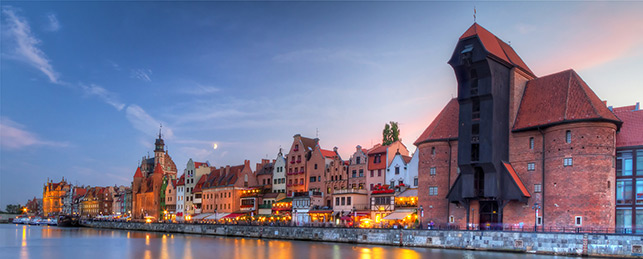
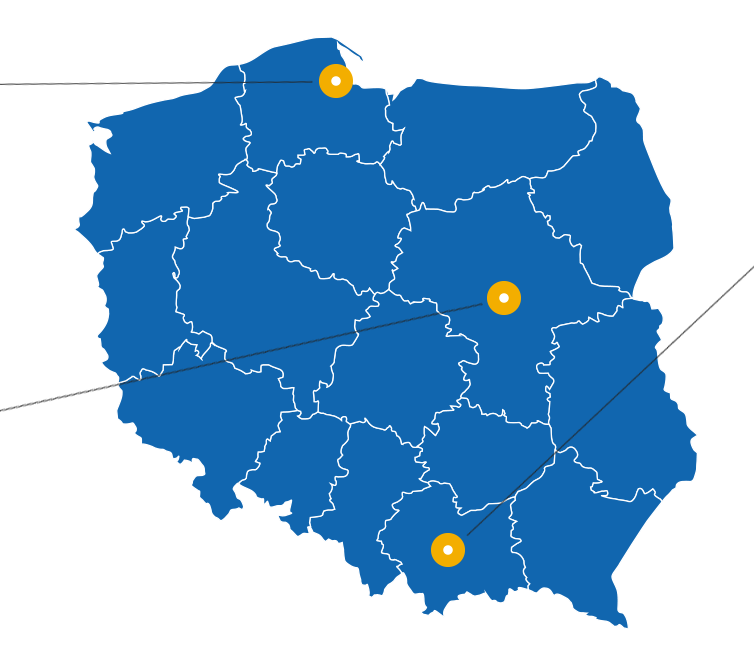
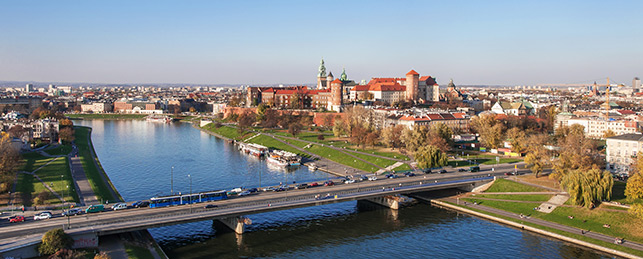

 (0048) 12 631 12 89