






Time to read:
QUICK ANSWER
Yes, an Employer of Record can be the right choice if you need to hire in Poland before creating a local entity. With EOR services Poland, the provider becomes the legal employer, manages contracts, payroll, taxes, social security, and HR compliance, while your company manages the employee’s daily work and business goals. This model is especially useful for market testing, early recruitment, small teams, or temporary expansion. However, a local entity may become more suitable once your team and long-term operations in Poland grow.
*This article provides general business information only. It should not be treated as legal, tax, or employment advice. Requirements may vary depending on the employee’s profile, contract type, and business situation.
Table of Contents
Hiring employees in Poland is not always straightforward. Foreign companies must comply with local employment regulations, payroll requirements, tax obligations, and social security contributions before they can legally employ staff. Setting up a local company also requires time, resources, and ongoing administrative management. For businesses that want to enter the Polish market quickly, EOR services in Poland provide a practical alternative. Instead of creating a local legal entity, companies can partner with an Employer of Record (EOR) to hire employees compliantly while focusing on business growth.
This guide explains the common hiring challenges in Poland, how an Employer of Record in Poland works, when businesses should use one, and what to look for when choosing an EOR service provider in Poland.
Why Hiring in Poland Can Be Challenging
To hire in Poland, an employer needs a compliant contract, payroll process, and HR framework from the employee’s first day.
A local entity may be required for direct employment
In practice, direct employment in Poland usually requires a registered local employment and payroll framework. For many foreign companies, this means setting up a Polish entity or using a compliant local employment structure. Setting up that entity involves company registration, tax setup, accounting, corporate administration, and, in some cases, banking procedures.
This investment may make sense for a mature operation with a significant local team. However, it can delay recruitment when the immediate requirement is to hire a sales manager, engineer, sourcing specialist, or country representative. In many cases, companies use an Employer of Record as the first employment structure before commercial demand is proven.

Polish employment law requires local expertise
Employment contracts must comply with Polish labor law and reflect the terms agreed with the employee. Employers must correctly manage working time, paid leave, sick leave, probation periods, contract amendments, employee records, and termination procedures. A contract template used in another country may not meet local requirements.
In addition, mistakes in employment status or termination procedures can create legal and financial risk. Local expertise is therefore important from the drafting of the employment contract through to offboarding.
Payroll involves several statutory obligations
Payroll in Poland involves more than calculating the employee’s net salary. Employers must manage personal income tax withholding, social security contributions, salary documentation, statutory leave, and reporting obligations. The employer must also register employees with the relevant authorities within the required timeframe. After that, payroll data must stay aligned with contract changes, absences, bonuses, and current rules.
For a small international team, building an internal Polish payroll capability is rarely efficient. As a result, outsourcing payroll can give companies access to local specialists without building a full HR and finance structure.
Remote management can create operational gaps
An employee may report directly to a regional manager based outside Poland. While daily management can remain international, local employment matters still require timely support. Employees may have questions about pay slips, annual leave, sick leave, benefits, or contractual changes. Without local support, simple issues can take longer to solve, affecting employee experience. This becomes more important as a team expands across Warsaw, Kraków, Gdańsk, Wrocław, Poznań, or other Polish cities.
If you also need help finding and selecting the right candidates, our recruitment and payroll services in Poland cover the full cycle, from candidate search to monthly payroll.
How EOR Services Poland Work
An Employer of Record separates legal employment from daily management. The EOR employs the worker under Polish law, while the client company directs the person’s day-to-day activities.

The client selects and manages the employee
The client usually defines the role, selects the candidate, sets business goals, and manages performance. The employee works as part of the client’s organization and follows its operational instructions.
The EOR does not take over the commercial or technical management of the employee. Its role focuses on the legal and administrative side of employment. This structure allows a company to build a local team while keeping business decisions in-house.
The EOR signs the local employment contract
The EOR prepares and signs a compliant Polish employment contract with the selected candidate. The contract should cover the role, salary, working arrangements, benefits, probation terms, notice periods, and other relevant conditions. Using a locally prepared contract reduces the risk of importing clauses that do not align with Polish labor law. It also gives the employee a clear legal relationship with a registered employer in Poland.
Once the contract is agreed, the EOR manages the formal onboarding process and requires registration.
The EOR manages payroll and statutory administration
Each month, the EOR calculates salary, deductions, income tax, and social security contributions. It also prepares payroll documents and coordinates salary payment. When an employee takes statutory leave, receives a bonus, changes salary, or signs a contract amendment, the provider updates the relevant payroll and HR records.
As a result, the client’s finance team receives structured employment costs without having to interpret local payroll rules internally. This creates a more predictable administrative process, particularly for companies hiring their first employees in Poland.
The EOR supports ongoing HR compliance
Employment administration continues after onboarding. Contracts may need to be updated, employee records maintained, or leave requests processed. The EOR also provides guidance when employment conditions change or when the company considers ending the relationship. This local support reduces delays between the employee, the client’s management team, and the legal employer.
Some EOR service providers in Poland focus mainly on contracts and payroll. Others also support recruitment, legal coordination, accounting, and market entry. These additional services can be scoped separately depending on the client’s needs. The broader model can be more useful when a company expects its local operation to develop over time.
Valians International follows this integrated approach. Clients can work with the same local partner for candidate search, employment, payroll, HR administration, and preparation for a future legal entity.
When Should You Use an Employer of Record?
An EOR is most relevant when a company needs to employ people in Poland before a subsidiary is operational or commercially justified.

Testing the Polish market
A company may want to appoint a local sales representative, country manager, or business development specialist before making a larger investment. Using an EOR allows the employee to start working while the company tests demand, customer response, and market potential. The business can then make a better-informed decision about whether to establish a permanent entity.
For a wider view of hiring models across the region, see our guide on how to hire remote employees in Eastern Europe.
This approach limits the amount of fixed infrastructure required during the validation stage.
Hiring before incorporation is complete
Some companies have already decided to establish a Polish subsidiary, but incorporation, banking, tax registration, and payroll setup are still in progress.
However, waiting until every administrative step is complete can slow the launch. An EOR can employ the first team members during the transition period. Once the company’s own entity is ready, employees may move to the new structure through a planned and compliant process. This process should be reviewed case by case with local HR and legal support.
Employing a small or distributed team
Opening a company may not be efficient when the local team has only one or a few employees. This is common for regional sales roles, technical experts, remote software teams, sourcing staff, and project-based functions.
Whether the employees are based in one city or distributed across Poland, the EOR provides one consistent employment framework. As a result, the company can avoid building local payroll and HR infrastructure for a limited headcount.
Supporting a defined project or temporary expansion
A company may need employees in Poland for a customer contract, industrial project, market study, or time-limited operational assignment.
In this case, EOR can provide a compliant employment structure without requiring a permanent subsidiary. However, the contract type and employment terms must still comply with Polish law. The provider should assess the proposed arrangement before onboarding to ensure the structure matches the actual role.
Preparing for long-term growth
Using an EOR does not prevent a company from establishing its own entity later. It can serve as the first phase of a wider expansion plan.
During this period, the company gains practical insight into salary levels, recruitment conditions, employee expectations, and operating requirements. These lessons can improve the design of the future local organization. When the team, revenue, and operational scope justify incorporation, the EOR provider can support the transition.
If incorporation is already planned, we can support the setup through our subsidiary creation service in Poland while your first employees start under the EOR.
How to Choose an EOR Service Provider in Poland
Before deciding, you should assess the provider’s local capabilities, service scope, pricing structure, and ability to support future growth.
Confirm the provider’s legal and HR expertise
The provider should understand Polish employment contracts, payroll rules, social security obligations, leave requirements, and termination procedures. Ask whether these functions are managed by an internal local team or passed to external partners. A provider with direct access to HR, payroll, legal, and accounting specialists can usually resolve issues more efficiently. Local presence is particularly valuable when an employee needs support or when regulatory changes affect the employment relationship.
Review the service scope
EOR packages do not always cover the same activities. Companies should confirm which services are included in the standard fee and which services require extra payment. The scope may include:
- Employment contract preparation
- Employee registration
- Payroll calculation and salary administration
- Tax and social security processing
- Leave and absence management
- HR documentation
- Contract amendments
- Onboarding and offboarding
- Local employee support
Recruitment, legal advice, travel administration, benefits management, and entity setup may be offered separately. A clear scope reduces uncertainty after the employee has started.
Compare pricing and contract terms carefully
EOR pricing in Poland may be structured as a fixed monthly fee, a percentage of payroll, or a combination of both. You should review setup fees, deposits, currency charges, benefit administration, termination support, and additional HR services. The EOR provider should also understand the notice period and the procedure for transferring employees to their own entity.
The lowest monthly fee does not always lead to the lowest overall cost. Limited support can create extra work for the client’s internal team or lead to separate legal and payroll expenses.
Assess the provider’s ability to support expansion
A suitable provider should fit the company’s likely growth path. A business entering Poland may later need recruitment, accounting, legal support, office setup, or assistance in other Central and Eastern European markets.
Working with one coordinated partner can reduce the number of suppliers involved. It can also preserve continuity as the operation grows. This is particularly relevant for SMEs that do not have a large international HR or legal department
Why Valians International Is a Trusted EOR Partner in Poland
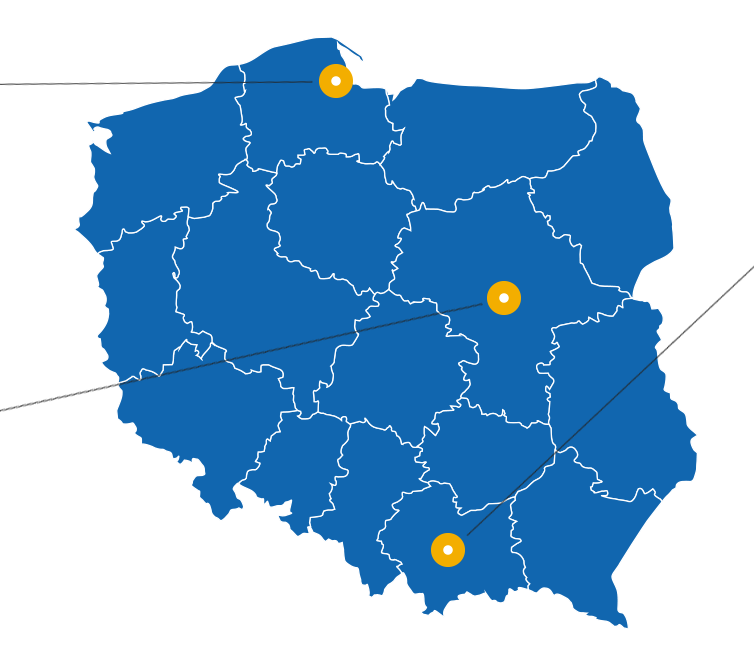
Valians International has supported international companies across Central and Eastern Europe for 30 years. Its head office is in Kraków, with additional teams in Warsaw and Gdańsk. This local presence gives clients direct access to consultants familiar with Polish employment practices and the operational realities of entering the market. Valians also works with in-house legal and accounting specialists. Therefore, employment questions can be reviewed within a wider business context.
Furthermore, we provide support before and after hiring. Our services include candidate search, interviews, employment contracts, payroll, social security administration, HR support, and local compliance.
This integrated model is useful when a company needs more than a payroll platform. A manufacturer may require a local sales engineer and later establish a commercial office. A software company may begin with two remote specialists and then build a larger team. A foreign SME may need a country manager before deciding whether to incorporate. In each case, the employment structure should support the company’s broader market-entry plan.
Valians also works across 18 countries through a team of more than 40 multilingual consultants. Therefore, we can support companies that use Poland as the first step in a wider Central and Eastern European expansion.
Final Thoughts
EOR services in Poland can be a practical option for companies that need to hire before establishing a local entity. The model gives employees a compliant Polish employment structure while the client retains control over their daily work.
Want a step-by-step view of contracts, payroll costs and EOR versus a local entity? Download our free guidebook on hiring employees in Poland.
It is particularly suitable for market testing, early recruitment, small local teams, and the transition toward a permanent subsidiary. The quality of the arrangement depends on the provider’s local expertise, service scope, and ability to support the business beyond payroll.
Hire Employees in Poland with Local Support!
Valians International helps foreign companies recruit, employ, and manage staff in Poland through locally delivered EOR, payroll, HR, legal, and accounting services. Contact the Valians Poland team to discuss your hiring needs and assess whether an Employer of Record is the right structure for your expansion.
Frequently Asked Questions
What are EOR services?
EOR services allow a company to hire employees in another country without opening its own local entity. The EOR becomes the legal employer and manages contracts, payroll, taxes, social security, and HR compliance. The client company manages the employee’s daily work.
How do Employer of Record services work in Poland?
The client selects the employee, and the EOR signs a compliant Polish employment contract. The EOR then manages registration, payroll, statutory contributions, HR documentation, and ongoing employment administration.
What is included in an EOR onboarding checklist in Poland?
The checklist usually includes candidate confirmation, contract preparation, employee documentation, registration with the relevant authorities, payroll setup, benefits review, and coordination of the employee’s start date.
What does EOR pricing in Poland include?
EOR pricing usually covers legal employment, payroll processing, tax and social security administration, and standard HR support. Recruitment, additional legal work, special benefits, travel administration, or termination support may be charged separately.
How can I compare contract terms and pricing for EOR services?
Compare the service scope, monthly fees, setup charges, deposits, notice periods, offboarding costs, employee support, and access to local specialists. The contract should clearly define the responsibilities of the EOR and the client company.
Valians International
Suggested Topics:
doing business (5) doing business in poland (6) market expansion (5) poland (13) supply chain (6)
Lastest Posts:
- Starting a Business in Poland: From Market Entry to First OperationsStarting a business in Poland? Compare legal structures, registration routes, initial costs, S24 requirements, banking and first operational steps.
- Distribution and Sales in Poland: How to Choose the Right Go-to-Market ModelCompare distribution and sales models in Poland, from distributors and direct sales to outsourced and hybrid approaches, and choose the right route to market.
- EOR Services Poland: Is an Employer of Record the Right Choice for Your Business? Expand into Poland without opening a legal entity. Learn how EOR services help you hire employees, manage payroll, and stay compliant with Polish labour law.
- How Recruitment Services in Poland Help International Companies Build Strong Local TeamsExplore how recruitment services in Poland help international companies hire qualified talent, manage executive search, and build stronger local teams.
- Global Sourcing Services in Central & Eastern Europe: How to Find Pre-Vetted Suppliers FastValians International provides global sourcing services across CEE – Poland, Czech Republic, Hungary, Romania and beyond. Access a pre-vetted supplier network with on-the-ground support.
- Third-party Manufacturing: Benefits of 3rd Party Manufacturing PartnershipsExplore third-party manufacturing, its benefits, risks, and how to choose the right partner to scale production and expand internationally.




 (0048) 12 631 12 89